

Photos by Betsy
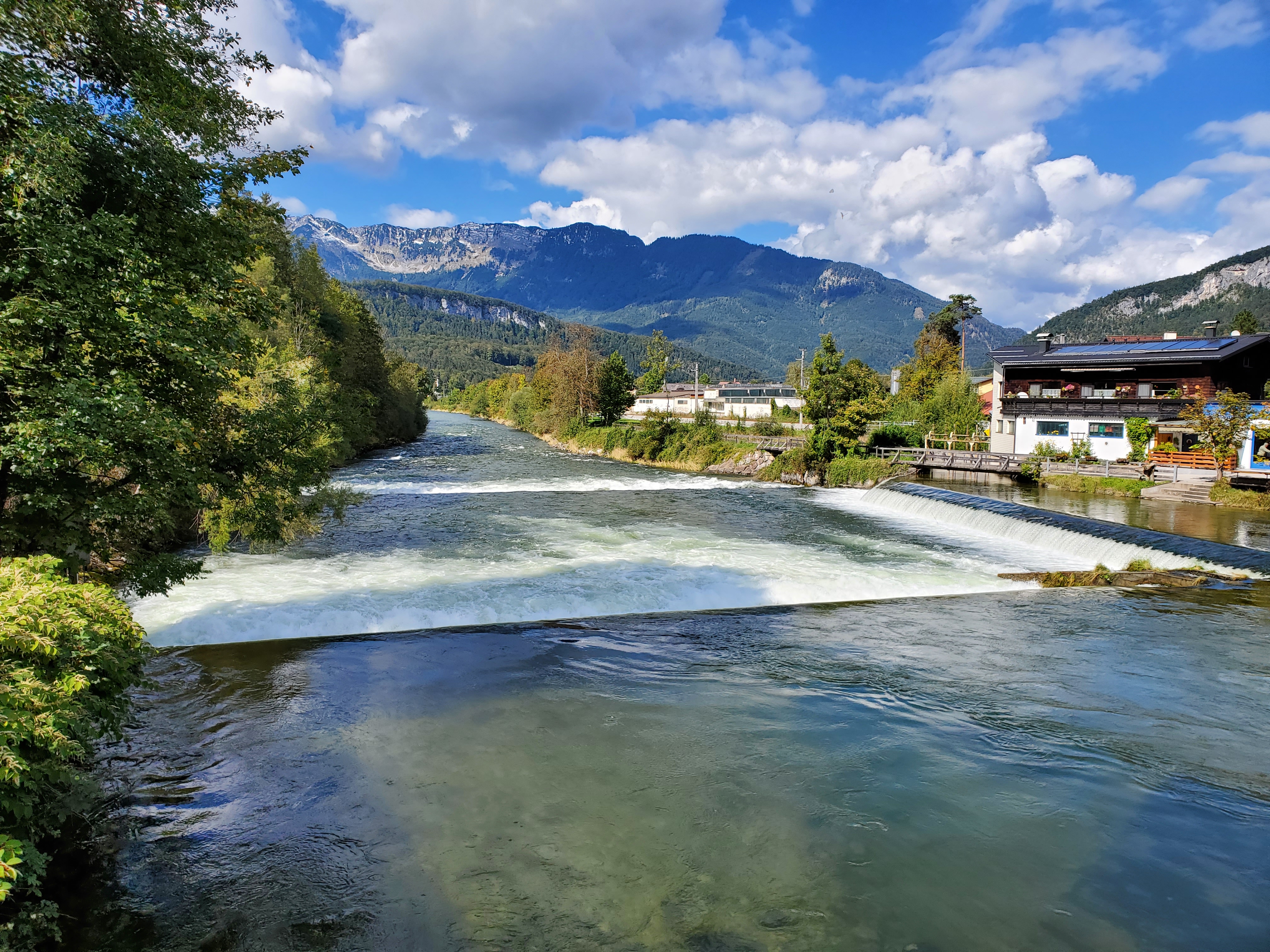
The sun shone on us all day today and it was magnificent. It was cold at first, low 40s, when we set out, but the day got warmer and warmer and so did we. We left Bad Ischl and walked along the river and by a children’s playground.

The highlight of today’s walk was a segment of the Brine Pipeline, an historic path along the mountainside. The path marks 7000 years of salt mining in the limestone mountains surrounding Lake Hallstatt. Fire/heat is required to separate the pure salt from the brine solution coming out of the mines. Hallstatt had limited trees, so a pipeline was constructed in 1596 to transport the brine to be boiled in “pan houses” in nearby towns. The pipeline was made from thousands of hollowed, interlocking tree trunks placed along the natural grading. Today, the brine line, the oldest in the world, is still operational and consists of plastic pipes. The 26-mile long hiking trail following the line was once the only way and out of the region; now it is one of the most beautiful and historically interesting hiking trails in Austria.
Our walking instructions indicated the Brine Pipeline was closed, but we’re glad we tested that information. We followed some signage instead of the instructions and did see some heavy equipment working in the area. One of the workers saw us and pointed us to an entrance to the trail, so we climbed up and found ourselves on the beautiful trail running mostly parallel to the river.
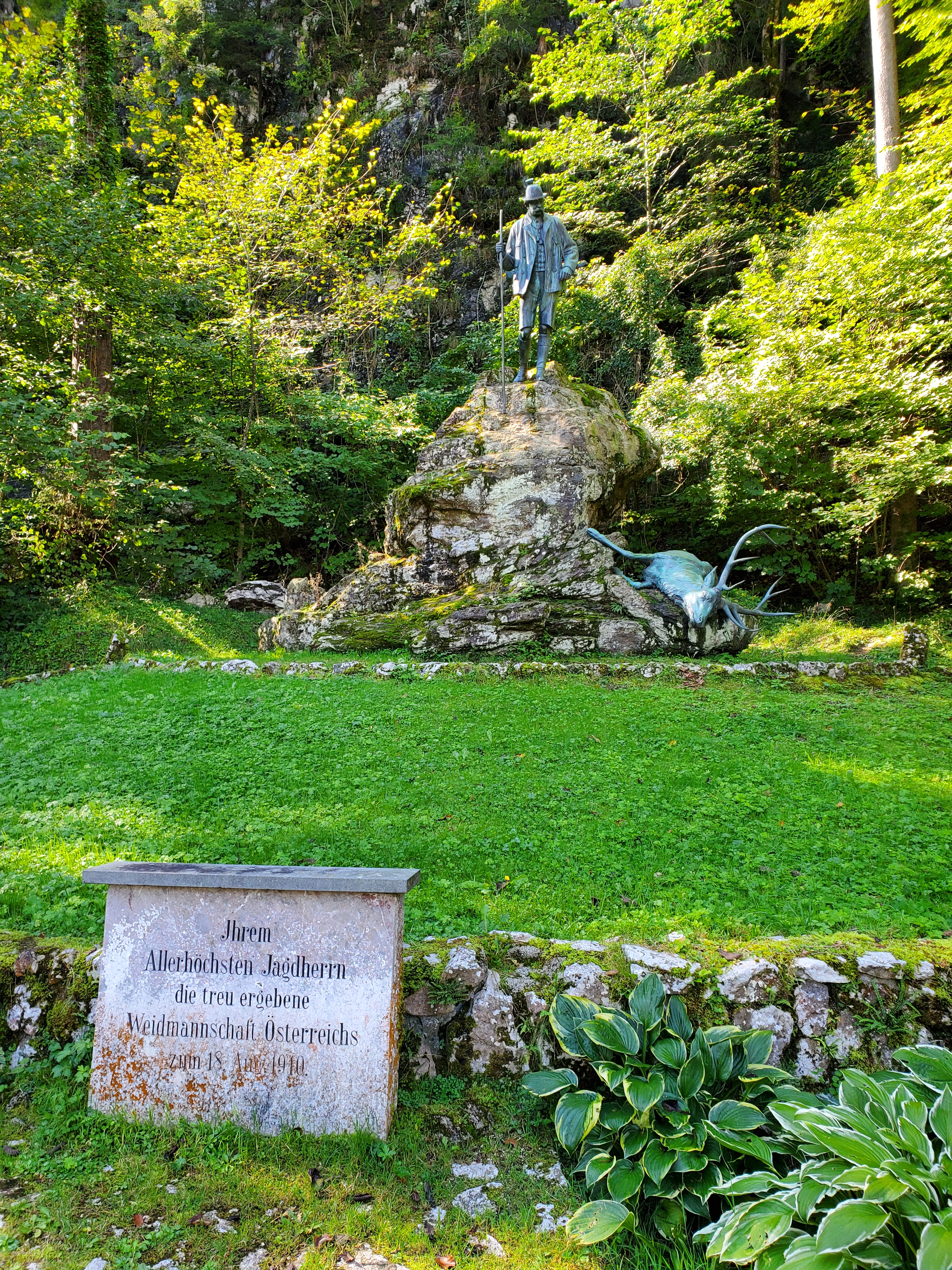

Most of the trail was wide and smooth and flat along the mountainside. It made for a really pleasant walk with occasional views and some detours through small villages.

At times we would leave the brine trail to walk alongside the road and then pass through a village before picking the trail back up again.
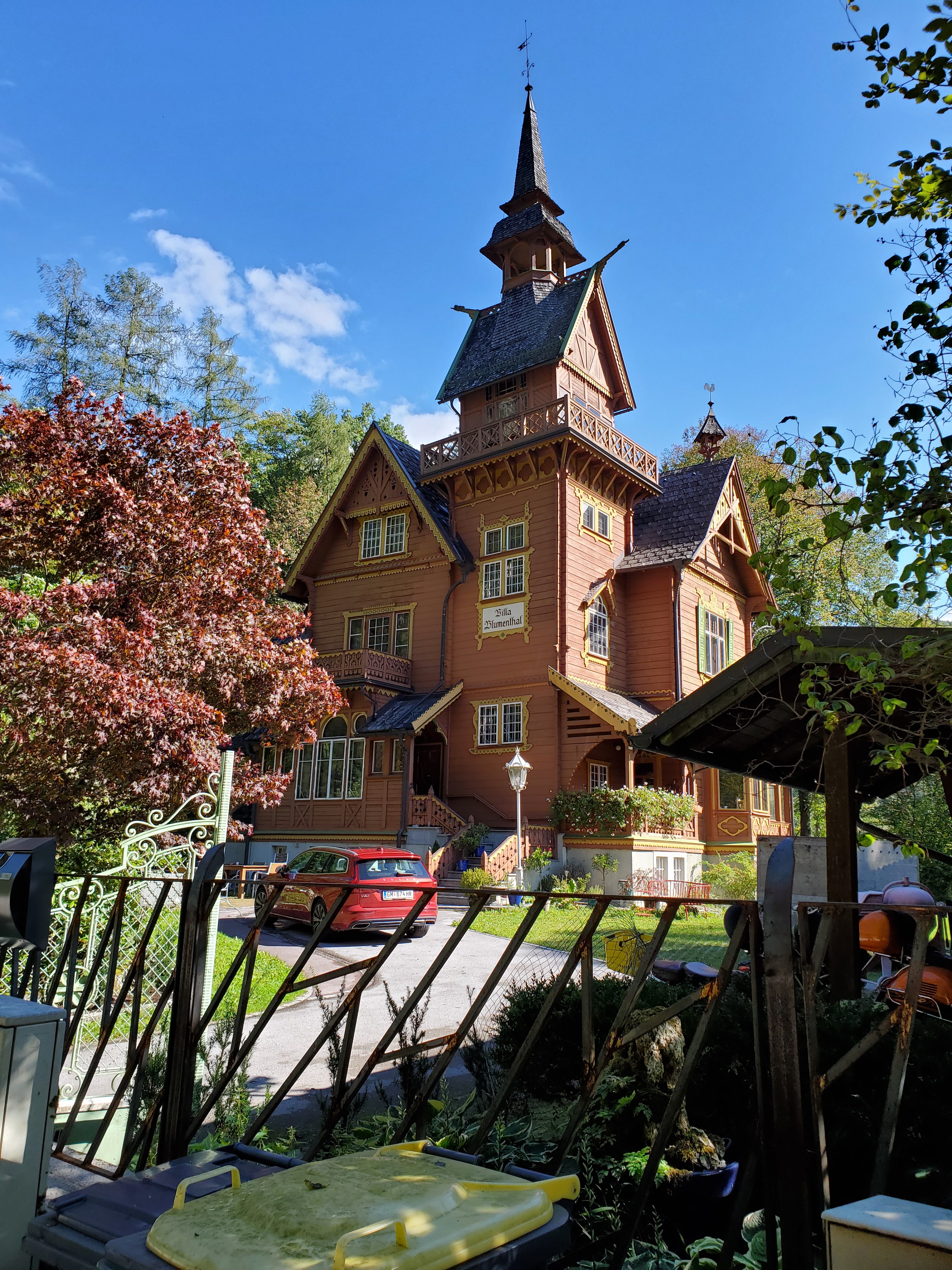
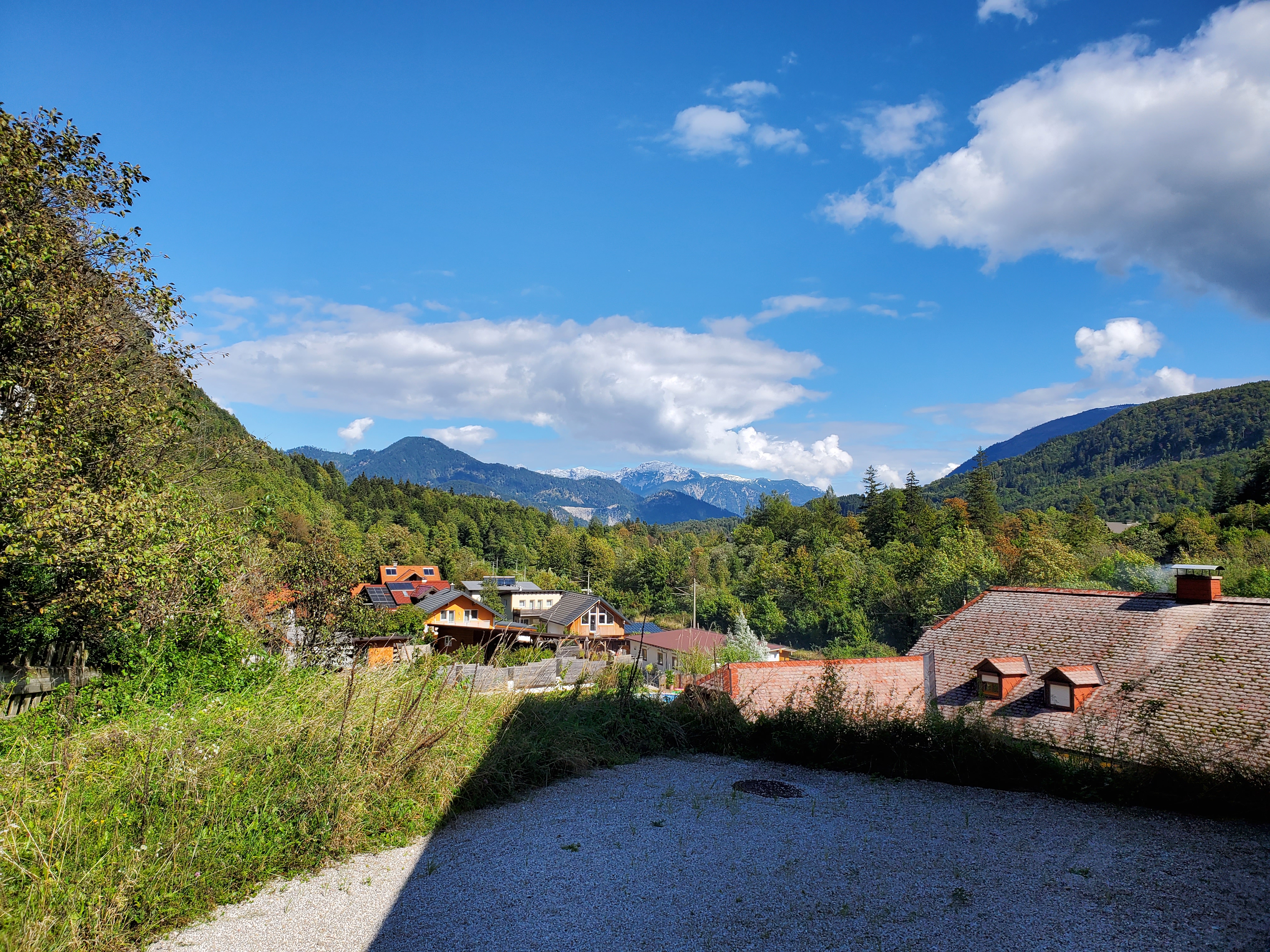
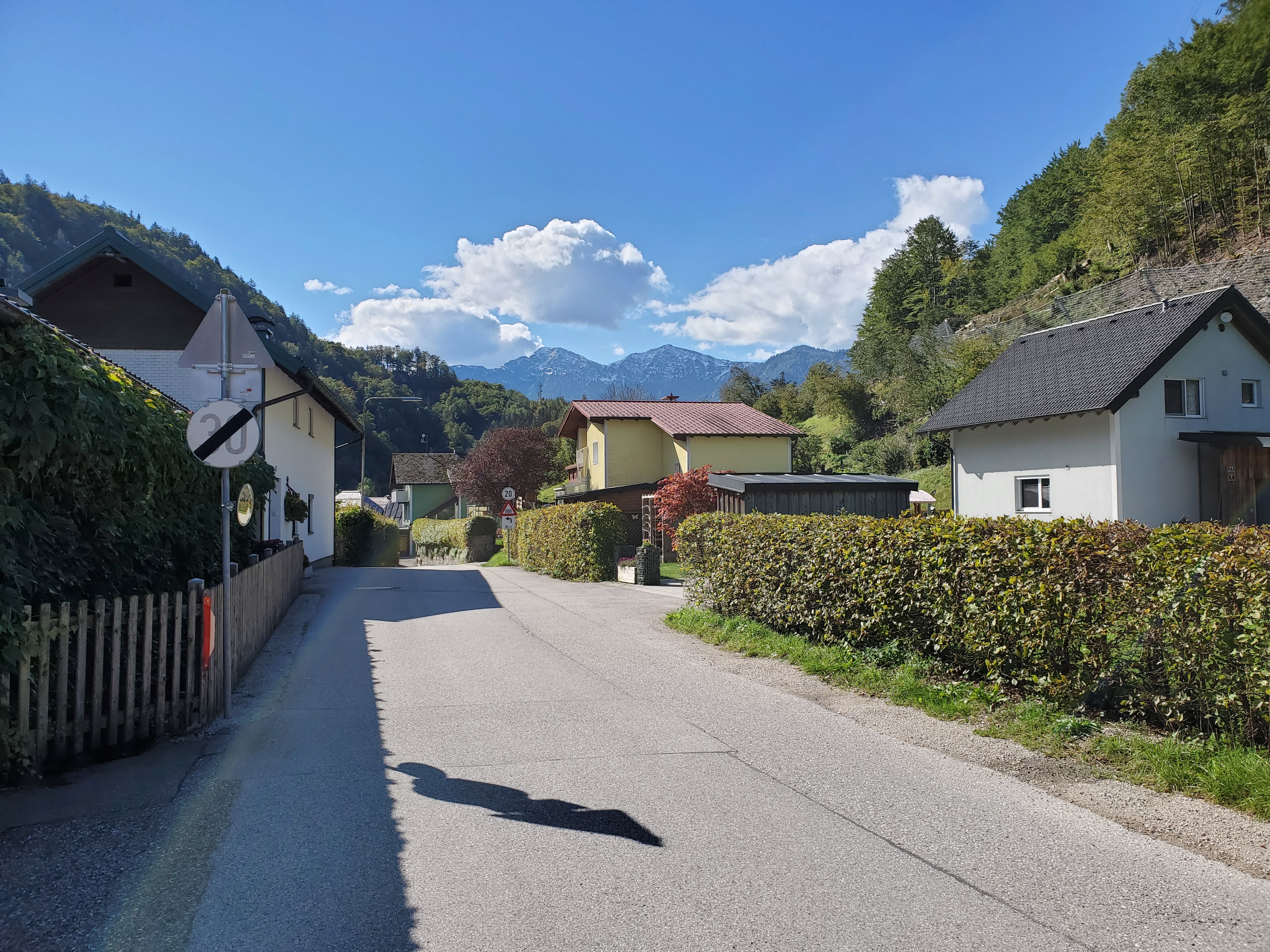


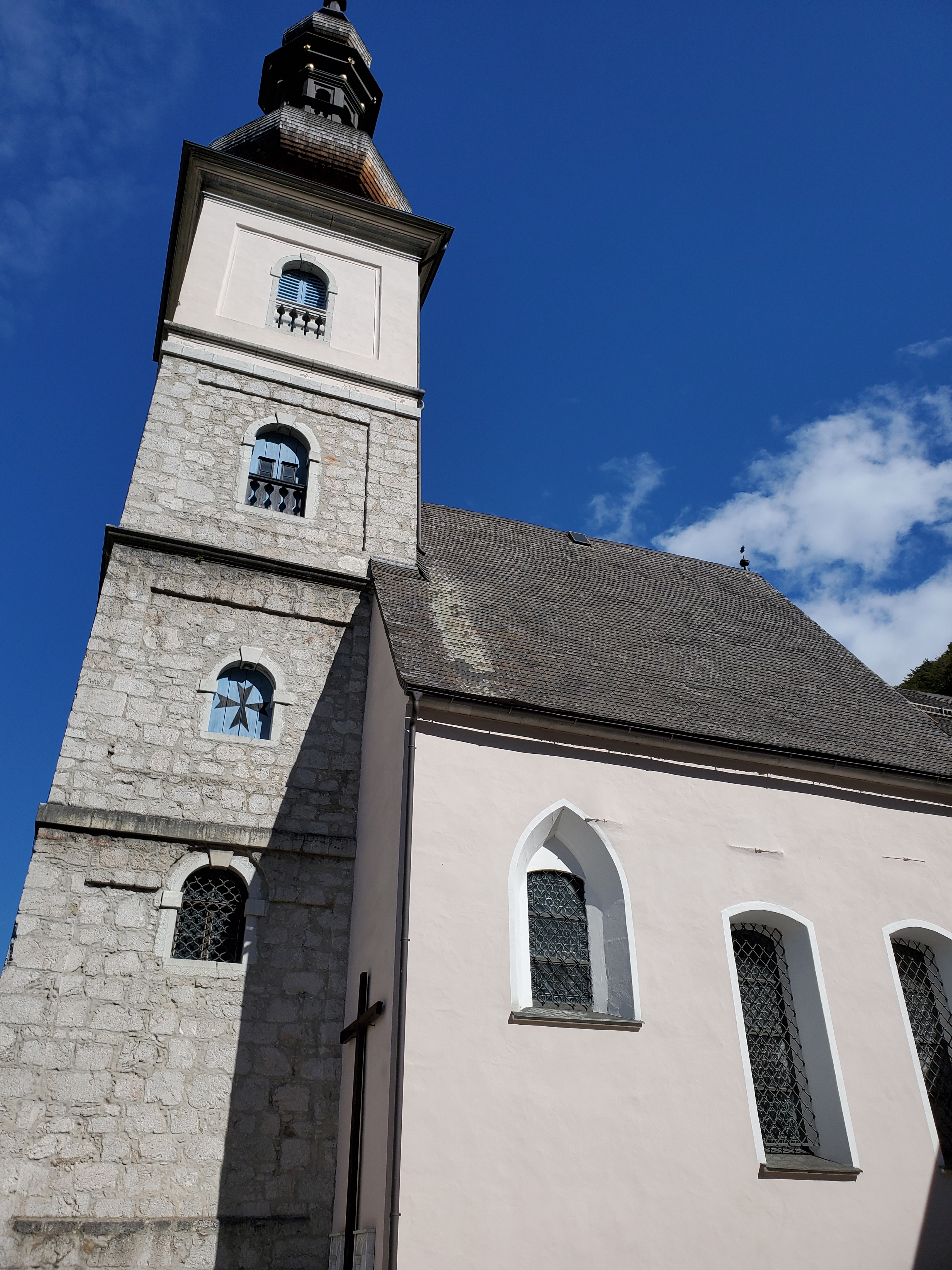
As we left Lauffen and crossed back over the river, we saw their water management system, collecting runoff from the recent heavy rains and moving it in channels into the river.

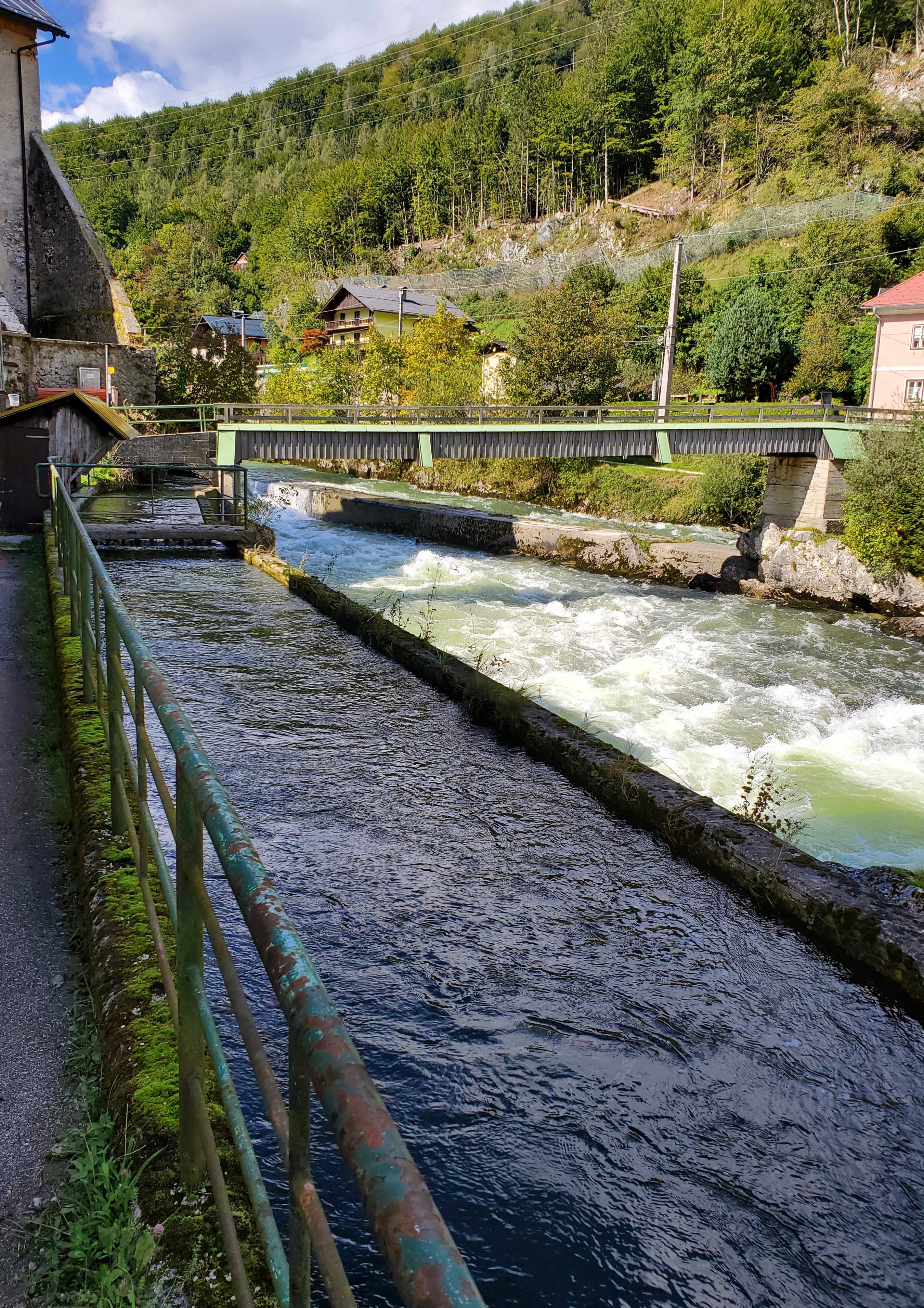
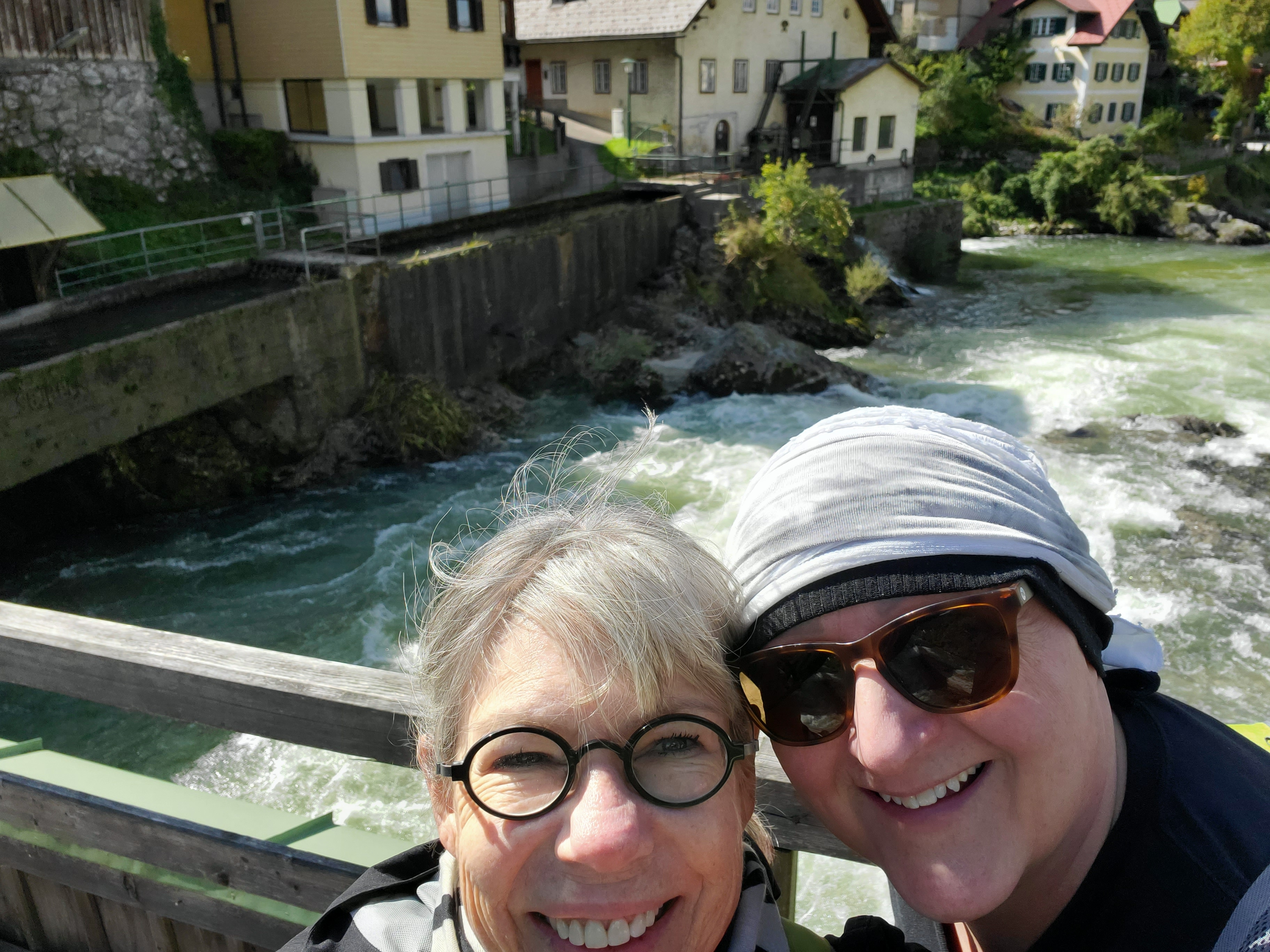
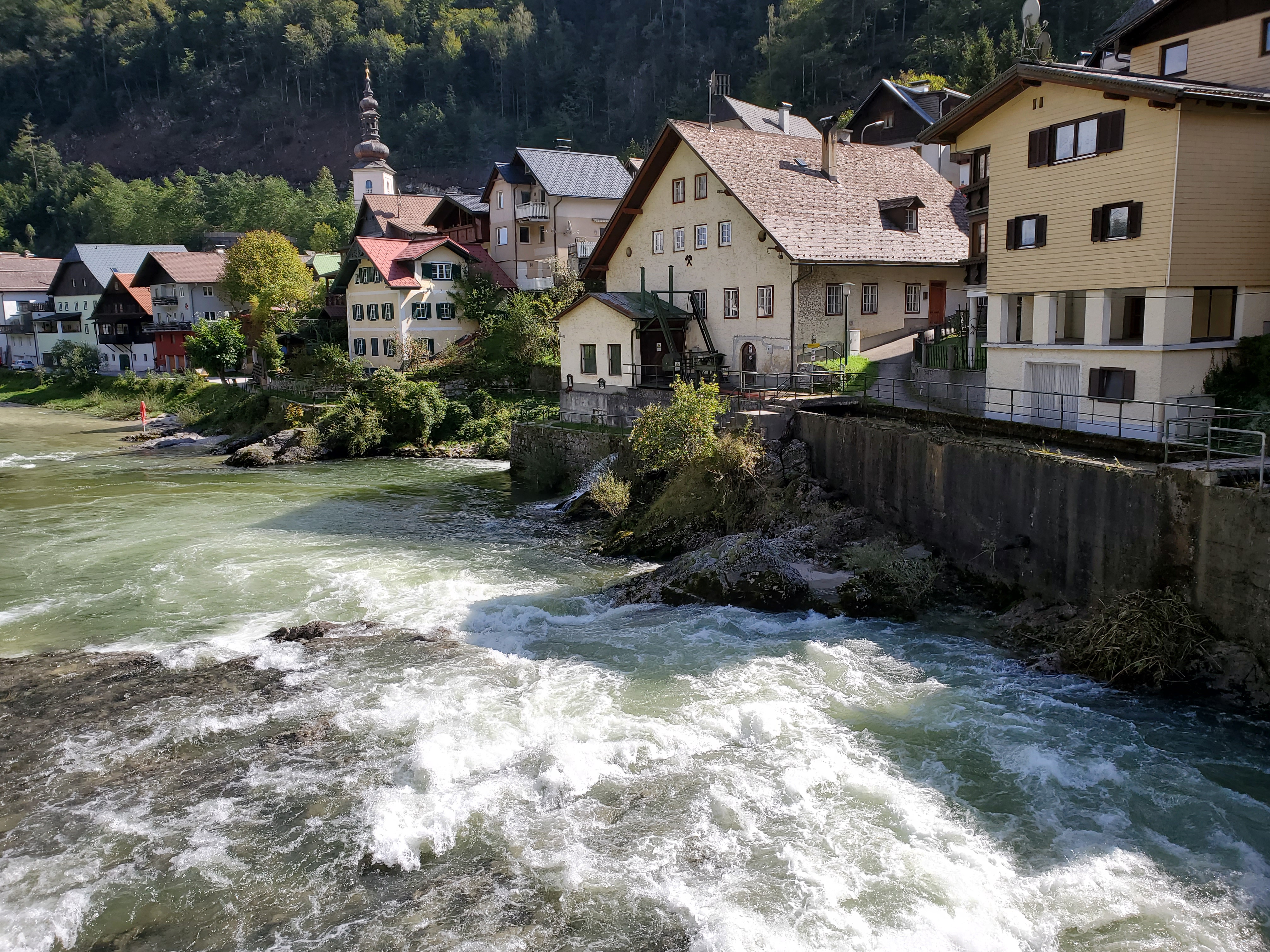
Leaving the village, we made our way back to the path.

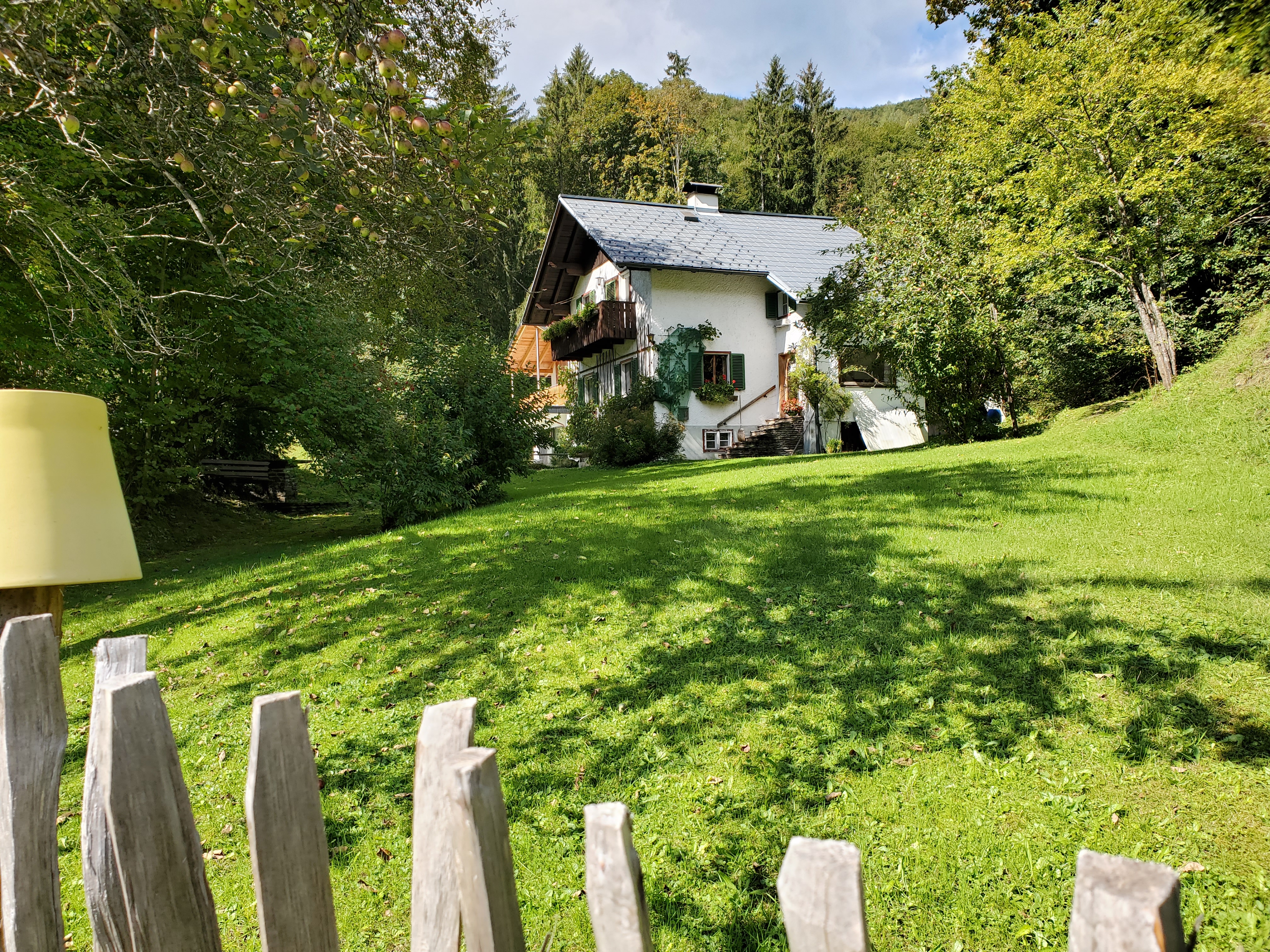

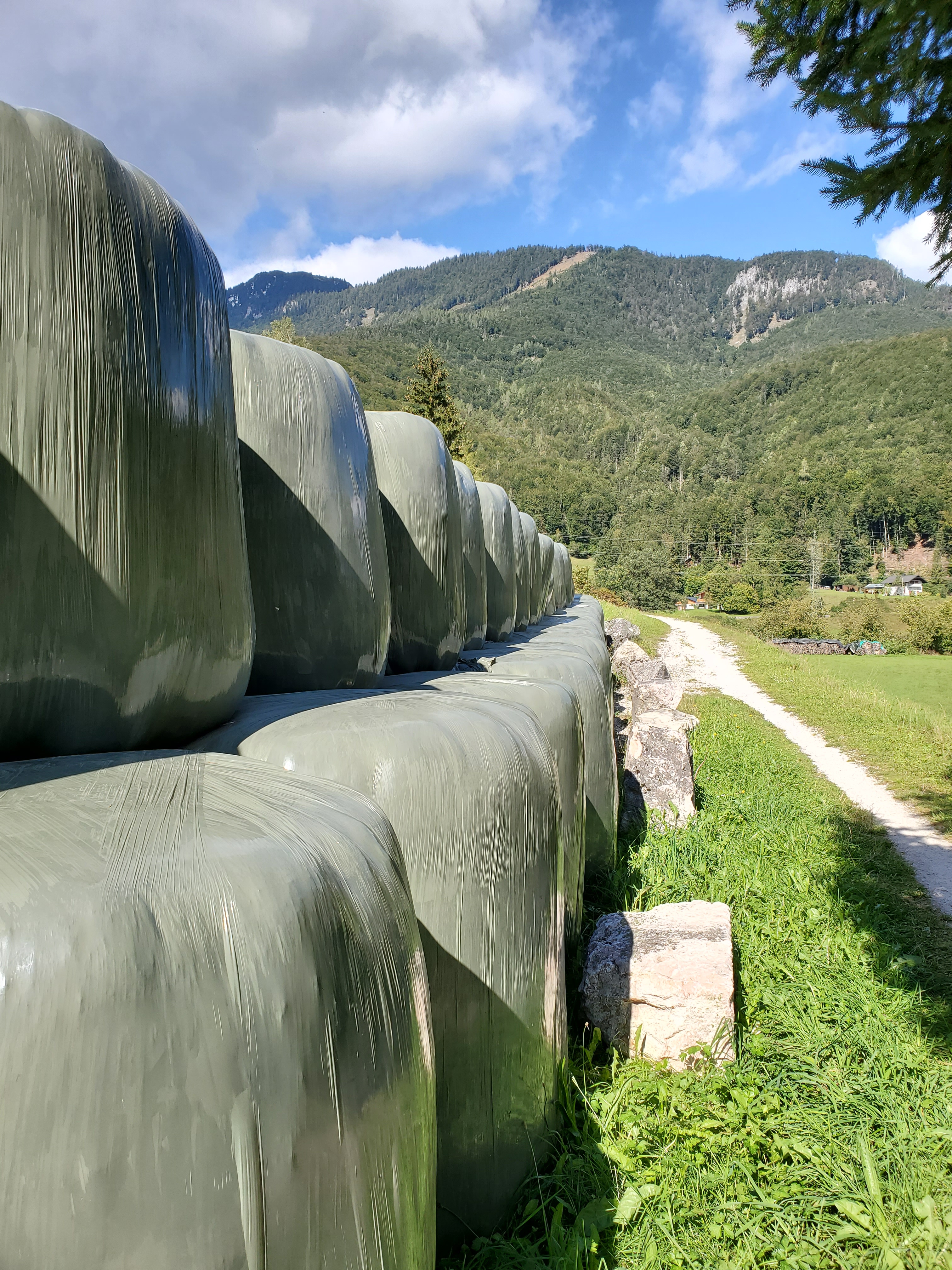
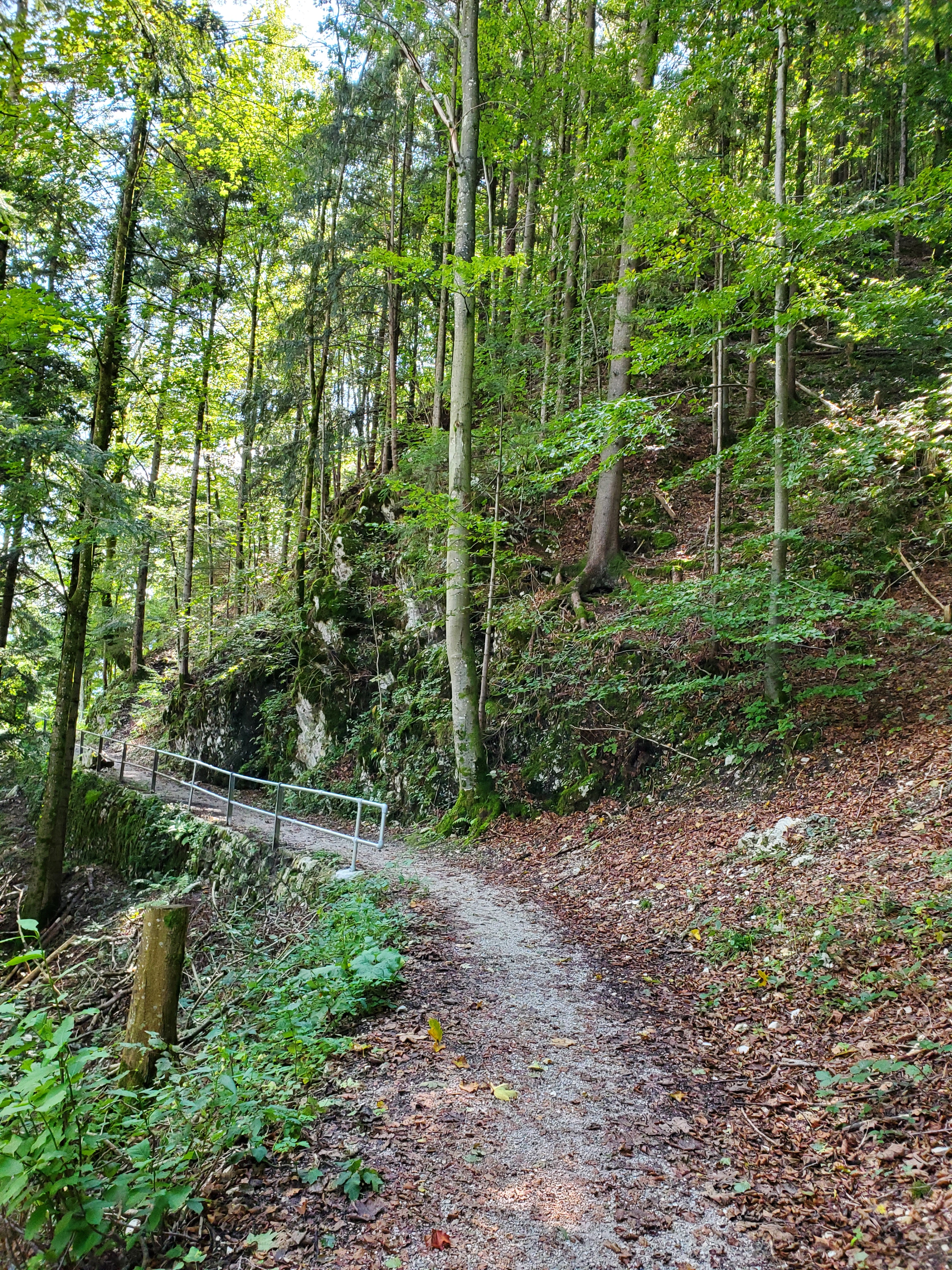

We left the trail again to enter Bad Goisen, where we could catch a bus to Hallstatt. Our schedule calls for us to do the section of the trail between the towns on Friday.


We had some difficulty finding the bus stop. We were supposed to train from Bad Goisen to Hallstatt, but the track is undergoing some work, so the train company is sponsoring a direct bus. We had tickets for that bus. However, we couldn’t find the bus stop for that service and ended up waiting for the regular bus just outside of town. Our tickets didn’t work for that and the free rides don’t extend to this region, so we paid about 10 euros, which we were happy to do. While at the bus stop, we met a young Canadian, Mitch. He is traveling Europe for two months and has already been in Italy, France, Spain, Switzerland and other places. After Austria, he is making his way to Amsterdam.
The bus apparently is school transportation as well. A group of about 10 kids ages from about 7 to 17 came to wait at the bus top. Fortunately, the bus had space for us all. We transferred to a new bus at some point and then into Hallstatt through a couple of tunnels.
This hotel is not as great as the previous three (Munich, St. Wolfgang and Bad Ischl). It has its quirks – no elevator to help us move our luggage, a tiny shower, a hardish bed. But, it’s fine for a couple of nights.
We showered and rested in the room for a while before dressing and exploring the town and finding food. We eat a hearty breakfast before each walk, but then we don’t eat again until dinner. Sometimes we have a piece of fruit on the trail. Usually, we’re pretty hungry by the end of the day.
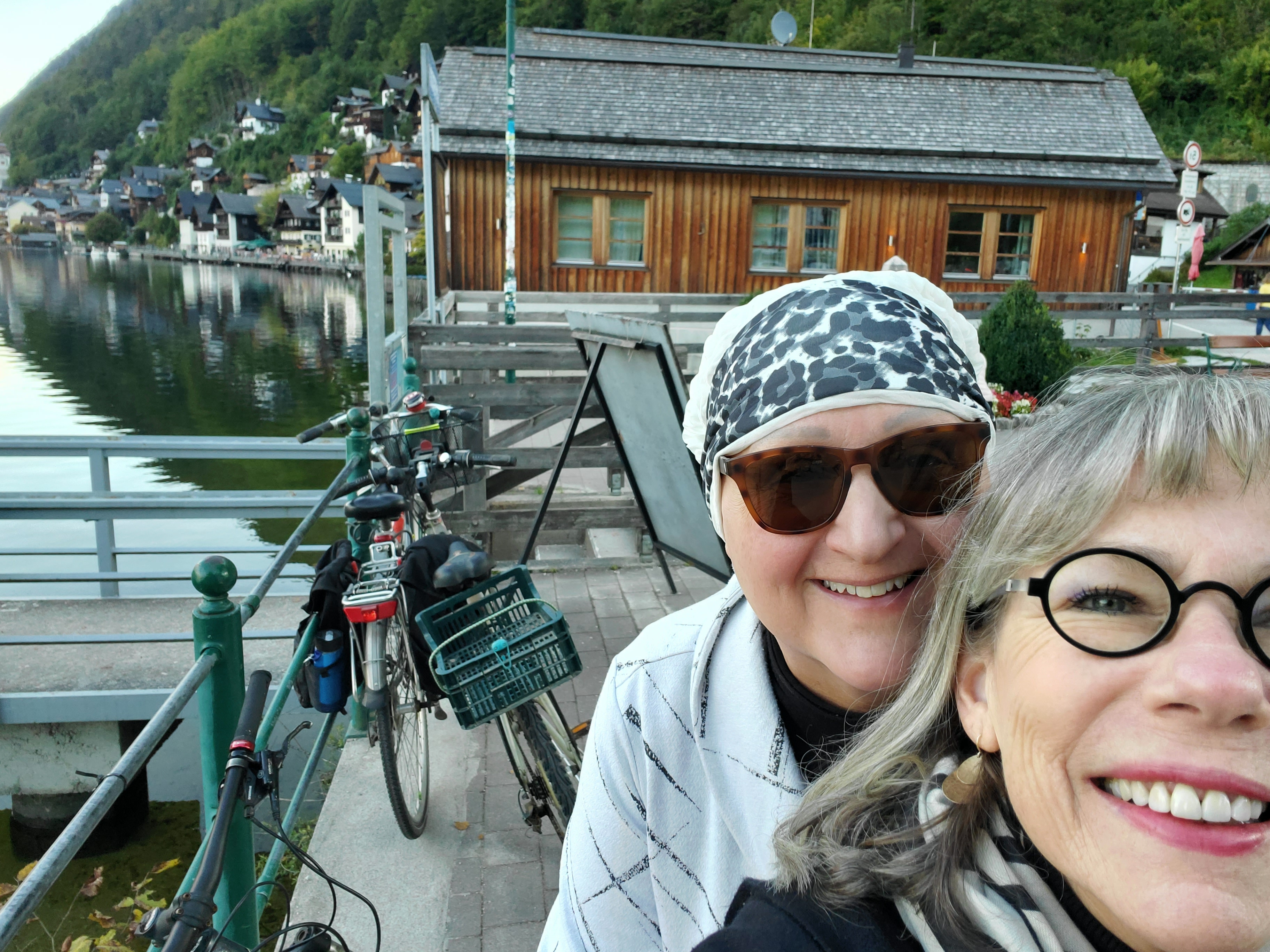
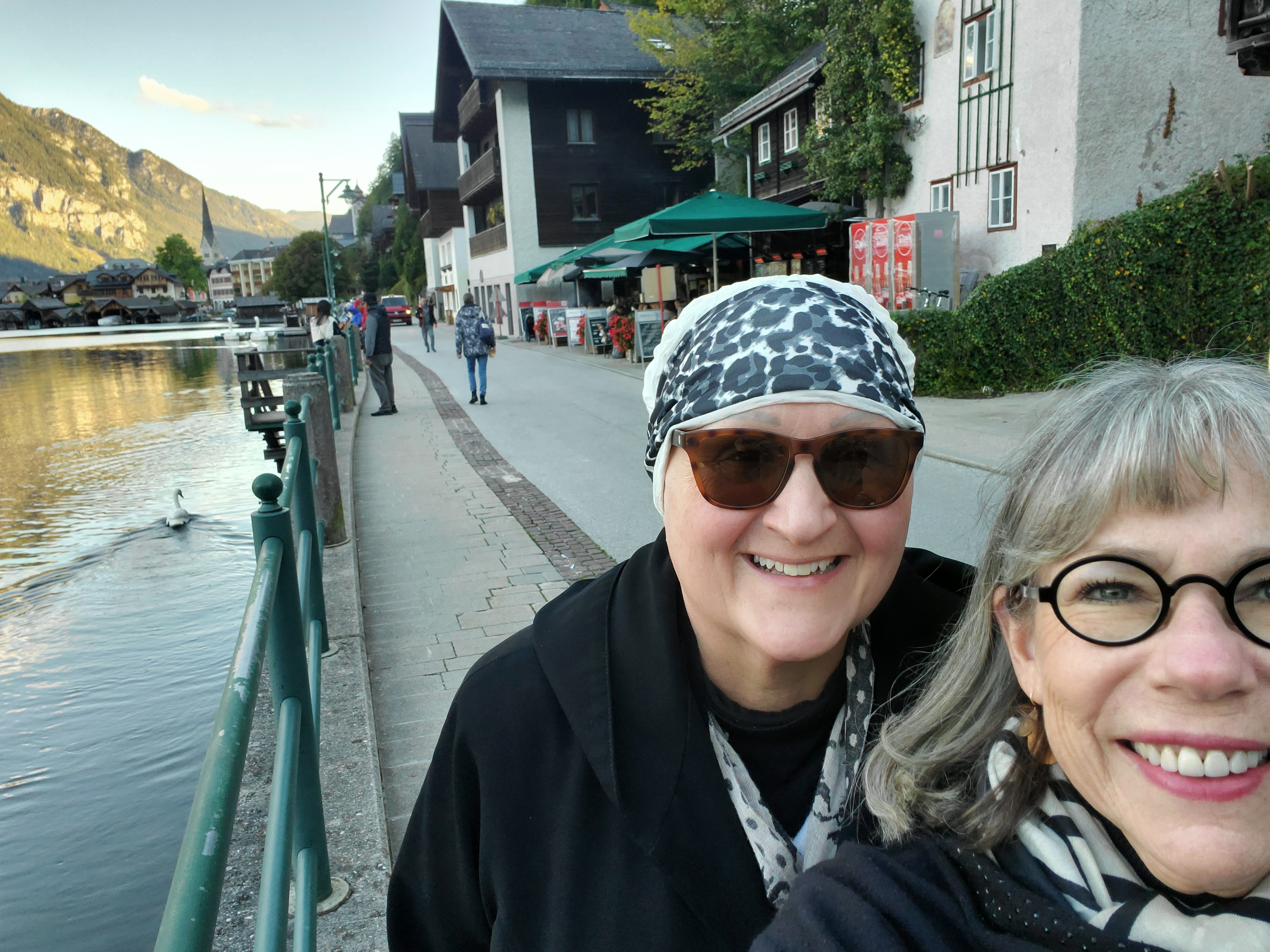
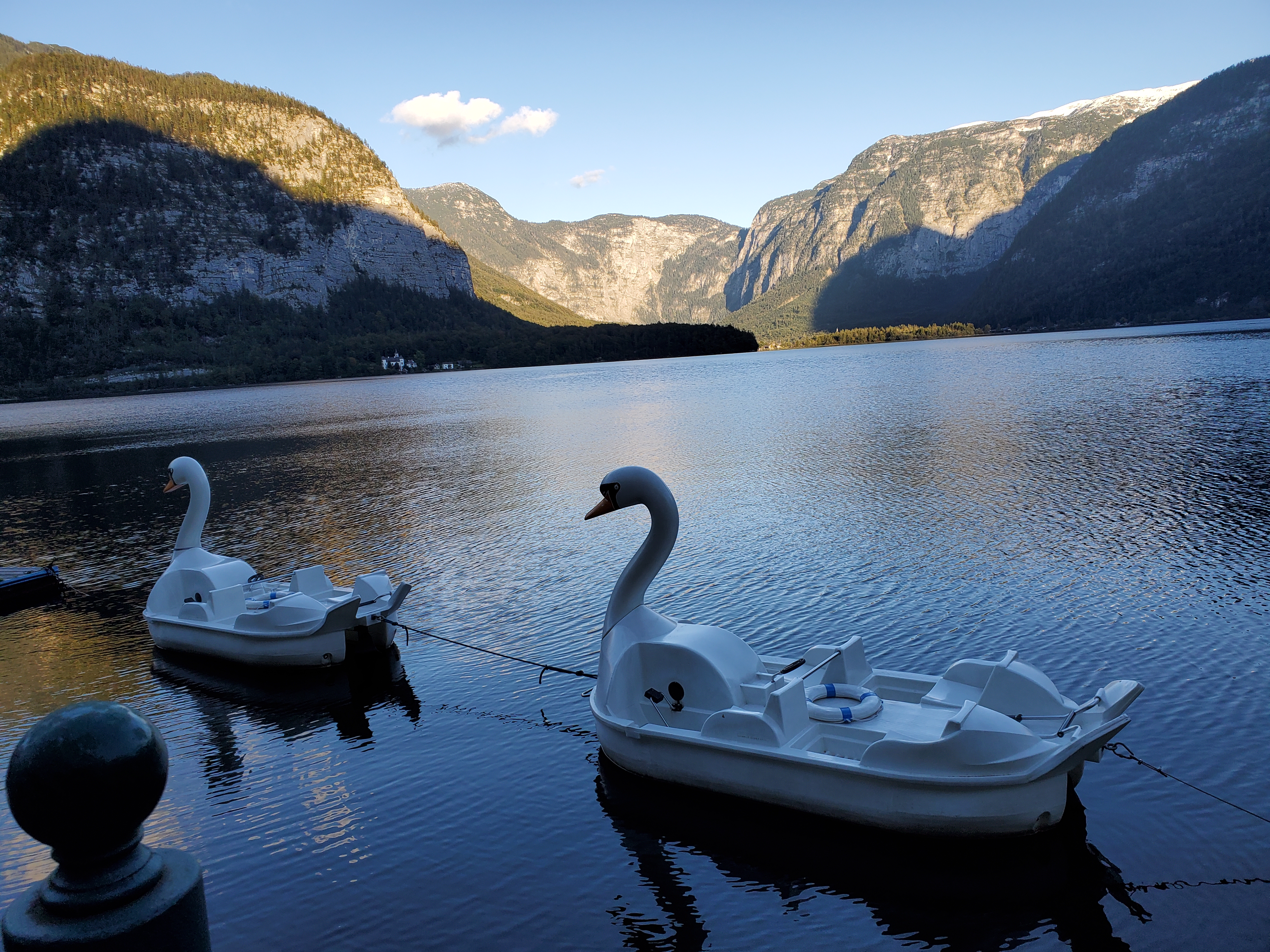


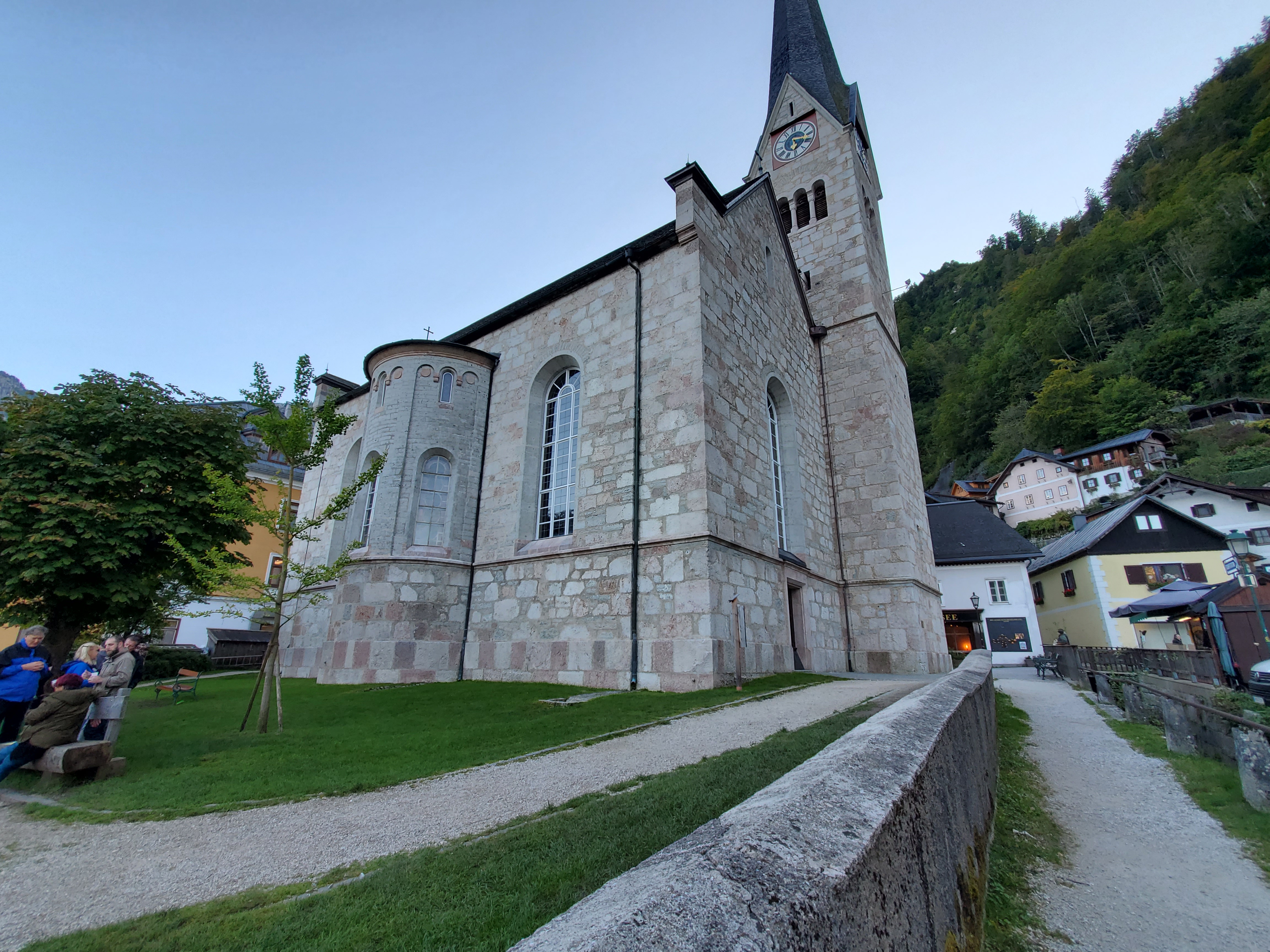

Hallstatt is still going strong with tourists, mostly daytrippers who leave by bus around 6 p.m. We overheard a lot of people talking and know we aren’t the only Americans here. There are also a lot of visitors from Asia and Middle East as well as throughout Europe. Hallstatt is a highly desirable place to visit and therefore is threatened by over-tourism. At least 10,000 people come here each day, pushing its resources to the limit. Yes, we know w’ere part of the problem, but we didn’t realize it until we arrived. Until 1960, it was a sleepy village only accessible by boat. The road/tunnel system was constructed and that led to the first influx of tourism. Over the years, the tourism numbers have increased dramatically. It’s no wonder because it looks like a fairy tale village. There’s talk among city leaders of setting limits on how many tourists can visit each day. For us, after 6 p.m., the streets were mostly quiet with just a few people eating in restaurants.
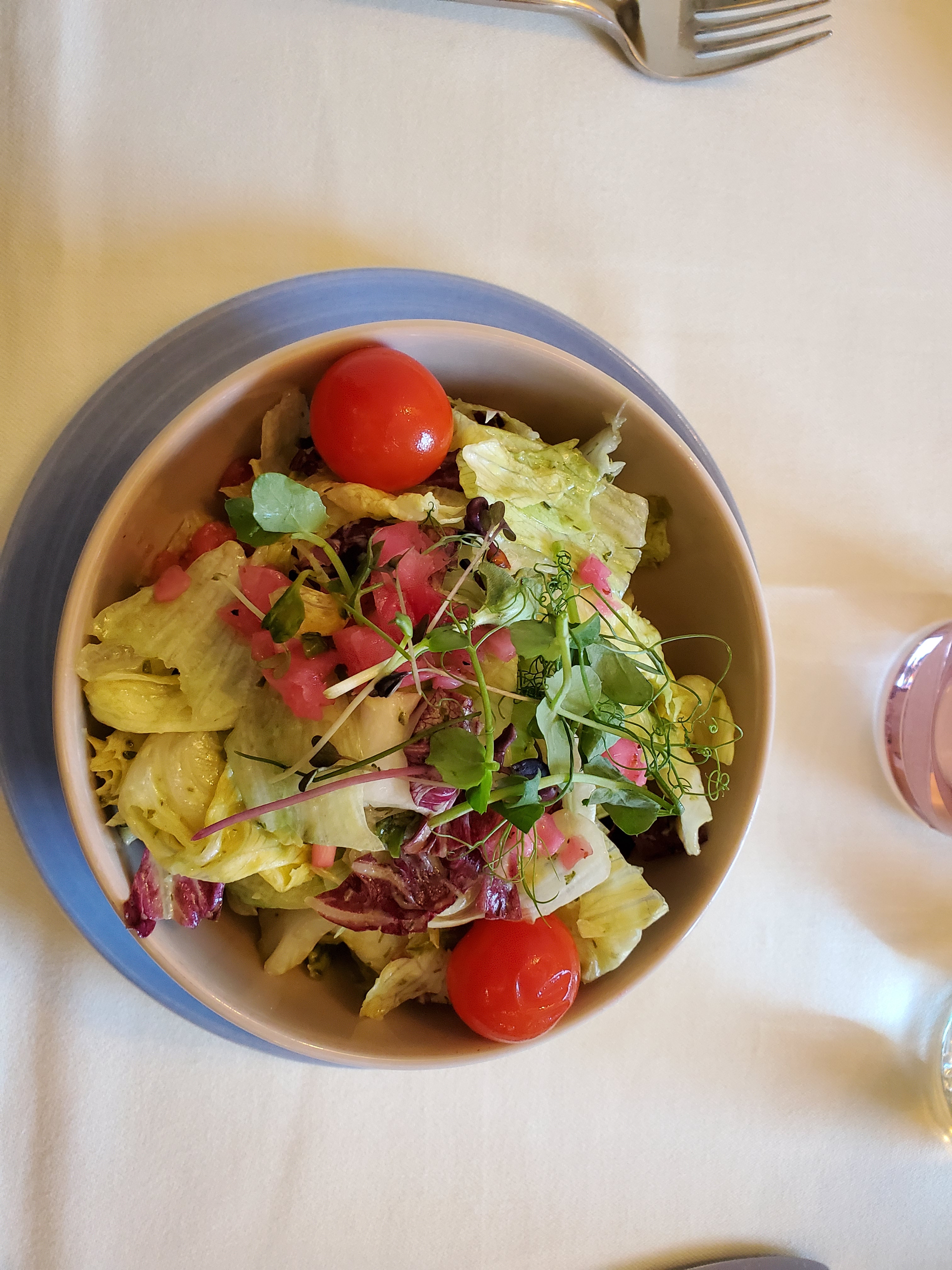
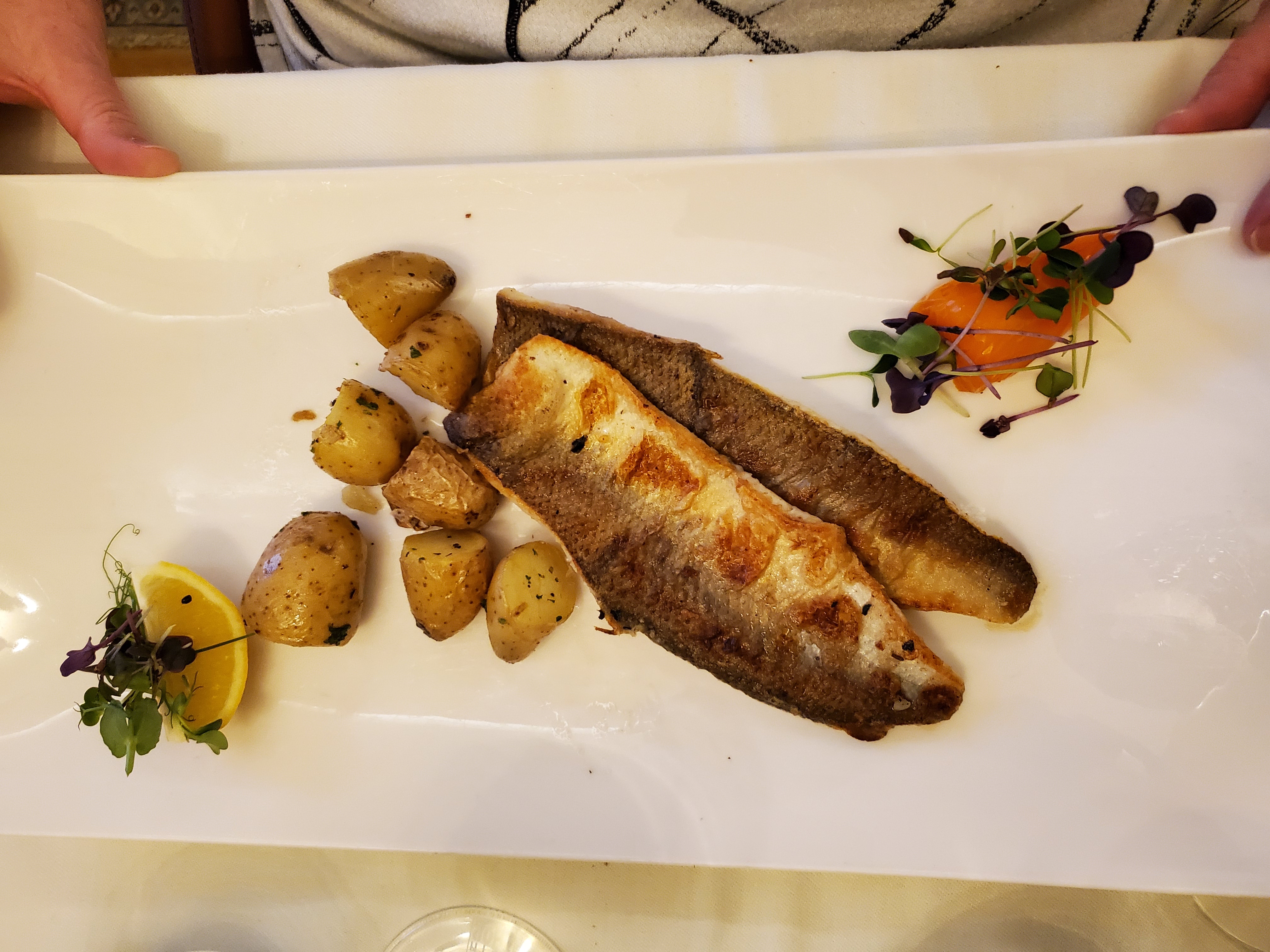
For dinner, we chose a hotel restaurant on the water. We were so happy we did.


Tired from walking a total of 12 miles again today, we opted for an early night.
Next up: More of the Brine Pipeline hike.

 Kim & Betsy