Today was five-star and turned that windstorm/power outage into just another experience.
The modern Siricusa has some ancient ruins, an impressive modern church that looks like a spaceship, and and old church with a painting from the 1600s. We enjoyed all of that, but Ortigia is a jewel of winding alleys, artists, musicians and a postcard appeal. We’ve visited Italian towns in Umbria, Tuscany, Puglia and the Lake Region, but I’ve never seen a town quite like this one with a stunning seafront and an interior of ancient buildings and mostly fabulous pedestrian alleyways. In a way, it feels like Rome in a manageable miniature.
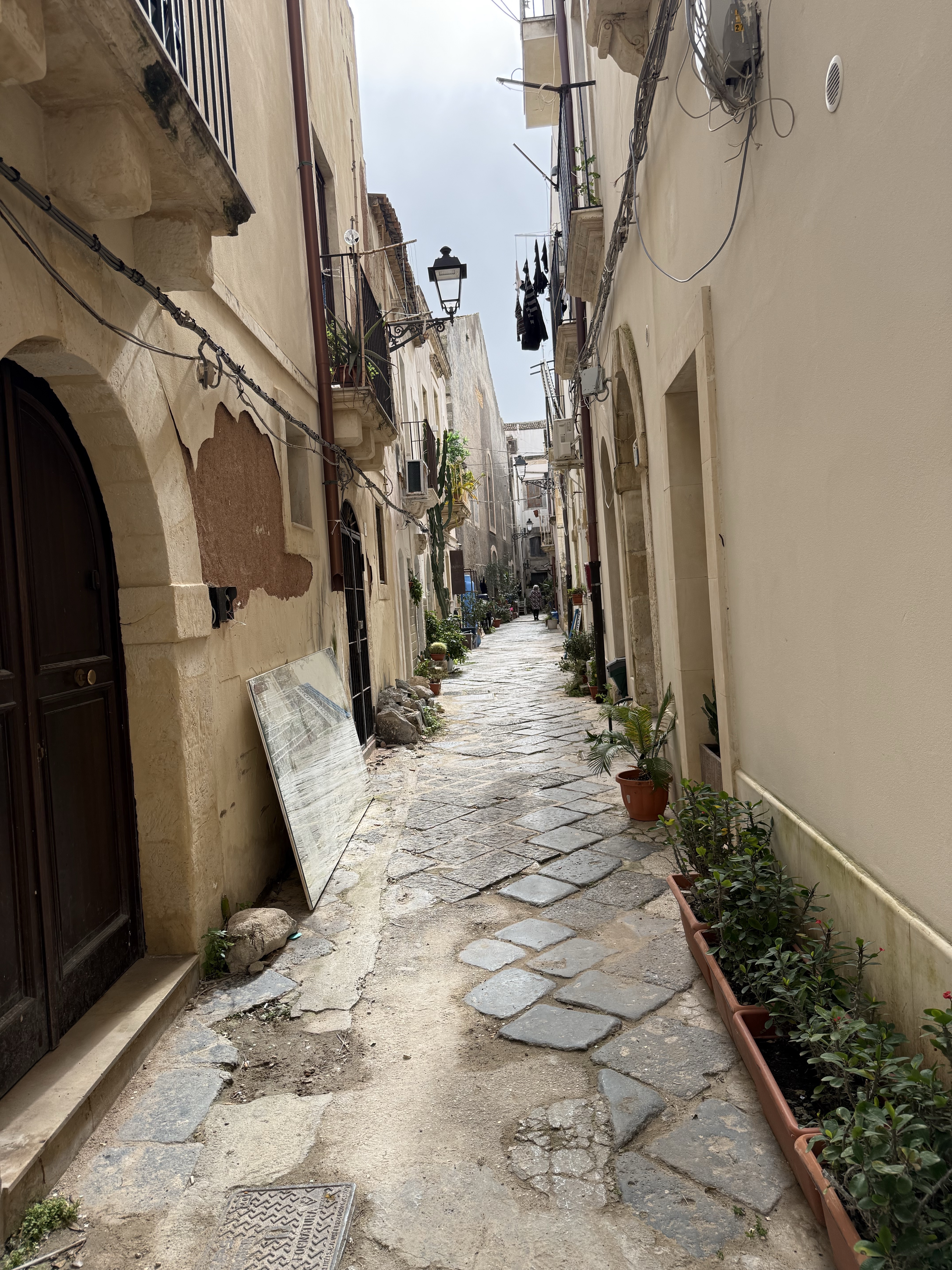
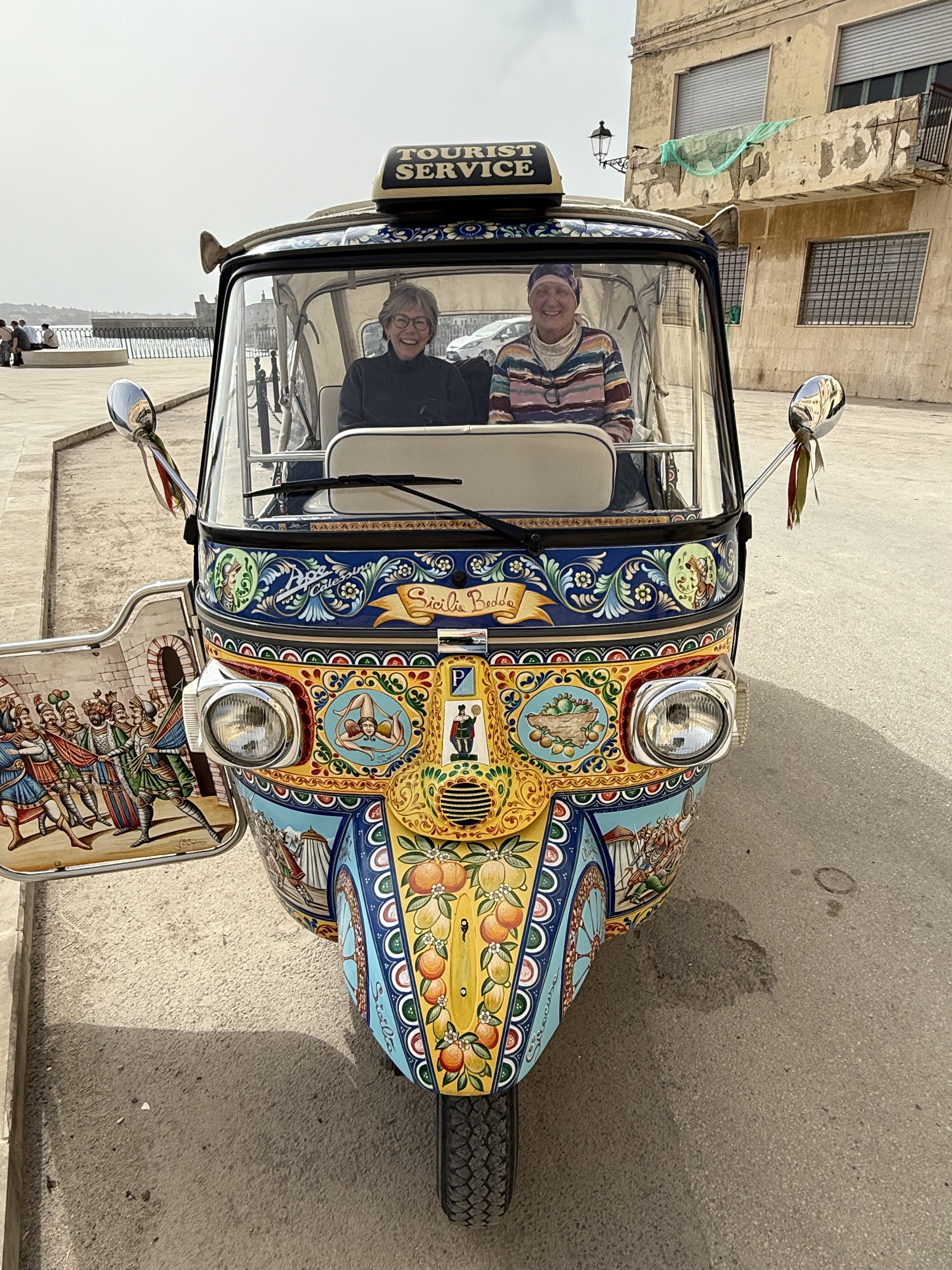
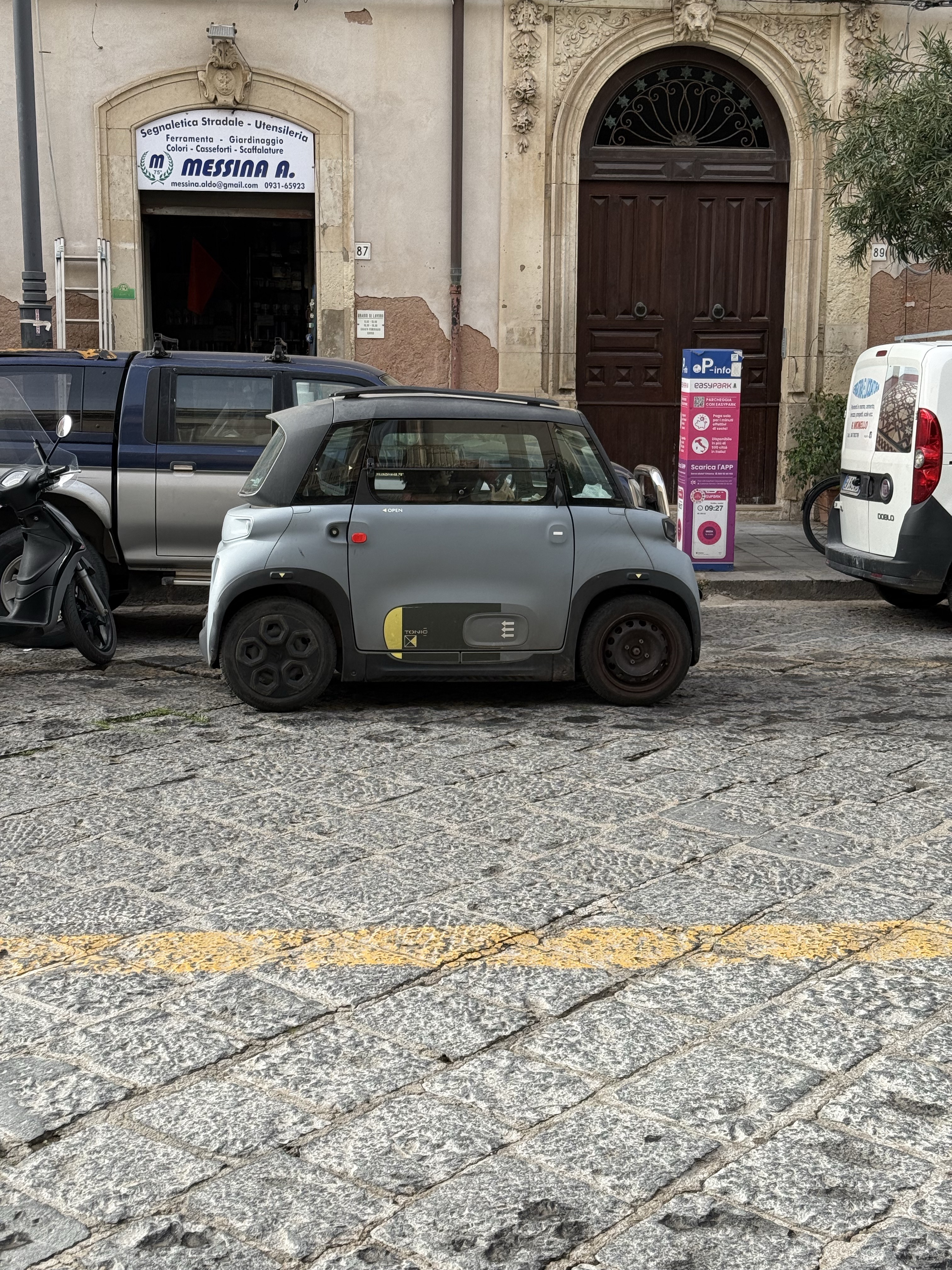
When I was out briefly Friday looking for groceries, I got a glimpse of how beautiful it was and wanted so much for Betsy to experience these alleyways, but that would mean a lot of walking. I saw a couple in a tuk-tuk and decided that would be our plan. It was a such a success. The little vehicle can go where cars can, and, more importantly, can’t go. We had a wonderful tour of all the major sites and were able to travel the narrow alleys. I’m not saying the pedestrians loved having to move to the side for us to pass, but I do know we will show up in many people’s travel photos because phones were often pointed at our vehicle, which was covered in color and decoration.
First thing this morning, I was off in a taxi to Mailboxes Etc. to send home some clothes, shoes and other items we should not have brought in the first place. We needed to clear out some space in our suitcase for wine and food items. Those are more difficult and costly to ship. It was an easy process, a bit expensive, but most lessons are in one way or another. Every time we travel, I promise to bring less and every time I break that promise.
I walked the 30 minutes back to our apartment and it was a great chance to see some of the city, but I wouldn’t let myself explore too much because we had a tuk-tuk tour planned and I really like to discover things with Betsy instead of just by myself.
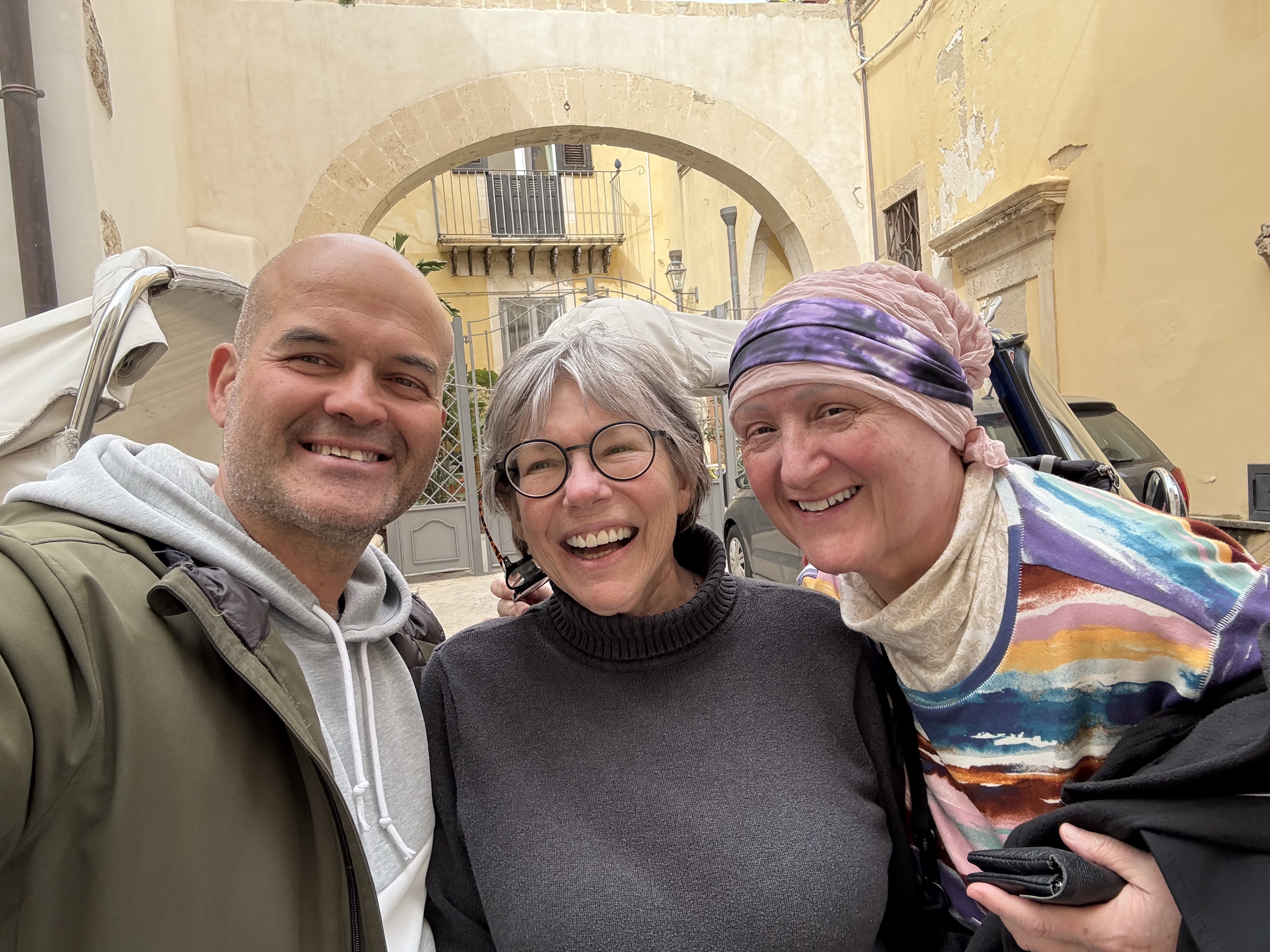
Antonio picked us up at 11:30 for a one-hour tour, which turned into a two-hour tour because he was kind and generous And there was so much to see. Again, we have met such nice people. Everyone who has crossed our path has been so willing to help, so generous with their time and patience. On the tour, which was fun in itself just being in that little vehicle, we went into Siricusa, which is the mainland, and then came back to Ortigia, which is the ancient heart of the city.
I’m going to let the photos tell the story of our day. I wish I could describe each building or alley, but while he gave us information about them all, it all ran together in my mind…in a good way. It wasn’t information overload, it was joy overload. Betsy and I had grins on our faces for the entire tour.
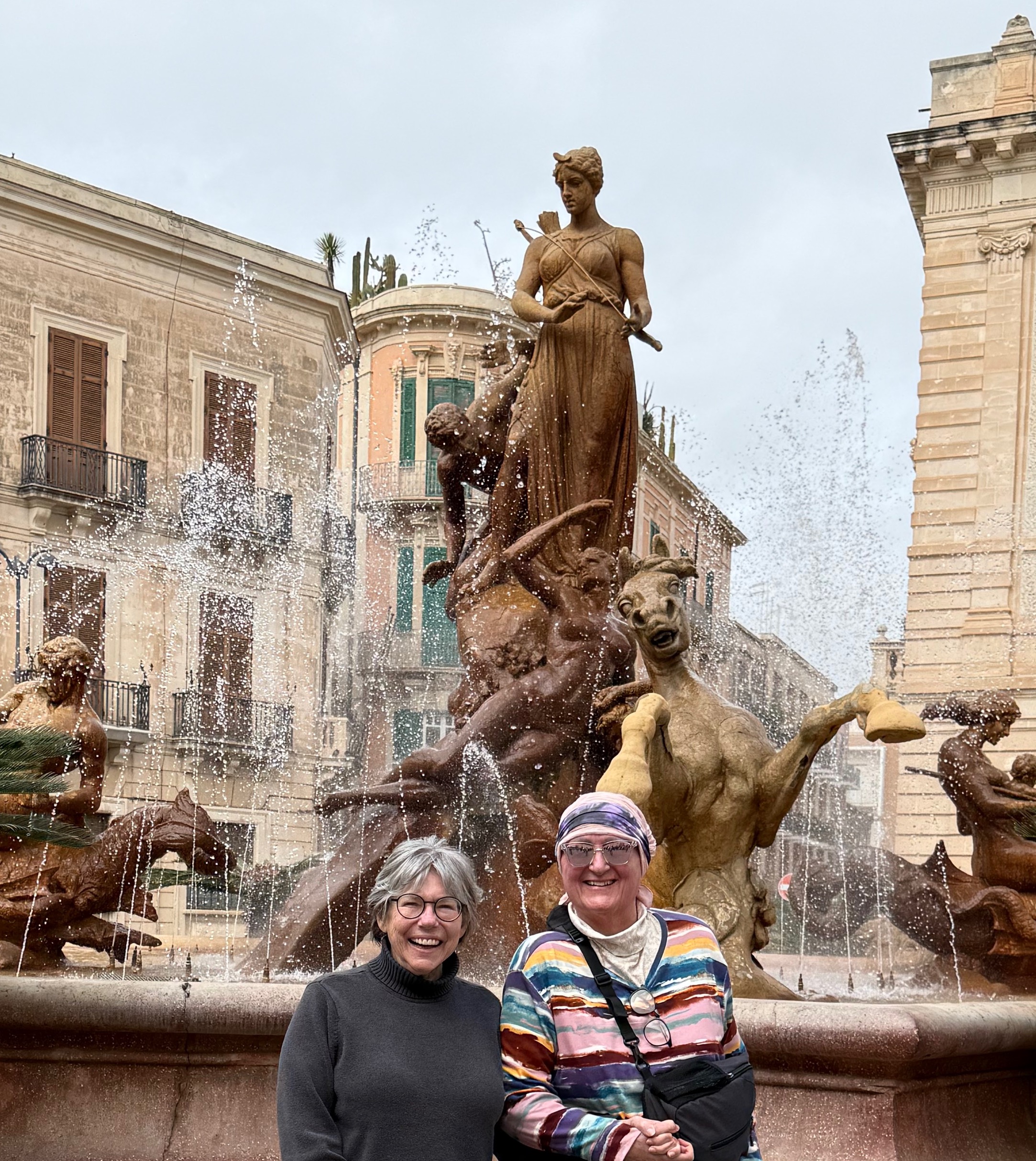
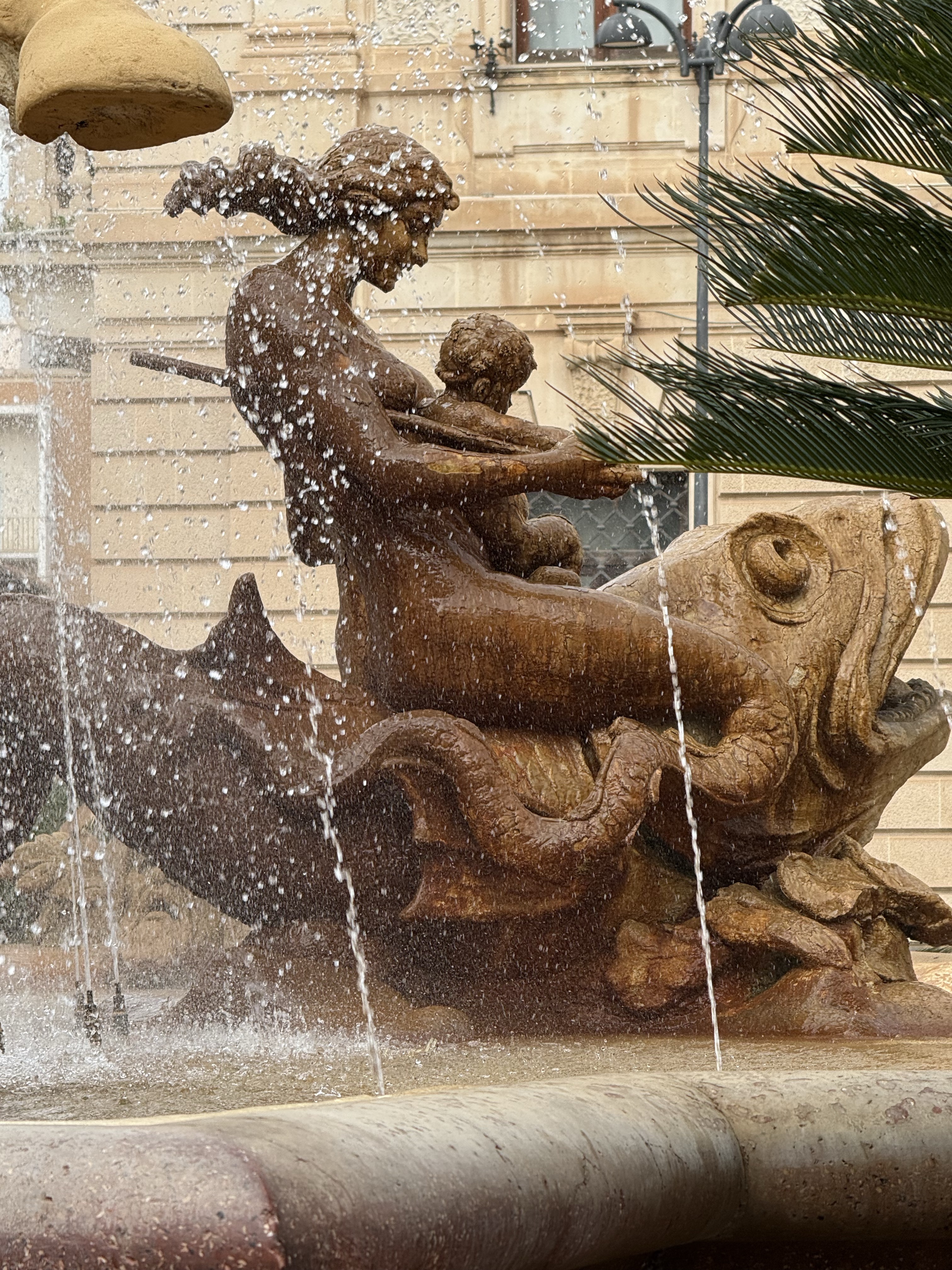
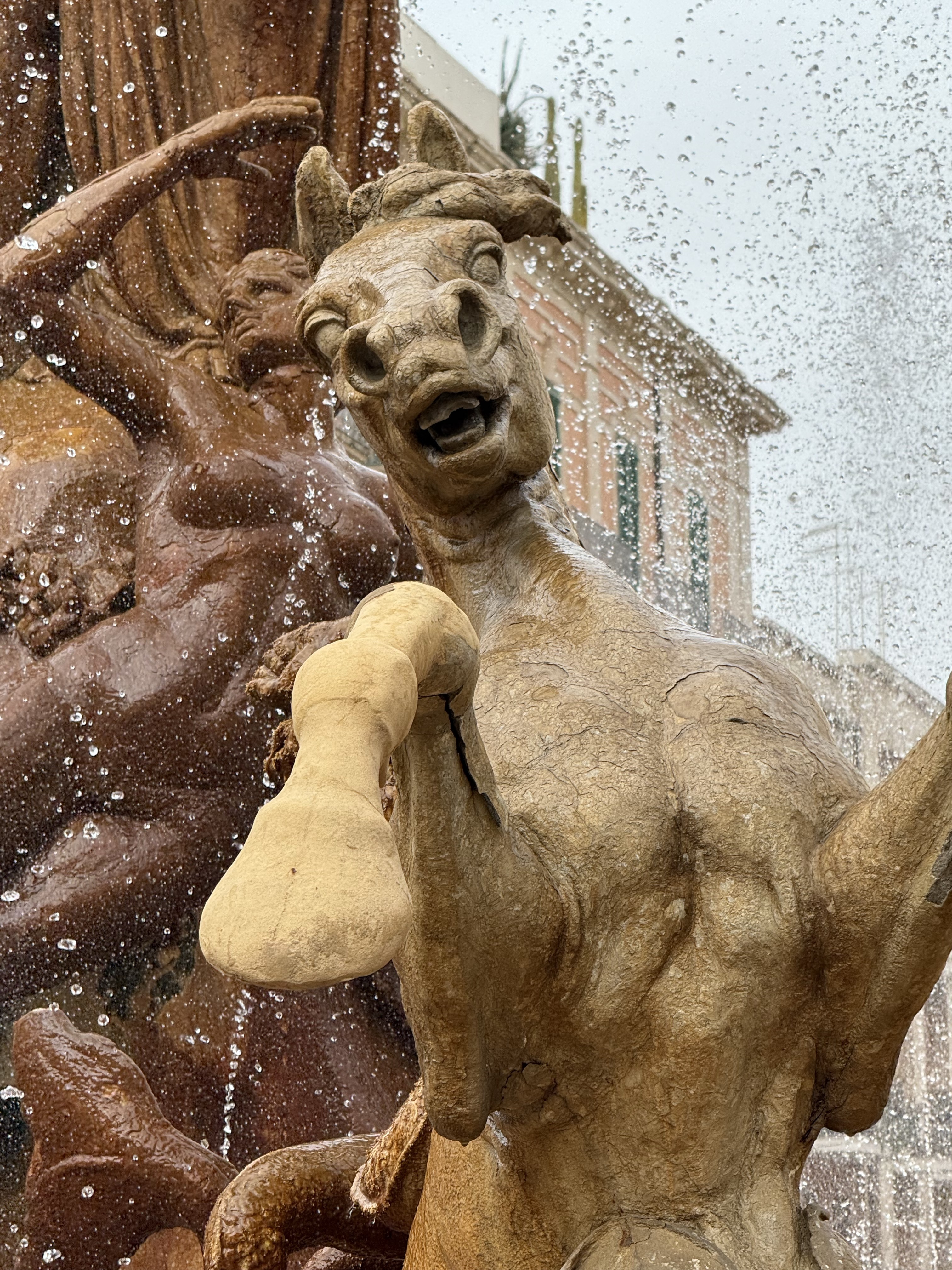
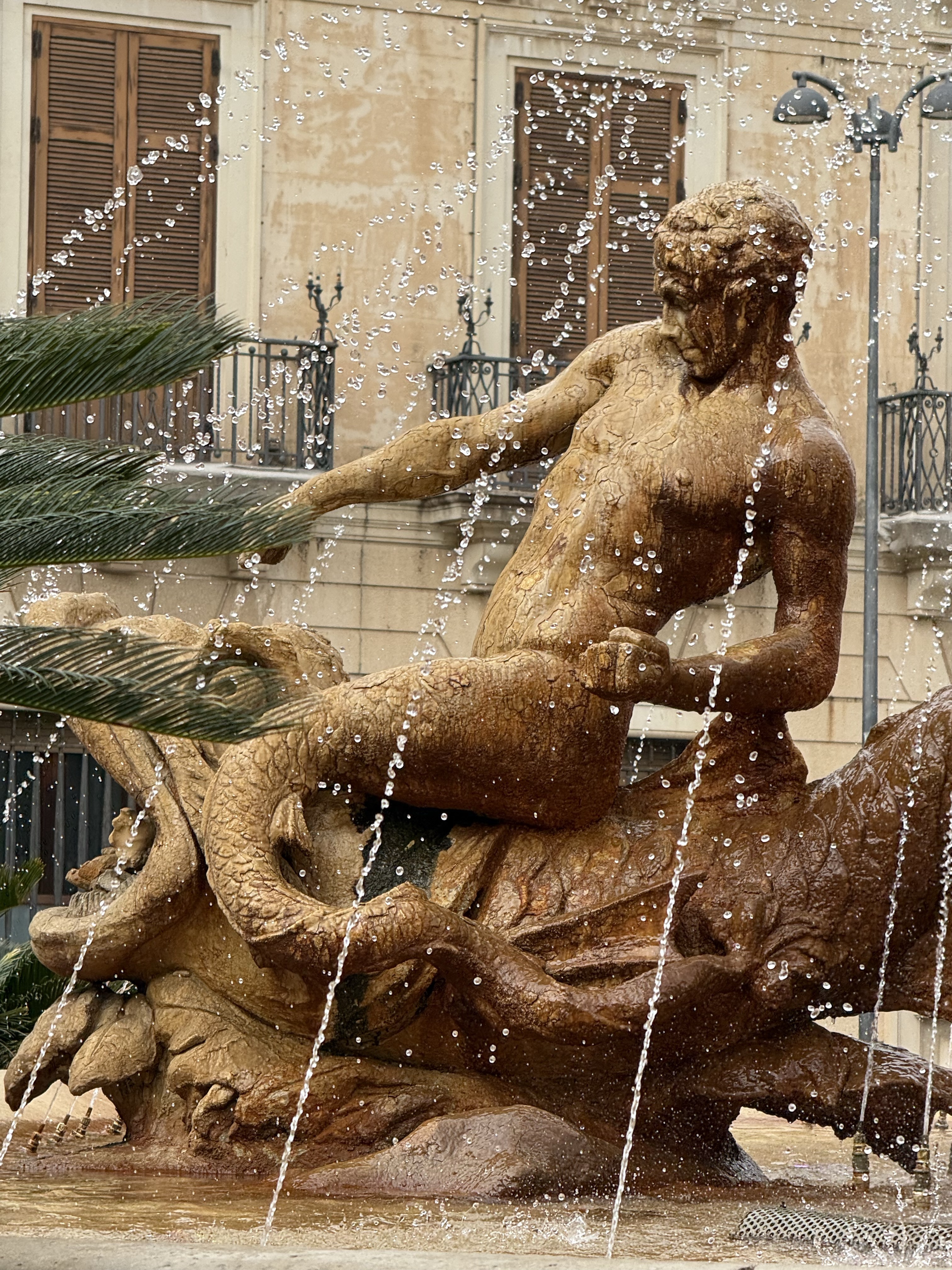
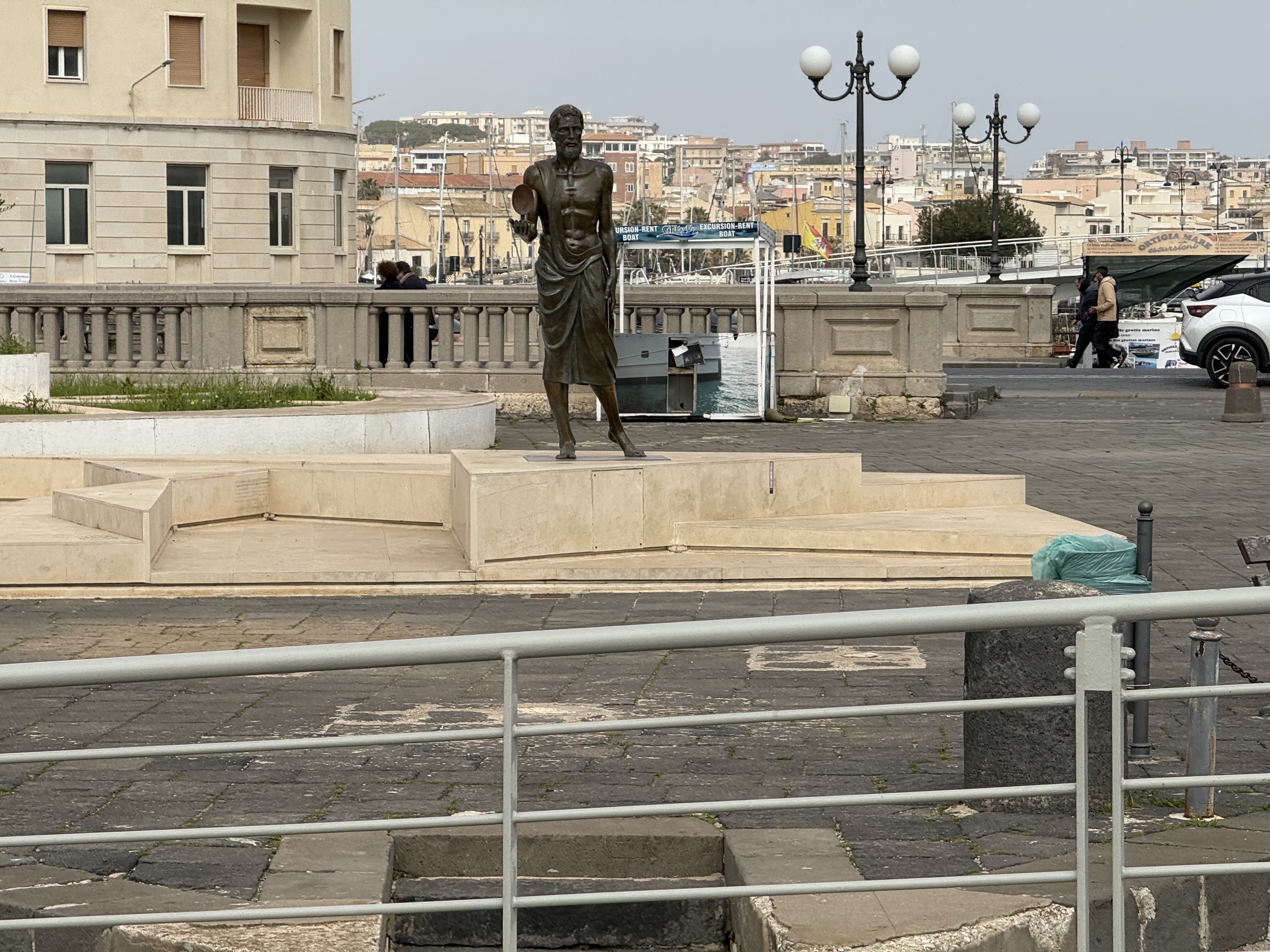
In the center of the bustling Piazza Archimede stands the Fountain of Diana, a masterpiece in stone that tells Ortigia’s most famous legend. At its center, the Goddess Diana stands guard over a frantic scene. Surrounded by charging sea horses and powerful Tritons, the fountain represents an ancient Greek drama. Sicily is the most important place outside of Greece for Greek history. For a while Syracusa/Ortigia eclipsed Athens as the leading city-state of civilization.
In Siracusa, we visited the Neapolis Archaeological Park, the Sanctuary of the Madonna of Tears and the Basilica of Saint Lucia of
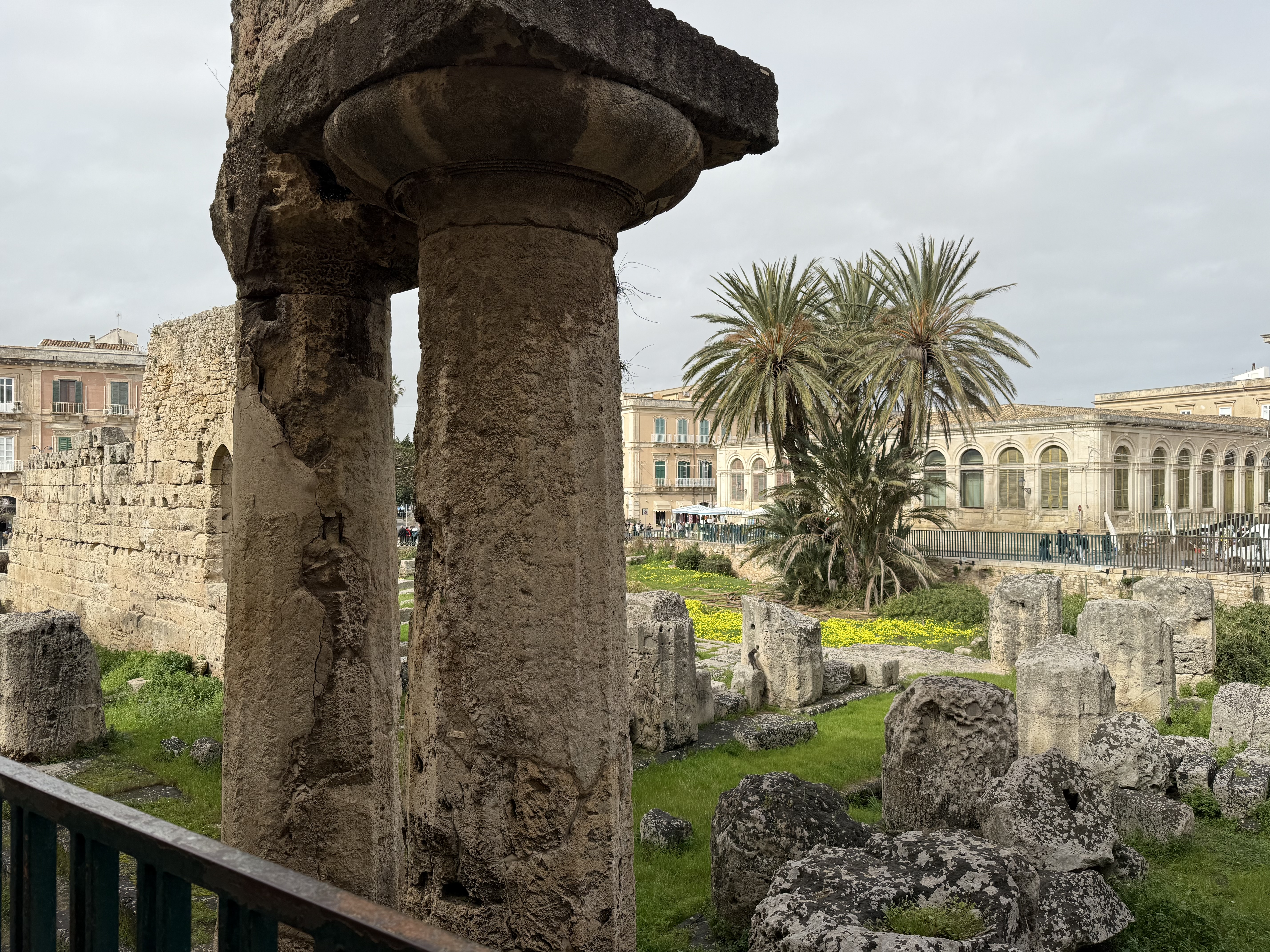
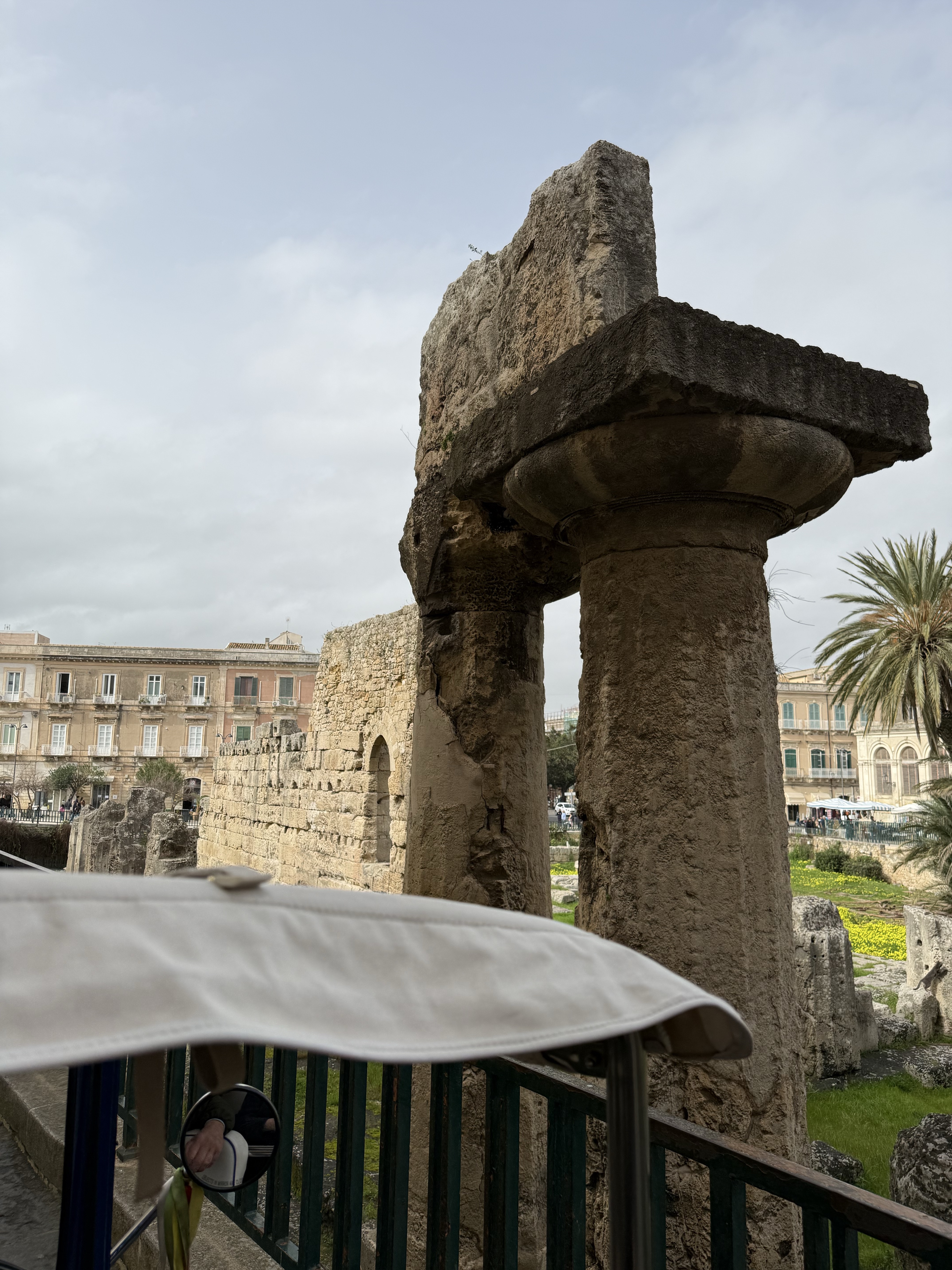
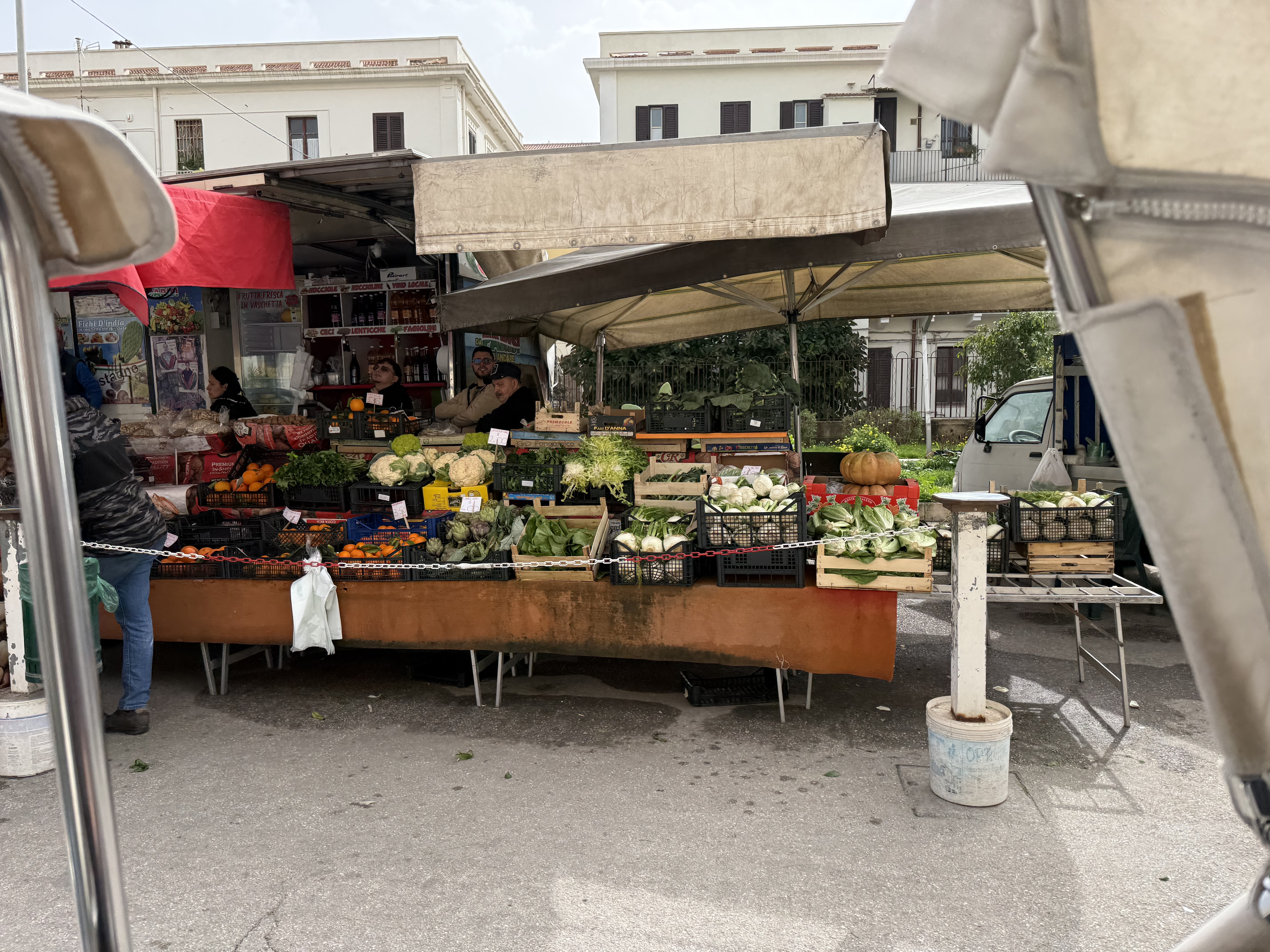
The Temple of Apollo is the oldest Doric stone temple in Sicily, dating back to the early 6th century BC. Over the centuries, when it stood intact, the building lived many lives: a Byzantine church, an Islamic mosque under Arab rule, and a Norman church before being used as Spanish military barracks. Because of these layers of history, you can still see the massive, closely-spaced columns that give it a heavy, powerful appearance compared to later Greek temples. It was rediscovered and excavated in the 1930s, and today the ruins sit in a sunken garden in Piazza Pancali, surrounded by the modern buzz of the local market and cafes.
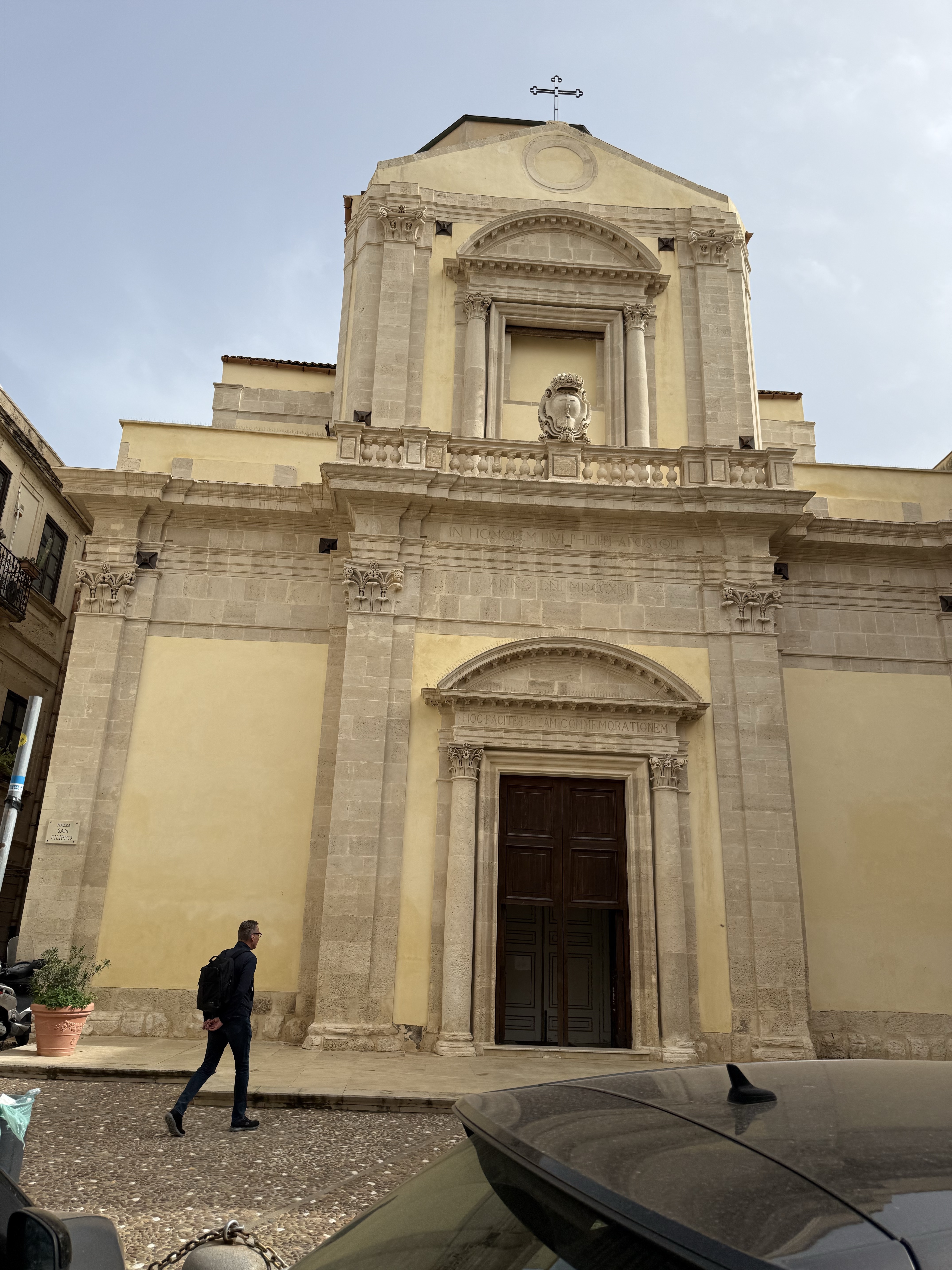
A much too common sad Jewish history is also evident in this region. The Church of San Filippo Apostolo was constructed directly over the ancient Jewish quarter, or Giudecca, of Syracusa. Below its foundations lies one of the most significant remnants of this era: a rare, stone-carved mikvah, or ritual bath, which remained hidden for centuries. The Jewish presence here was once one of the largest and most vibrant in Sicily, flourishing for over a millennium until the Alhambra Decree of 1492. Issued by the Spanish monarchs Ferdinand and Isabella, this edict forced the Jewish population to choose between conversion to Christianity or immediate expulsion. This mass exodus effectively ended centuries of cultural and economic contribution, leaving behind only “ghost” structures like those found beneath the church to tell the story of a once-thriving community.
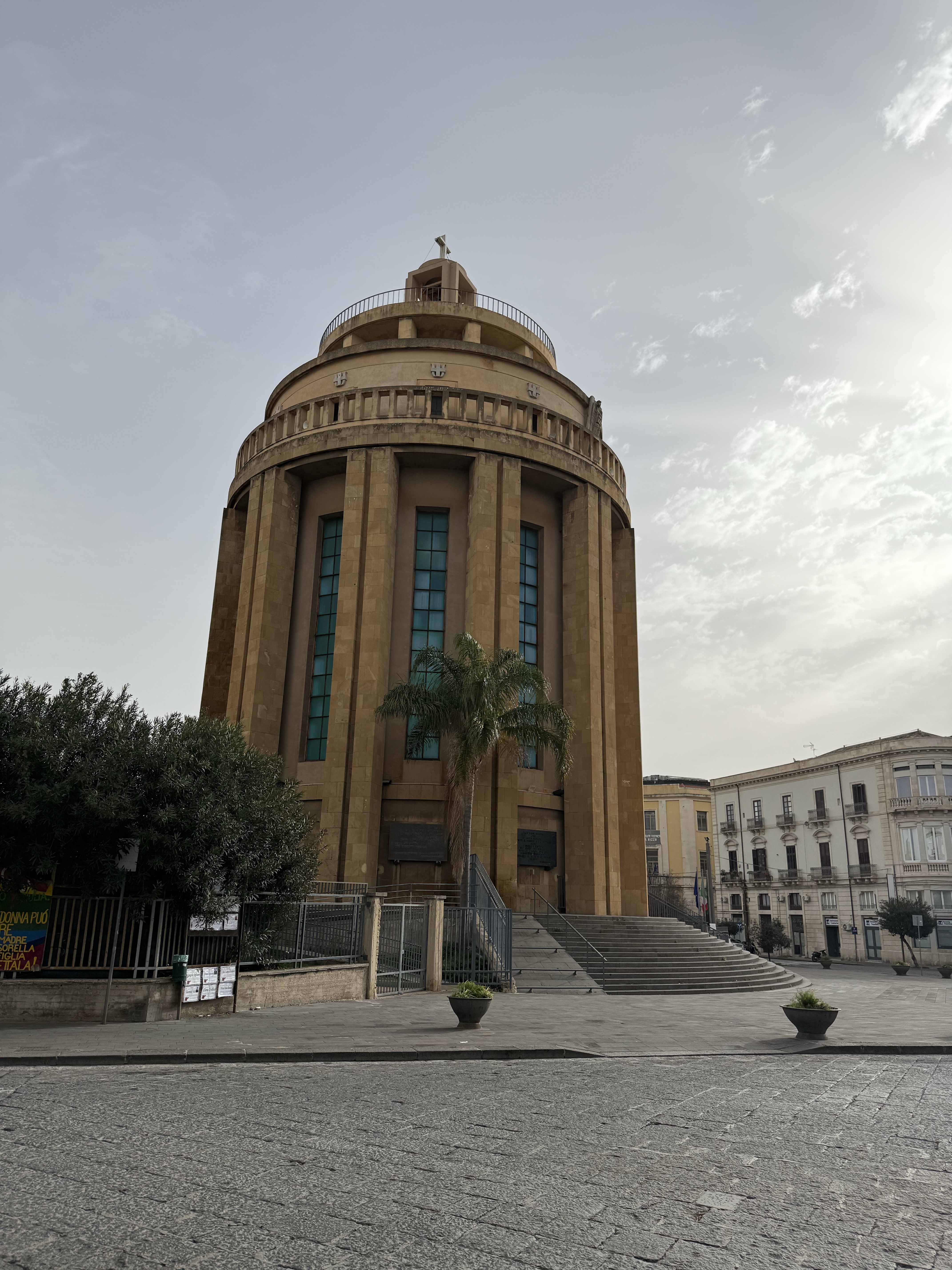
The massive, circular stone tower of San Tommaso al Pantheon is on the edge of the historic district. It is a product of the early 20th century, built during the rise of the Fascist regime and Mussolini as a memorial to the fallen of World War I. Its design is intentionally heavy and imposing—a style known as Rationalism that favored rigid symmetry and colossal scale to emphasize the might of the State over the individual. There are other similar buildings here, but time moves on and democracy won against the Fascists. So buildings designed to minimize the importance individual freedom and maximize state control are now luxury hotels and banks.
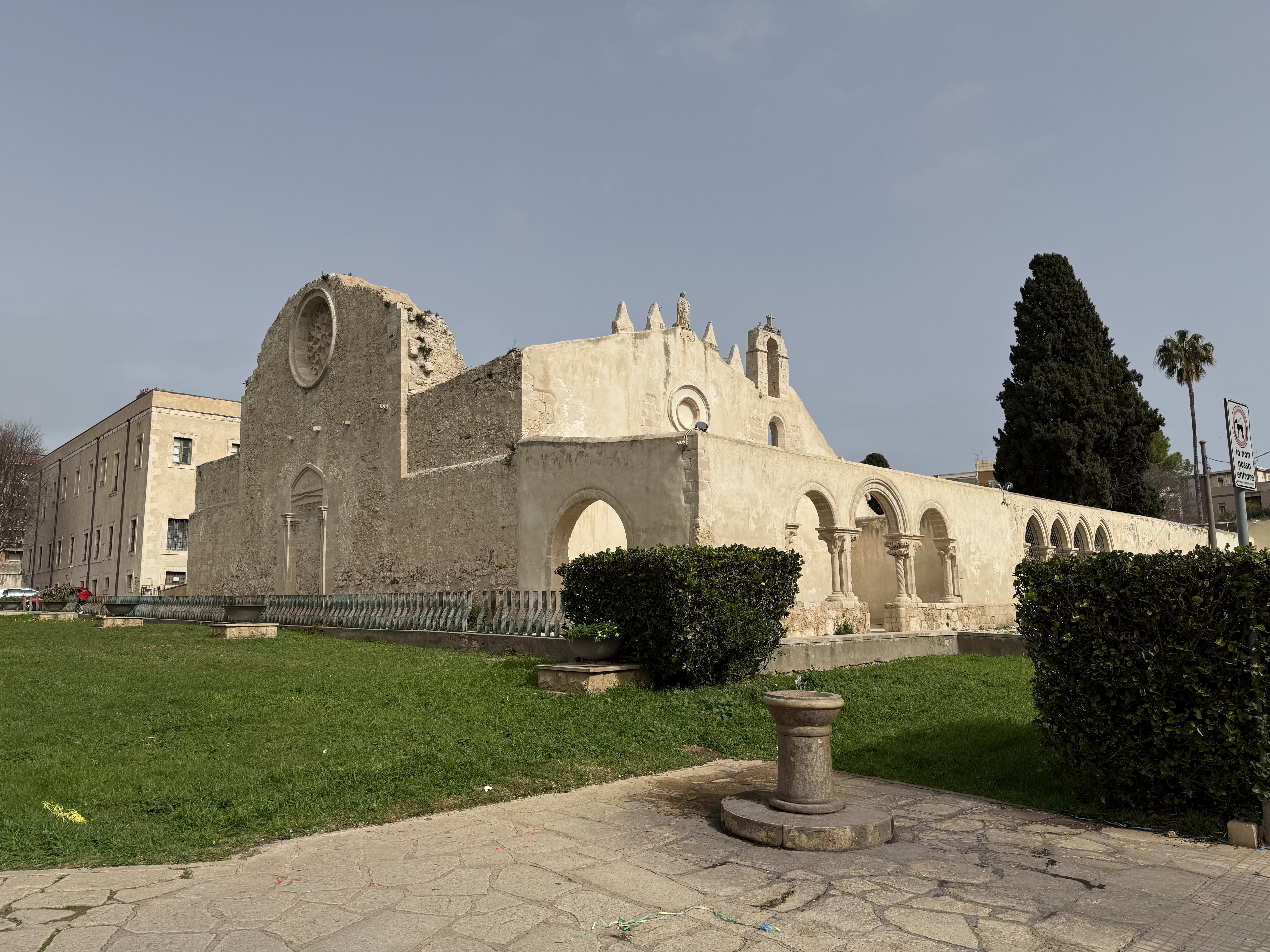
The ruins of San Giovanni alle Catacombe still has its 14th-century rose window and Gothic arches. It was originally built over the crypt of Saint Marciano, the first bishop of Syracuse, and today it serves as the gateway to a vast, labyrinthine network of early Christian catacombs carved into the limestone below.
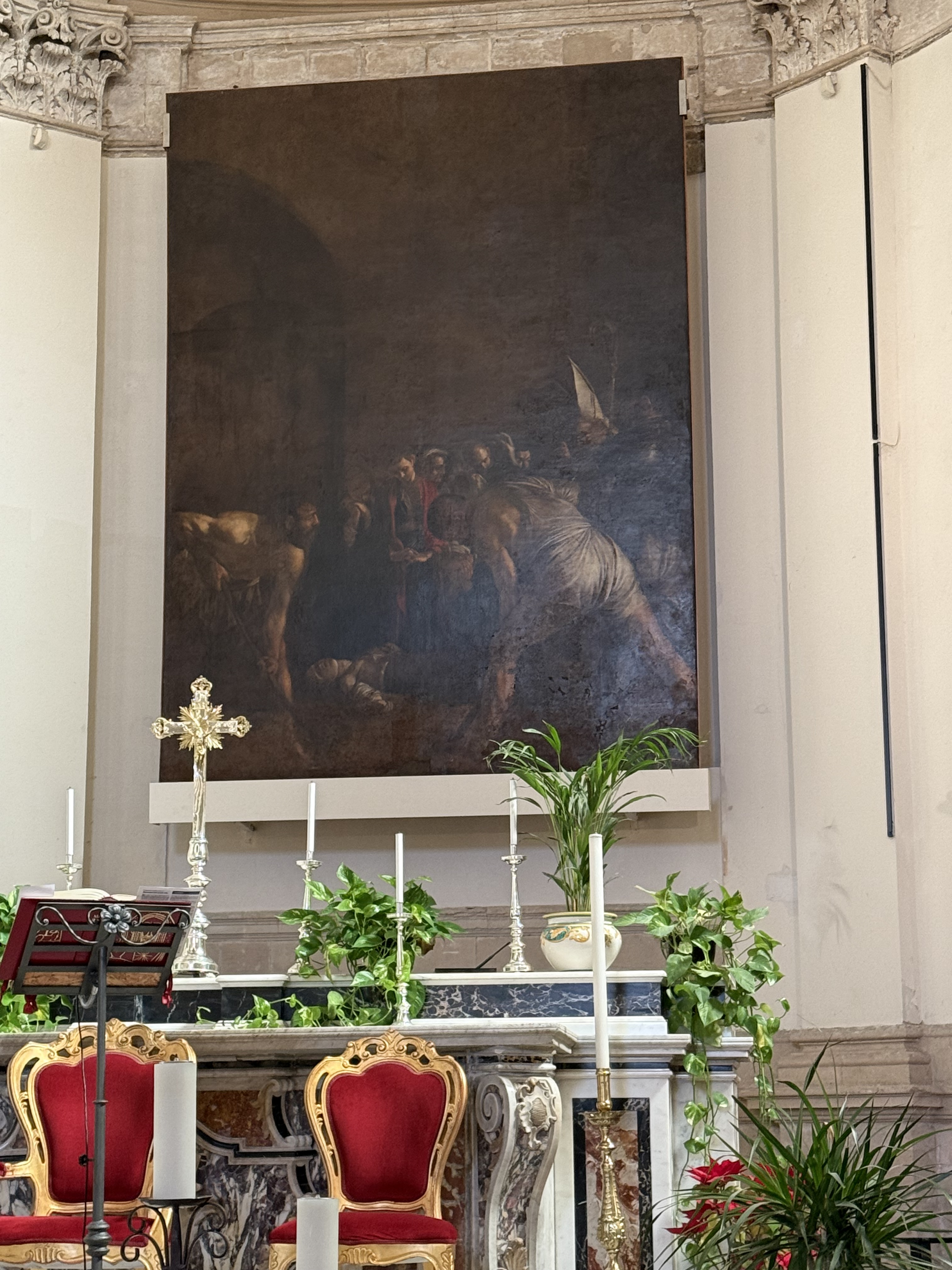
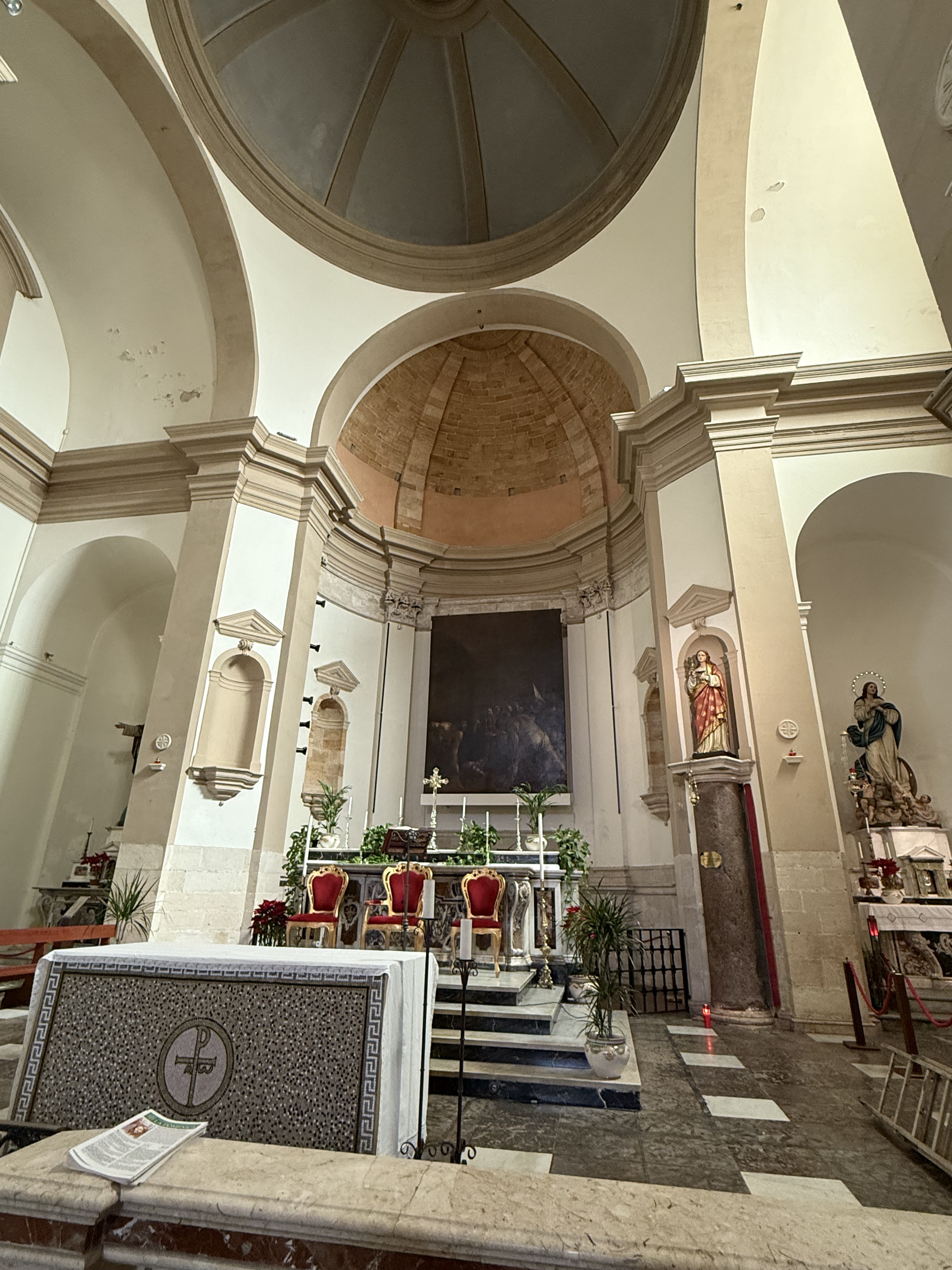
The Church of Santa Lucia alla Badia features Caravaggio’s 1608 masterpiece, “The Burial of Saint Lucy.” The canvas is old and not easy to see the details.
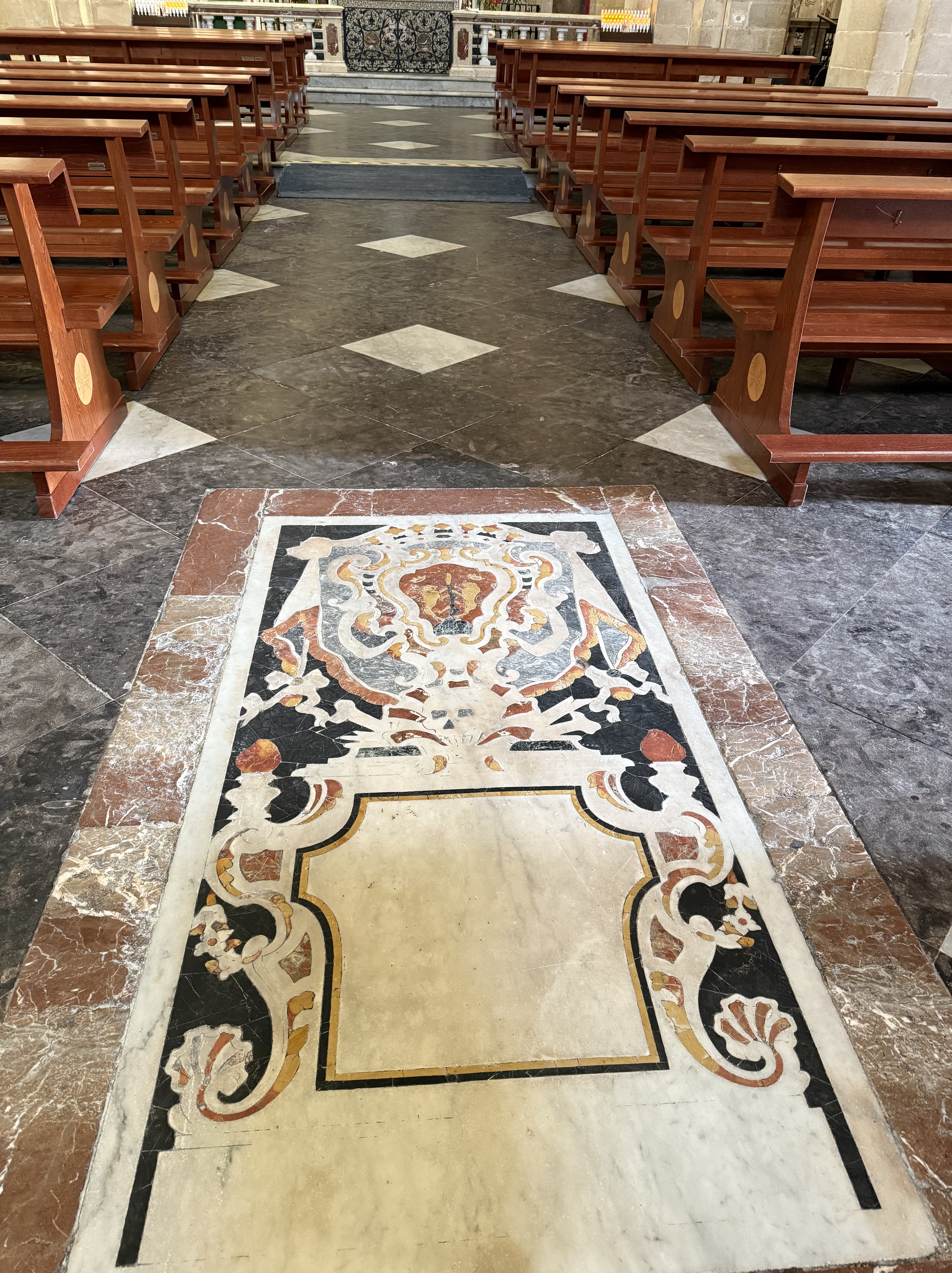
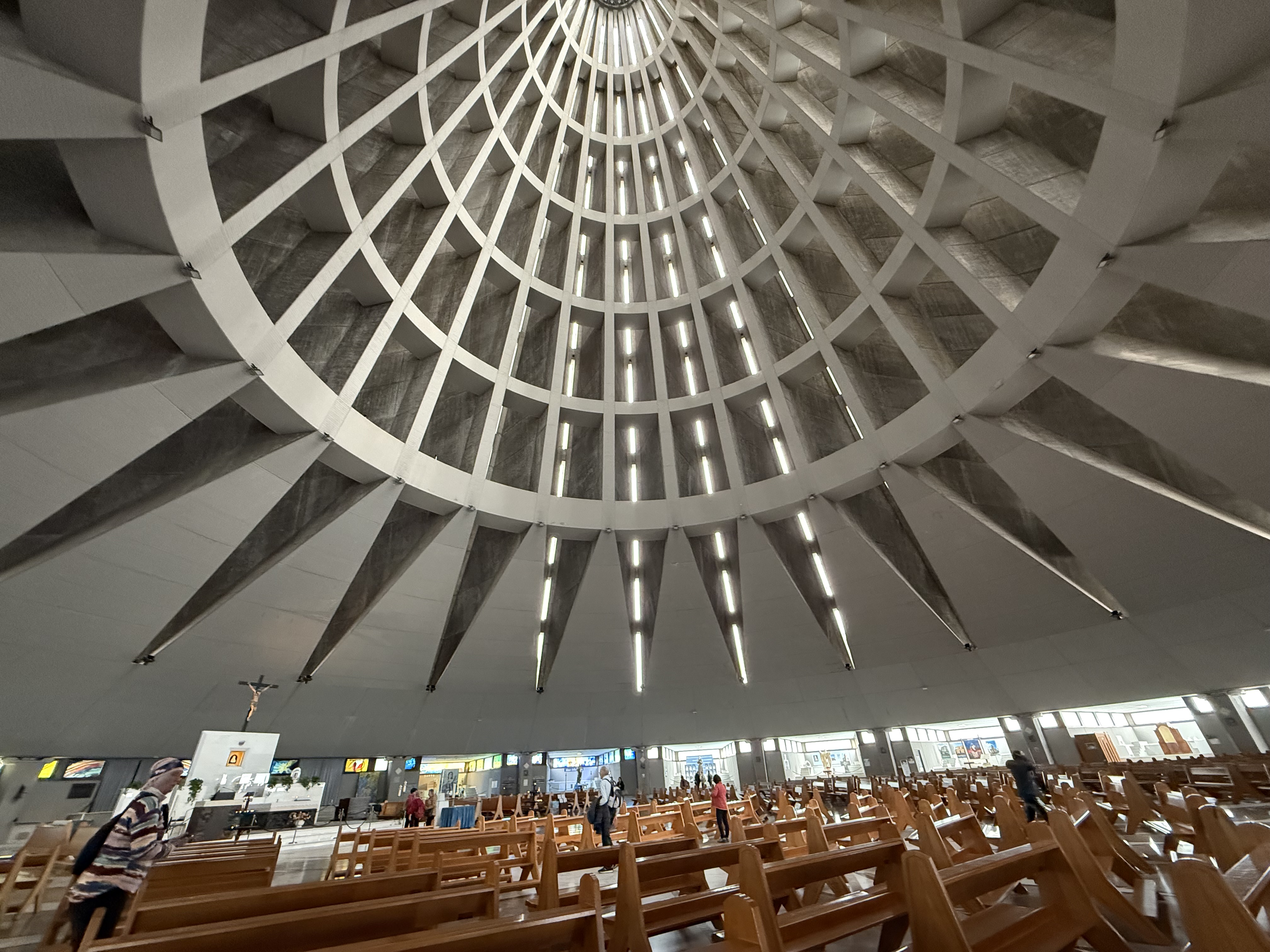
Soaring up the sky, there’s a modern church that seems so out place, but it is definitely dramatic.
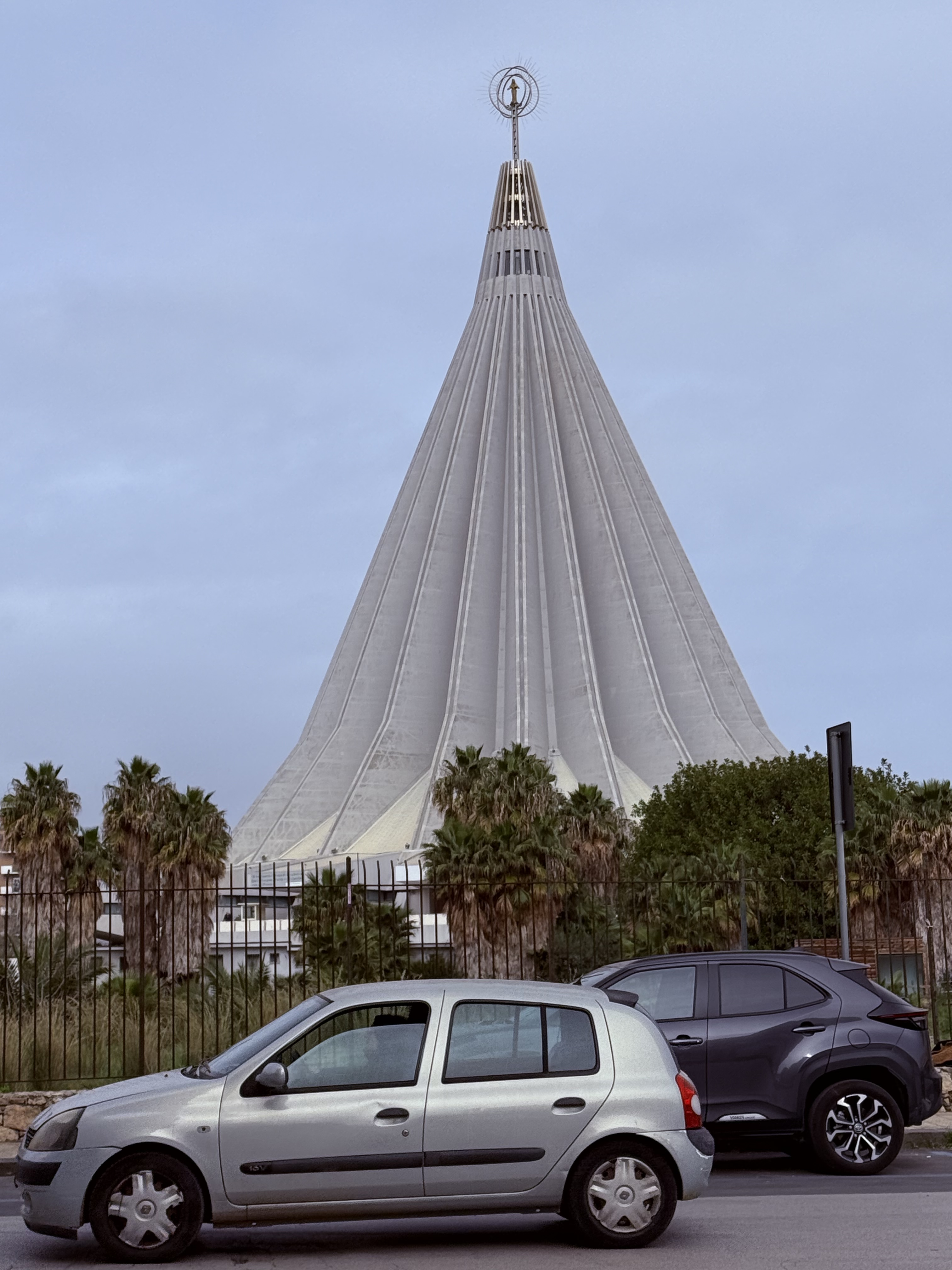
The Sanctuary of Our Lady of Tears was completed in 1994 to commemorate a 1953 miracle in which a small plaster effigy of the Virgin Mary reportedly wept. Its polarizing architecture features a soaring, conical reinforced concrete spire that reaches a height of 103 meters. Inside, the vast, circular sanctuary can accommodate thousands of visitors. We found it a bit cold and uninviting. But, to each his/her own.
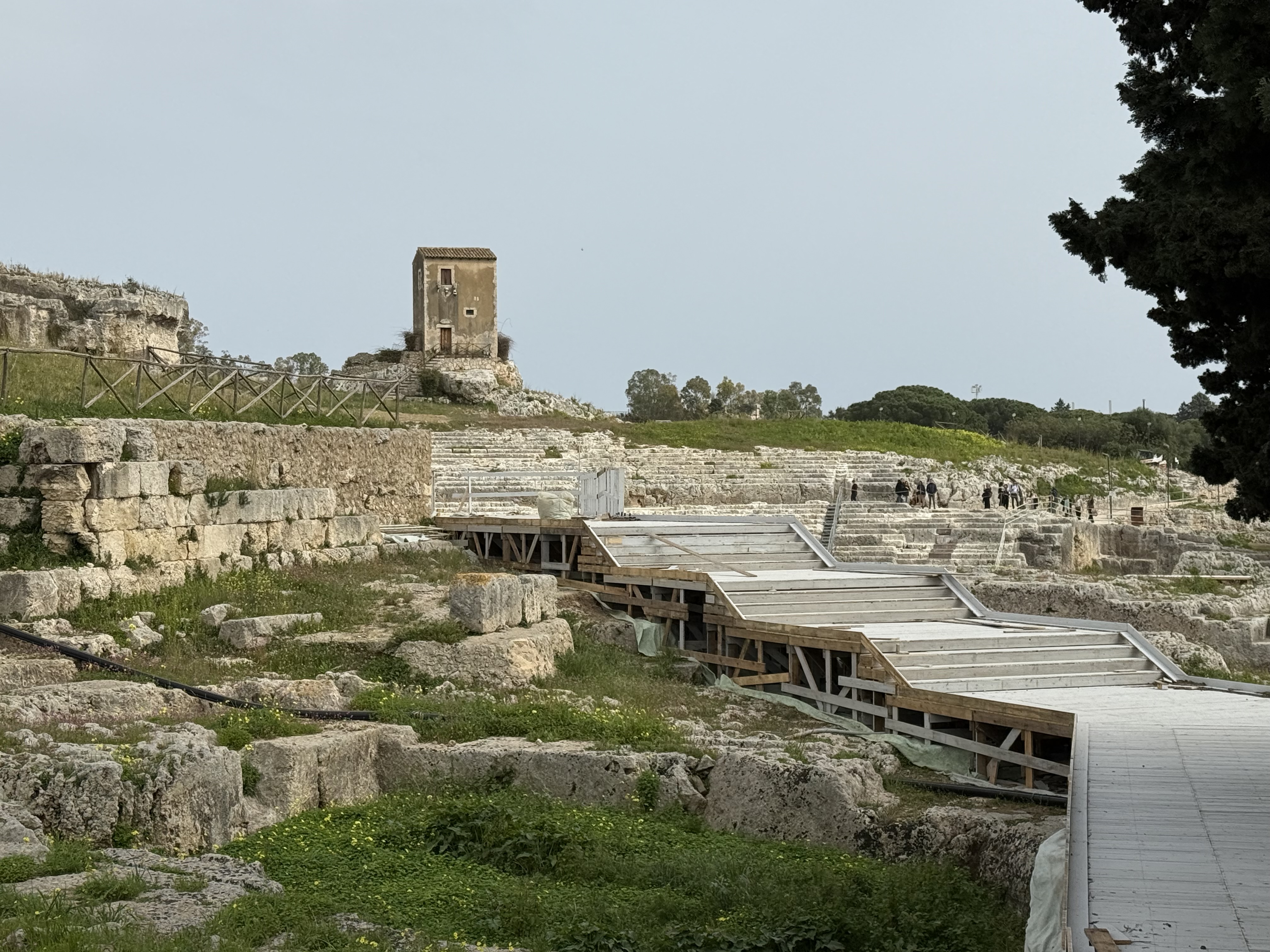
The Neapolis Archaeological Park includes the Greek Theater (Teatro Greco), one of the largest and most significant theaters of the ancient world. Carved directly into the limestone of the Temenite Hill in the 5th century BC, it once seated up to 15,000 spectators for the premieres of tragedies by masters like Aeschylus. The small building perched at the top of the seating area is the Casetta dei Mugnai (the Miller’s House); it is a 16th-century relic from a time when the ancient theater was repurposed as a site for water mills, using the flow from the ancient Galermi Aqueduct to grind grain.

This magnolia tree was enormous and magnificent, but it was difficult to capture a photo through the fence. It is located within a limestone quarry in the archaeological park. This area, once a prison for Athenian soldiers in 413 BC, is now a lush, sunken garden filled with citrus, palms, and centuries-old trees. Betsy said it would be a child’s dream to climb.
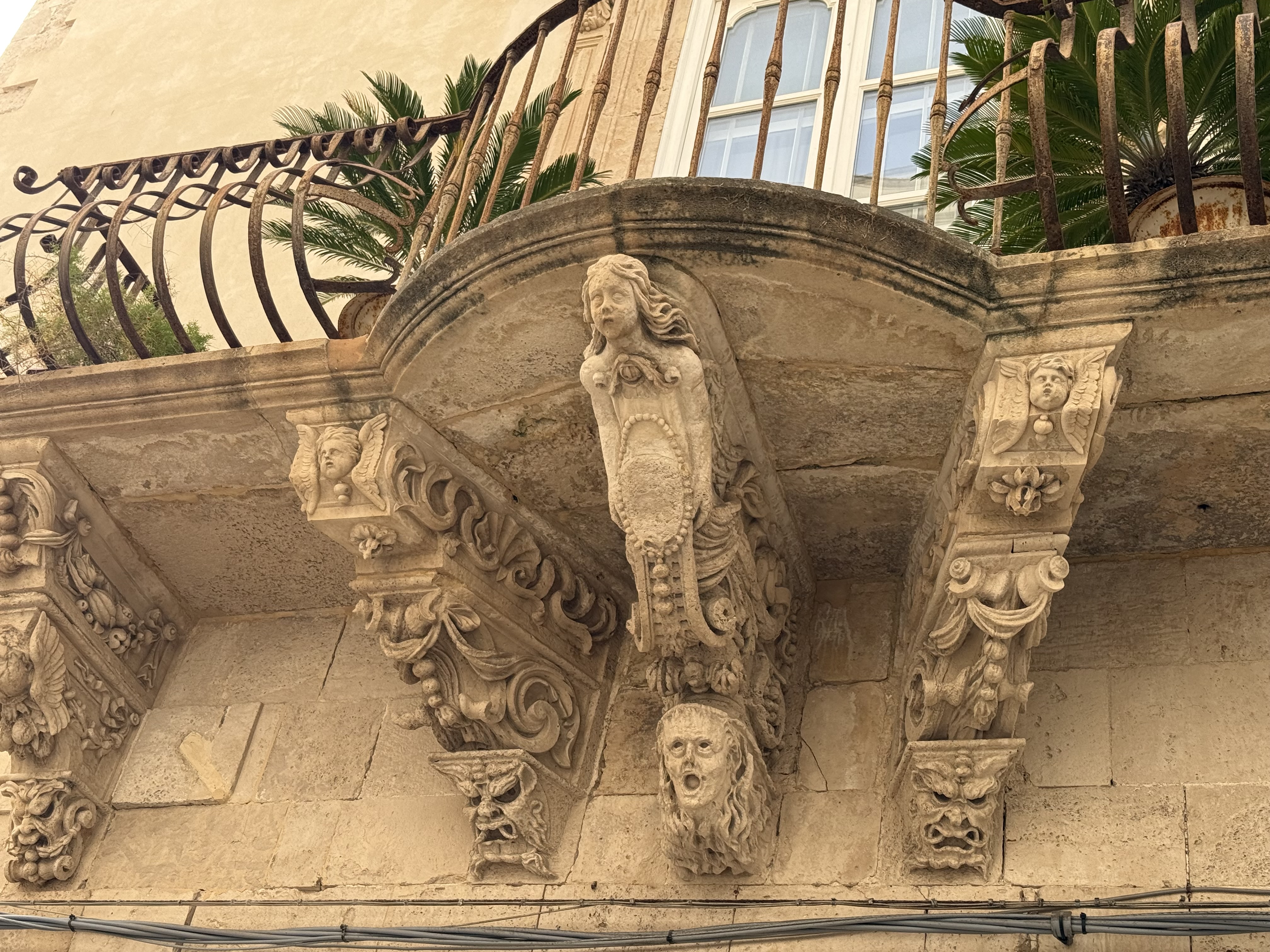
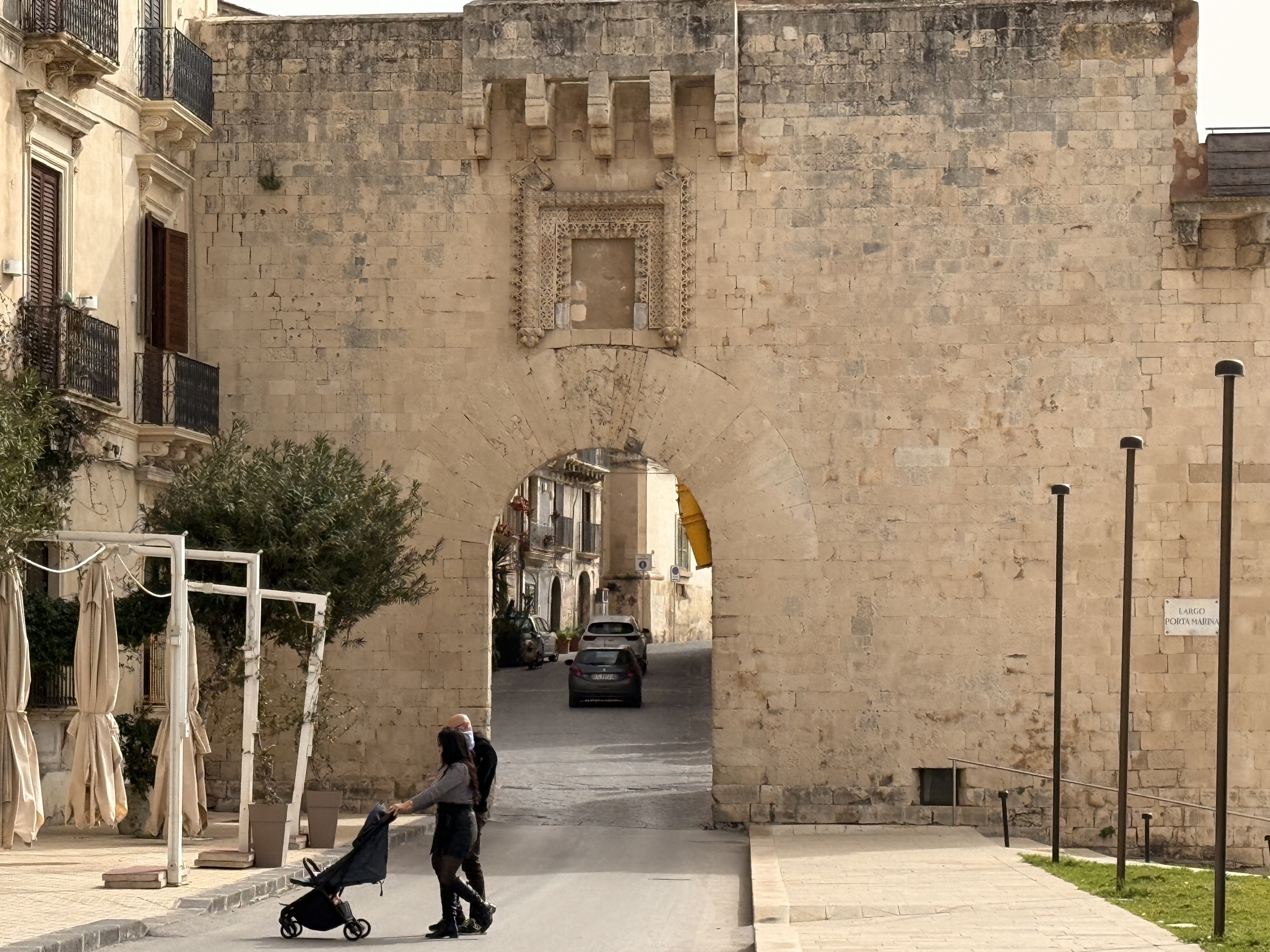
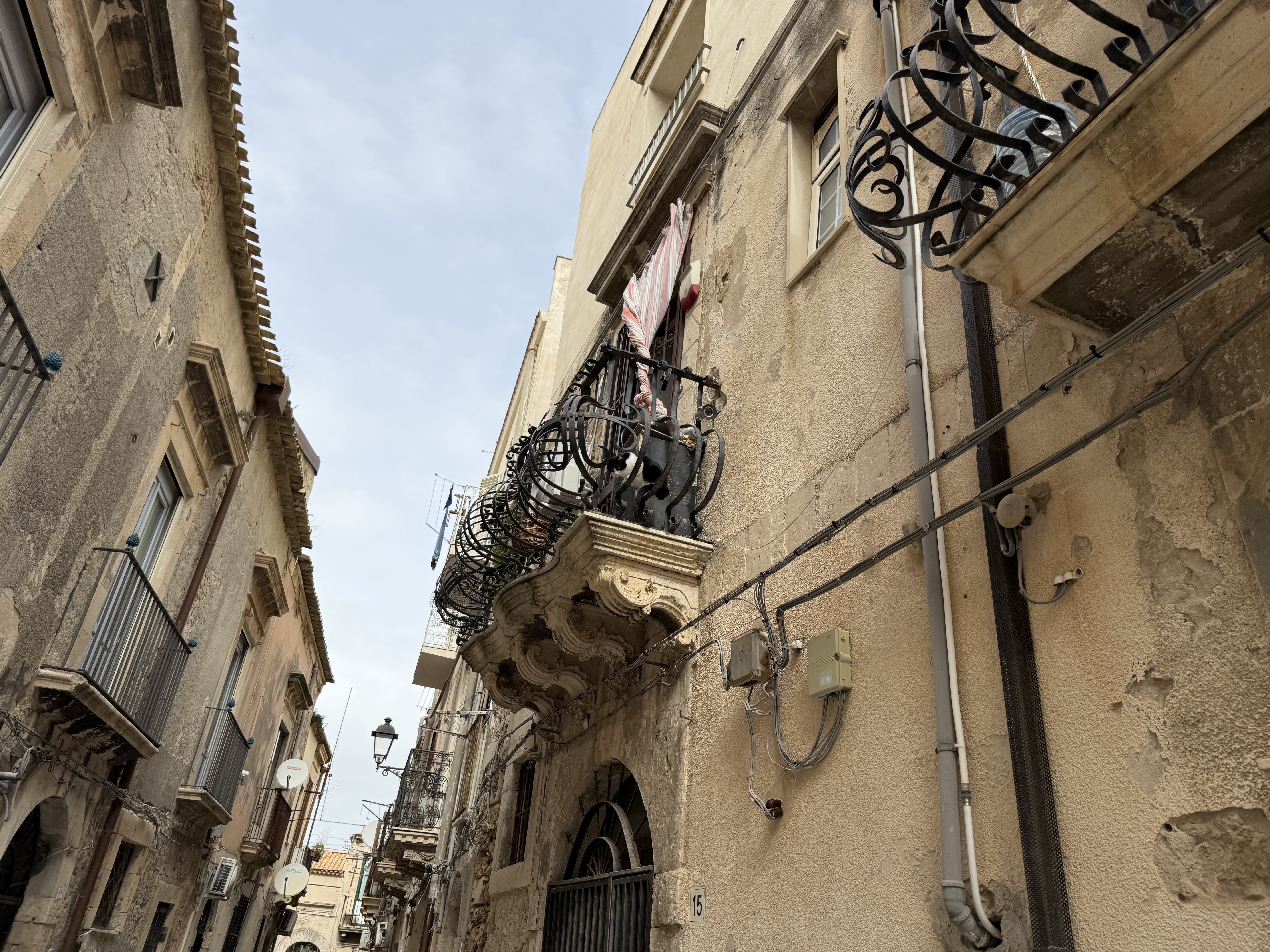
We took a lot of photos of the alleys. They are just so incredibly charming.
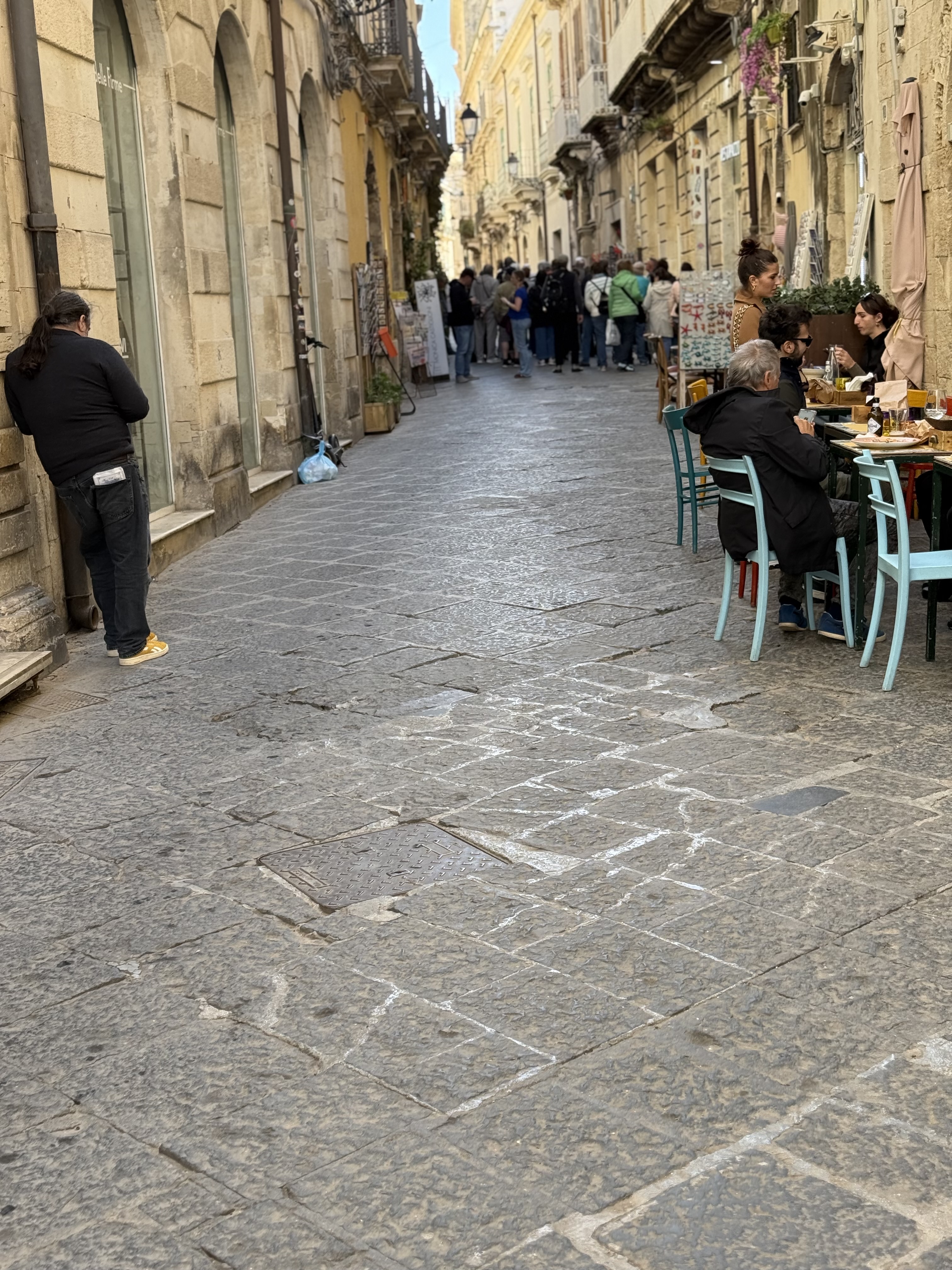
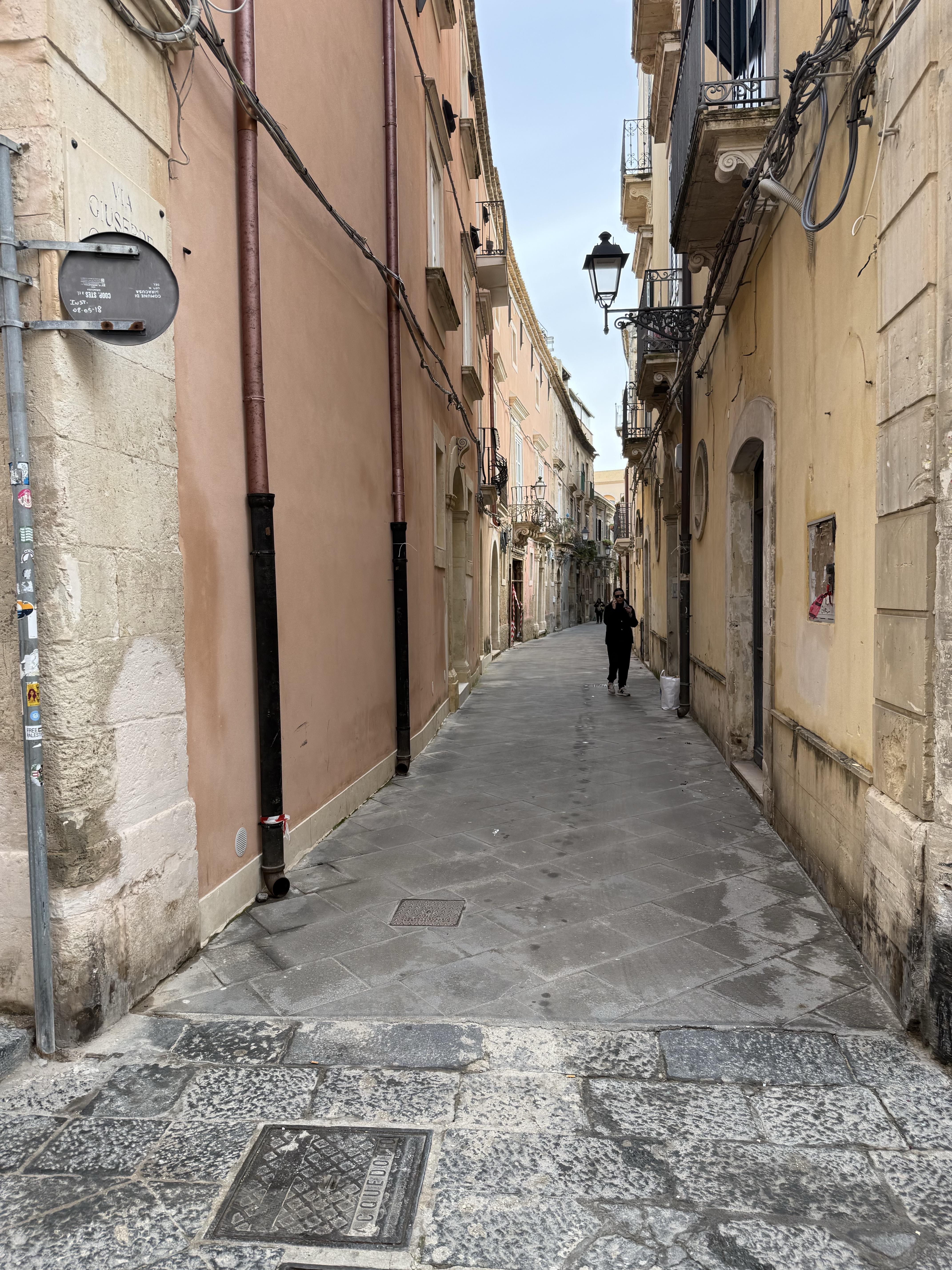
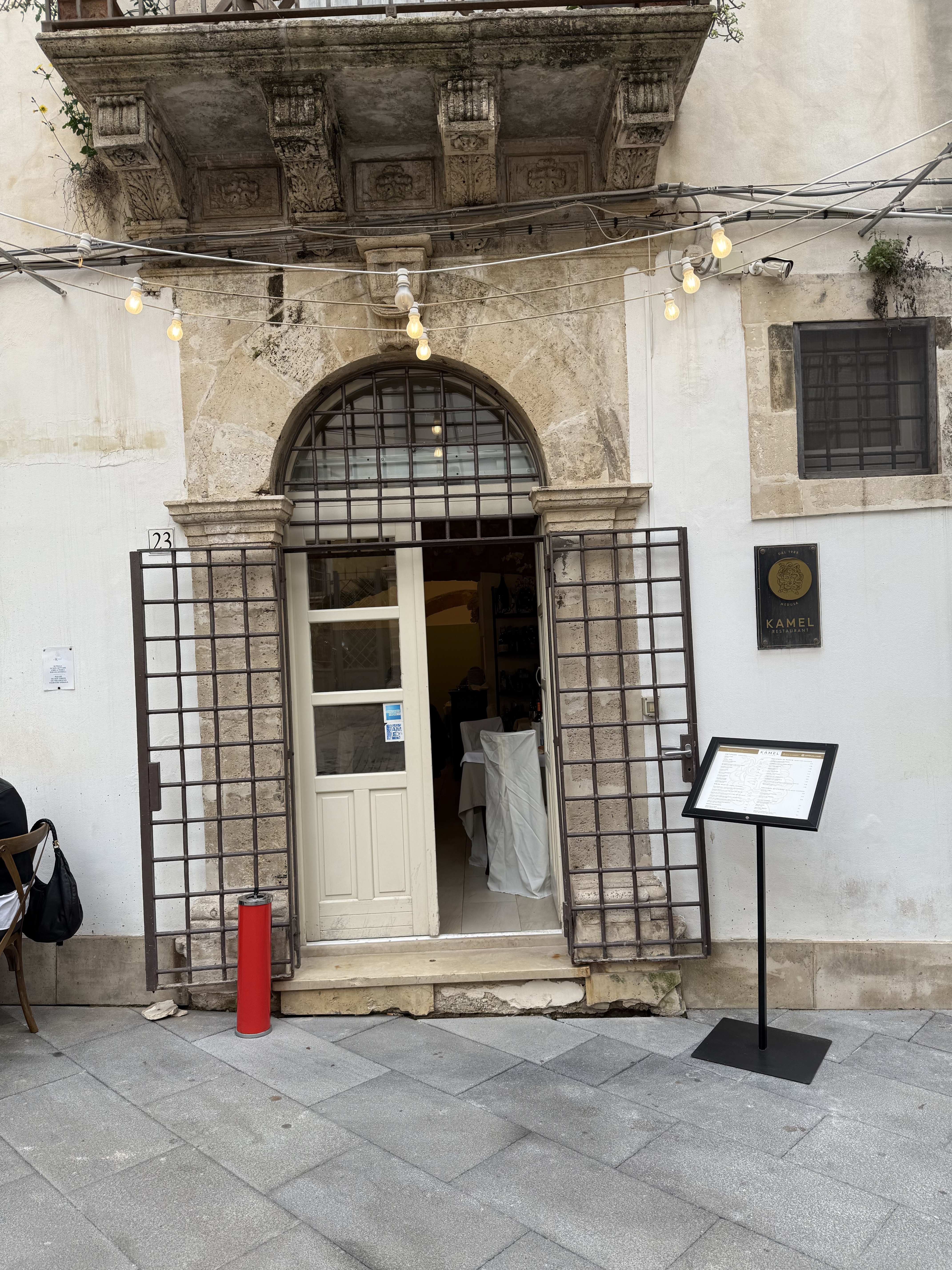
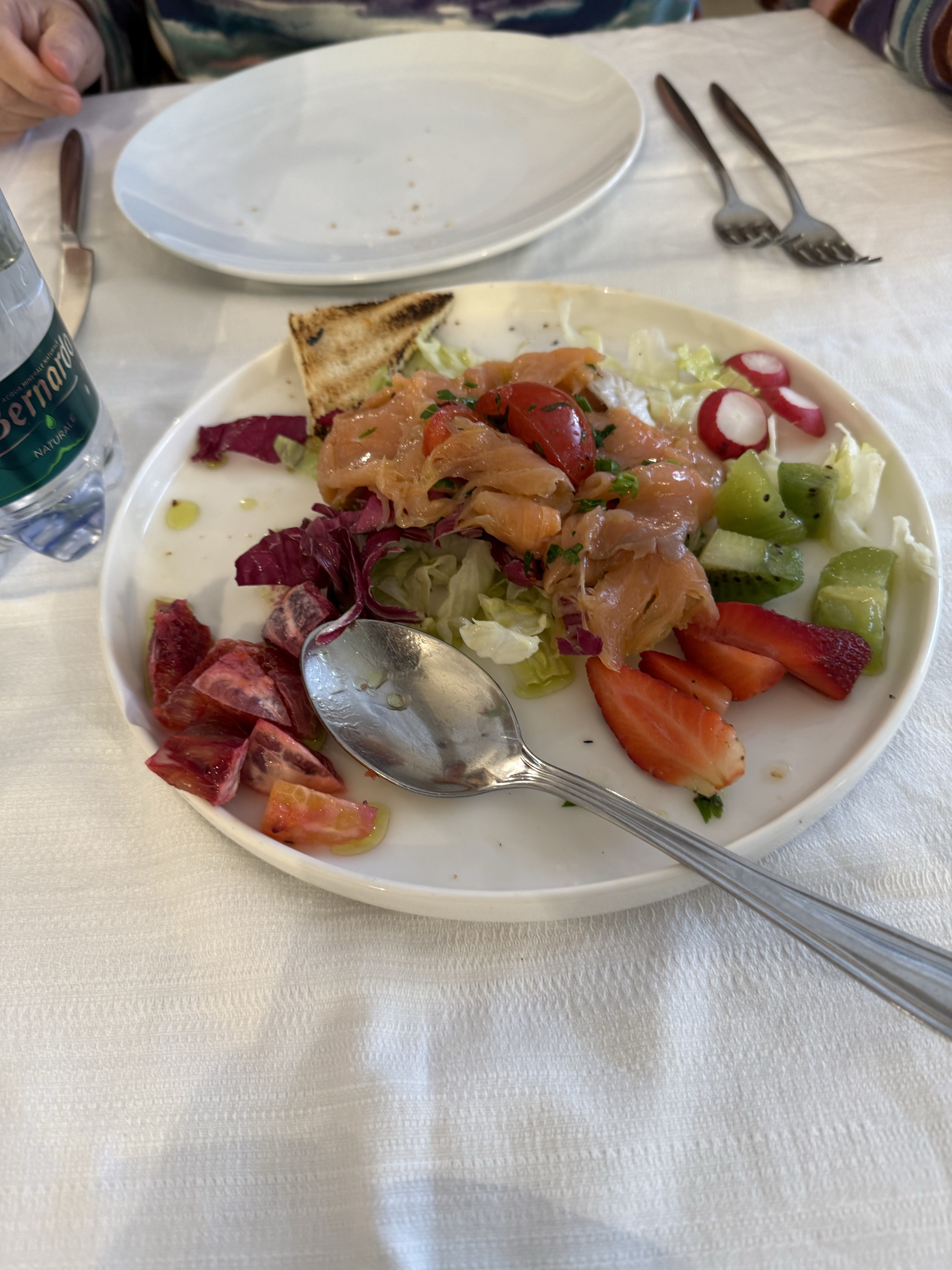
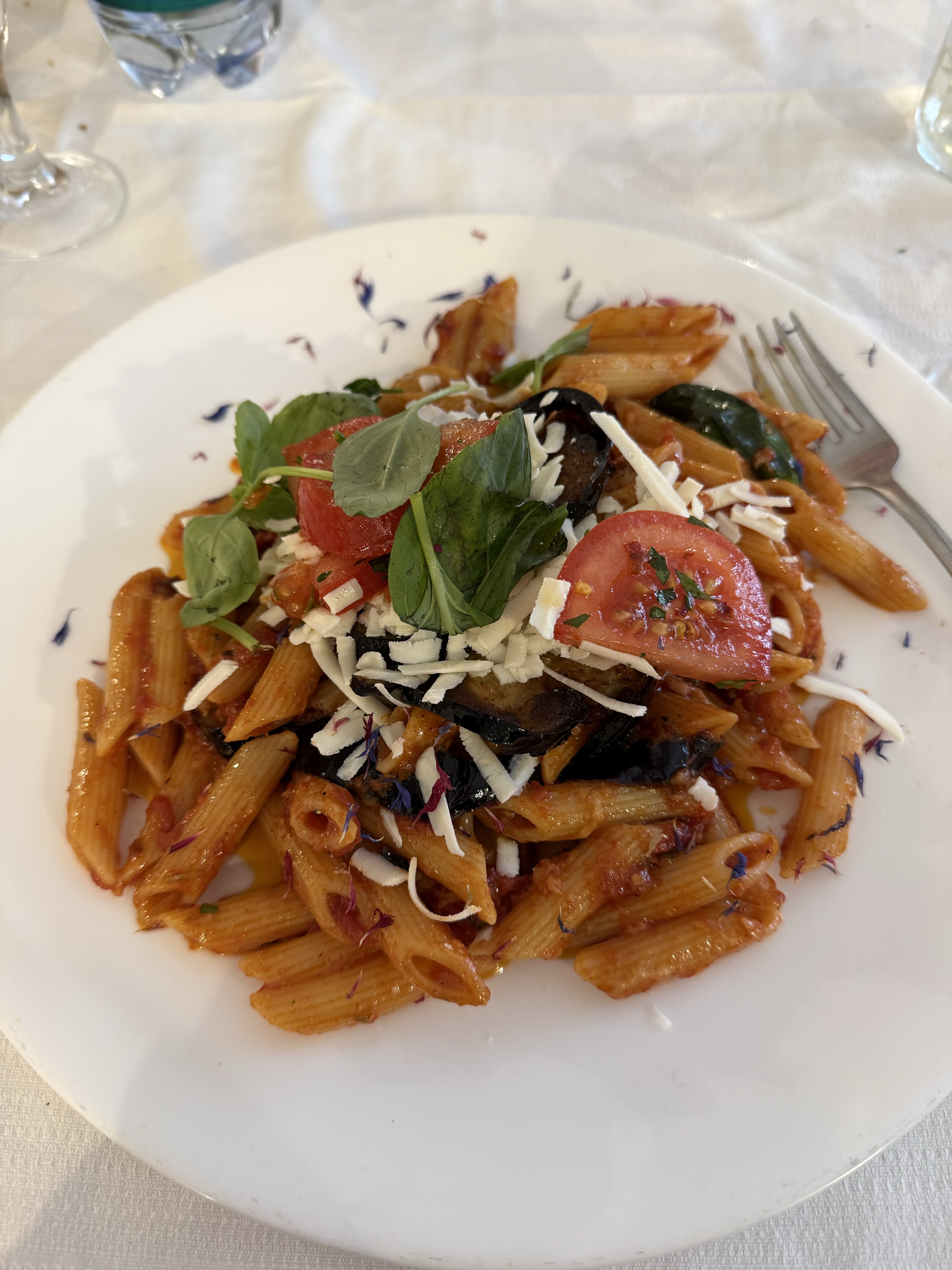
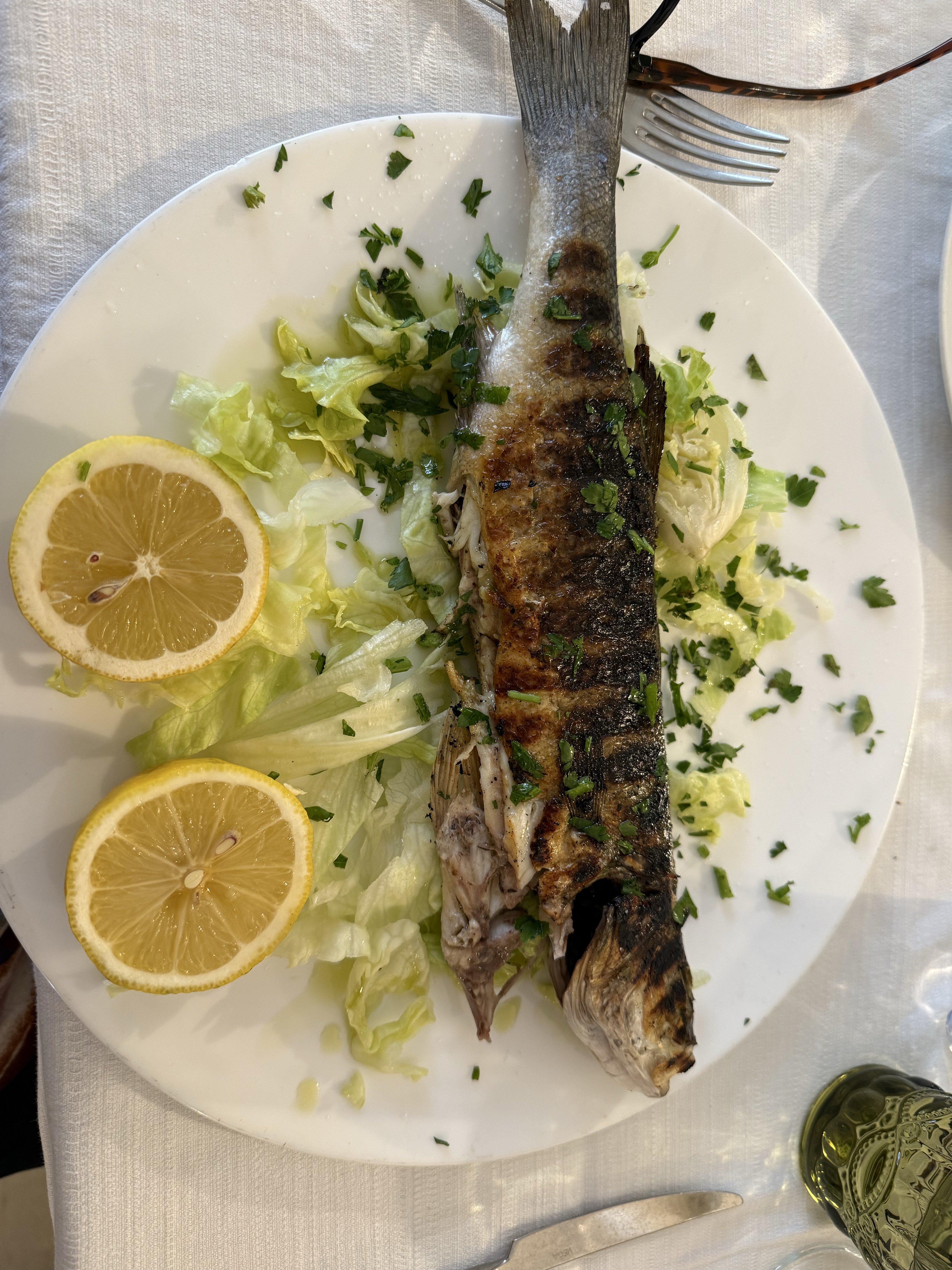
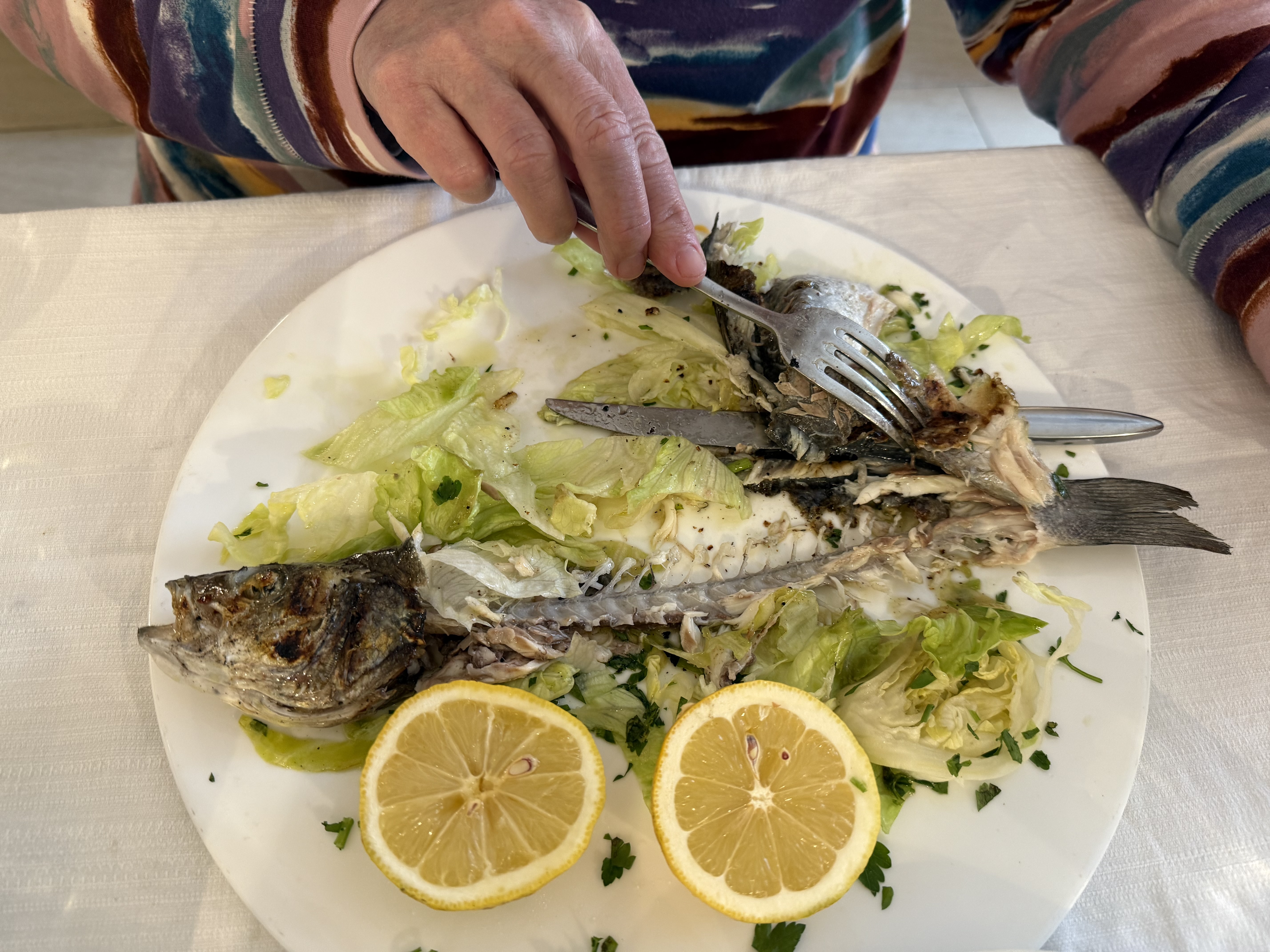
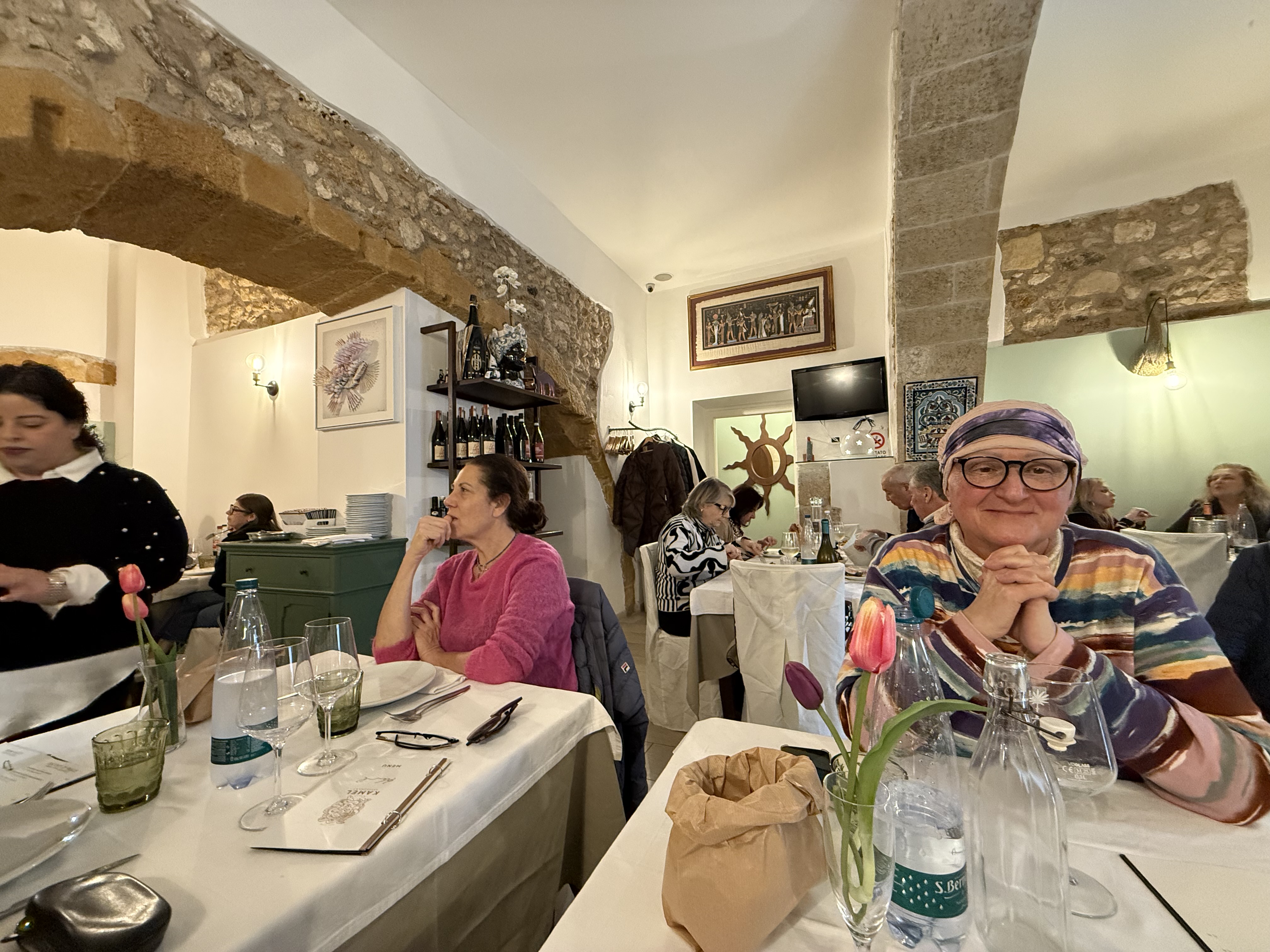
We skipped the Duomo today, deciding to visit it tomorrow instead. We were hungry and Antonio recommended a restaurant near our apartment. It was a perfect lunch spot and, again, staffed with the nicest people. And the food was fabulous.
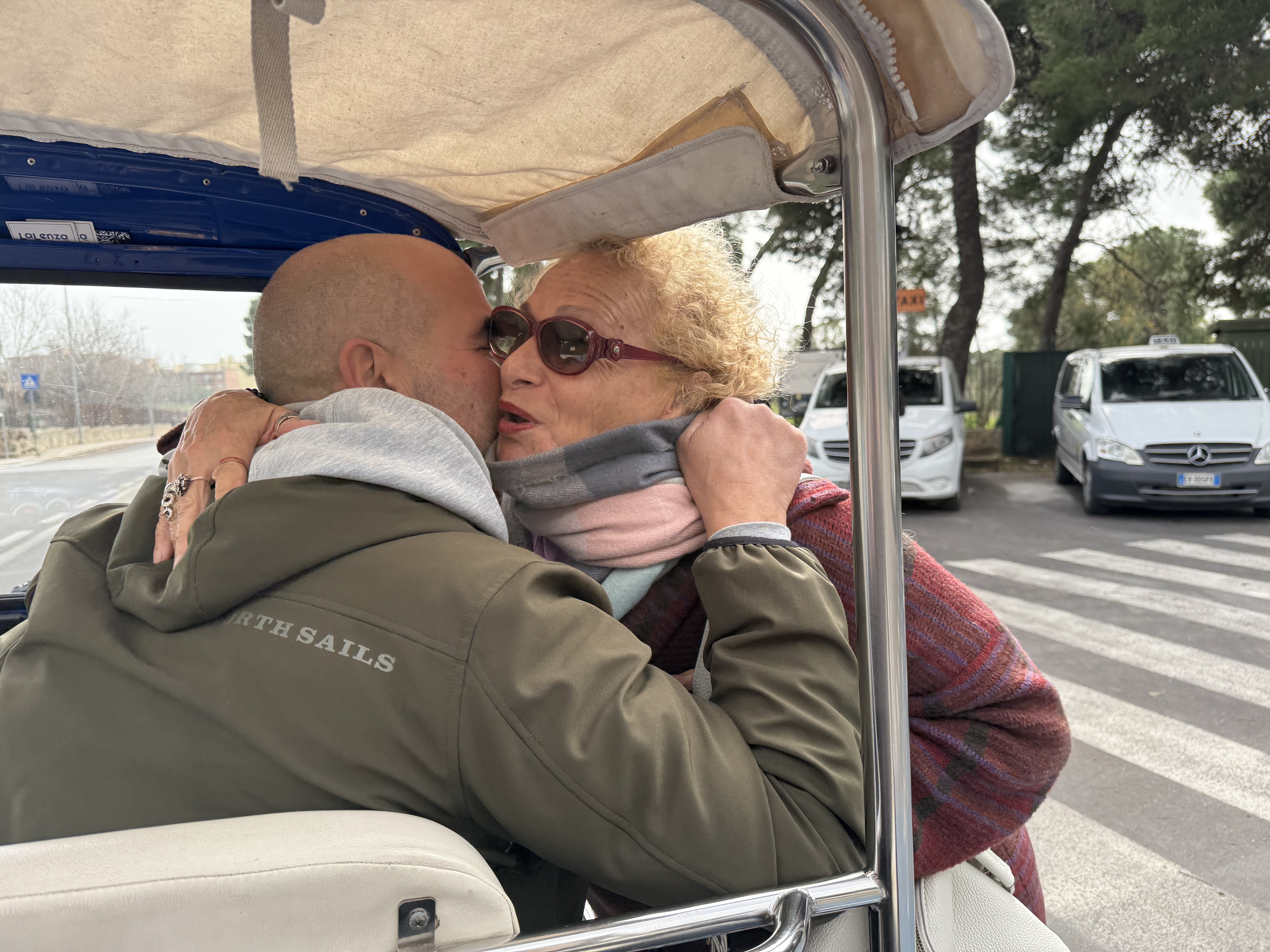
Our tuk tuk guide, Antonio, seemed to know everyone in the city. Motorcyclists stopped to say hello, cars beeped at him in a friendly greeting and drivers called his name and said hello. Pedestrians knew him. This woman came across the street to greet him. It felt a little like riding with a popular celebrity.
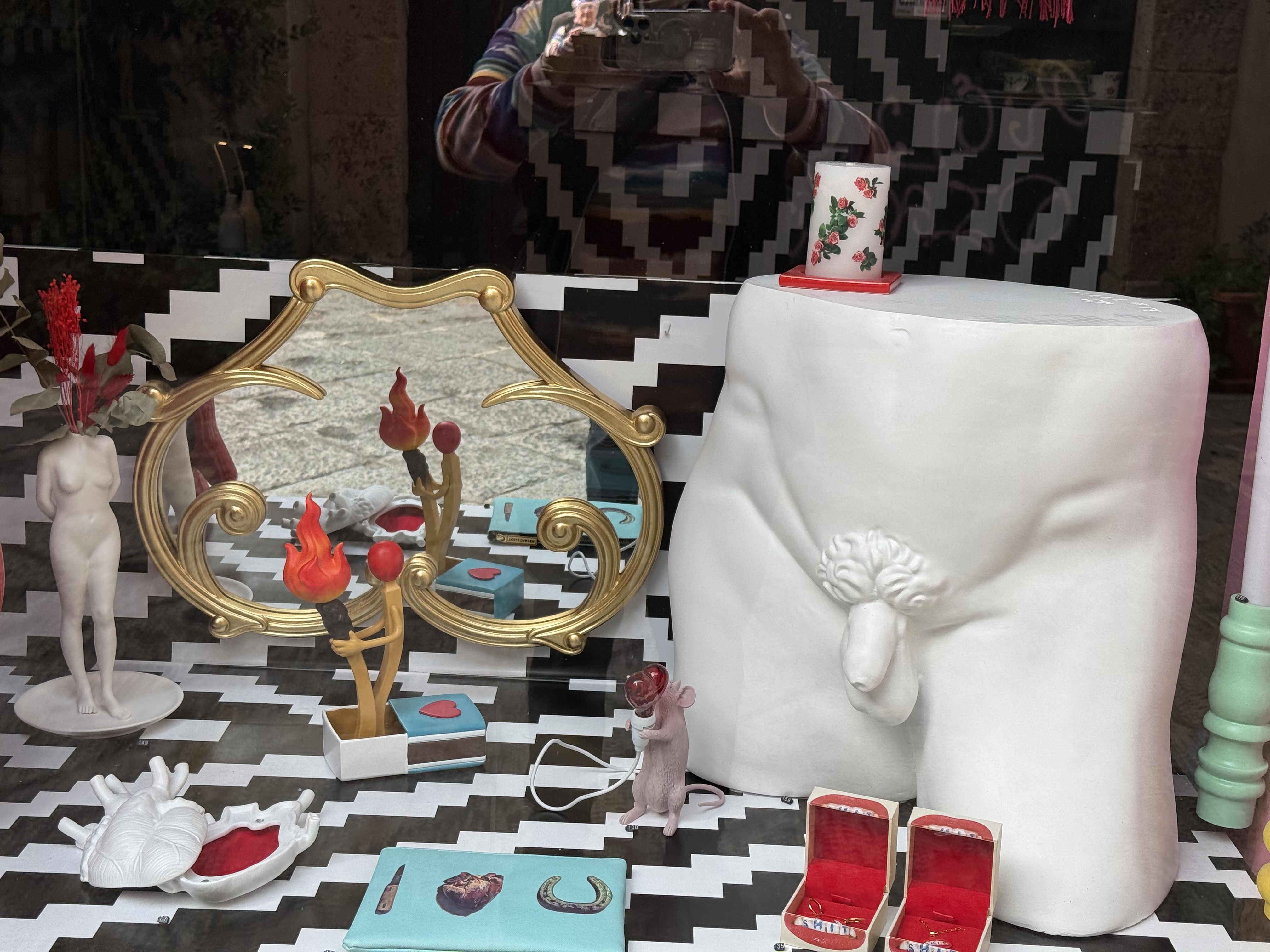
Here are few other random photos. I apologize if this first one is offensive, but it filled a shop window and I just couldn’t figure out why in the world anyone would purchase that. And the little headless female figure isn’t much better.

 Kim & Betsy