
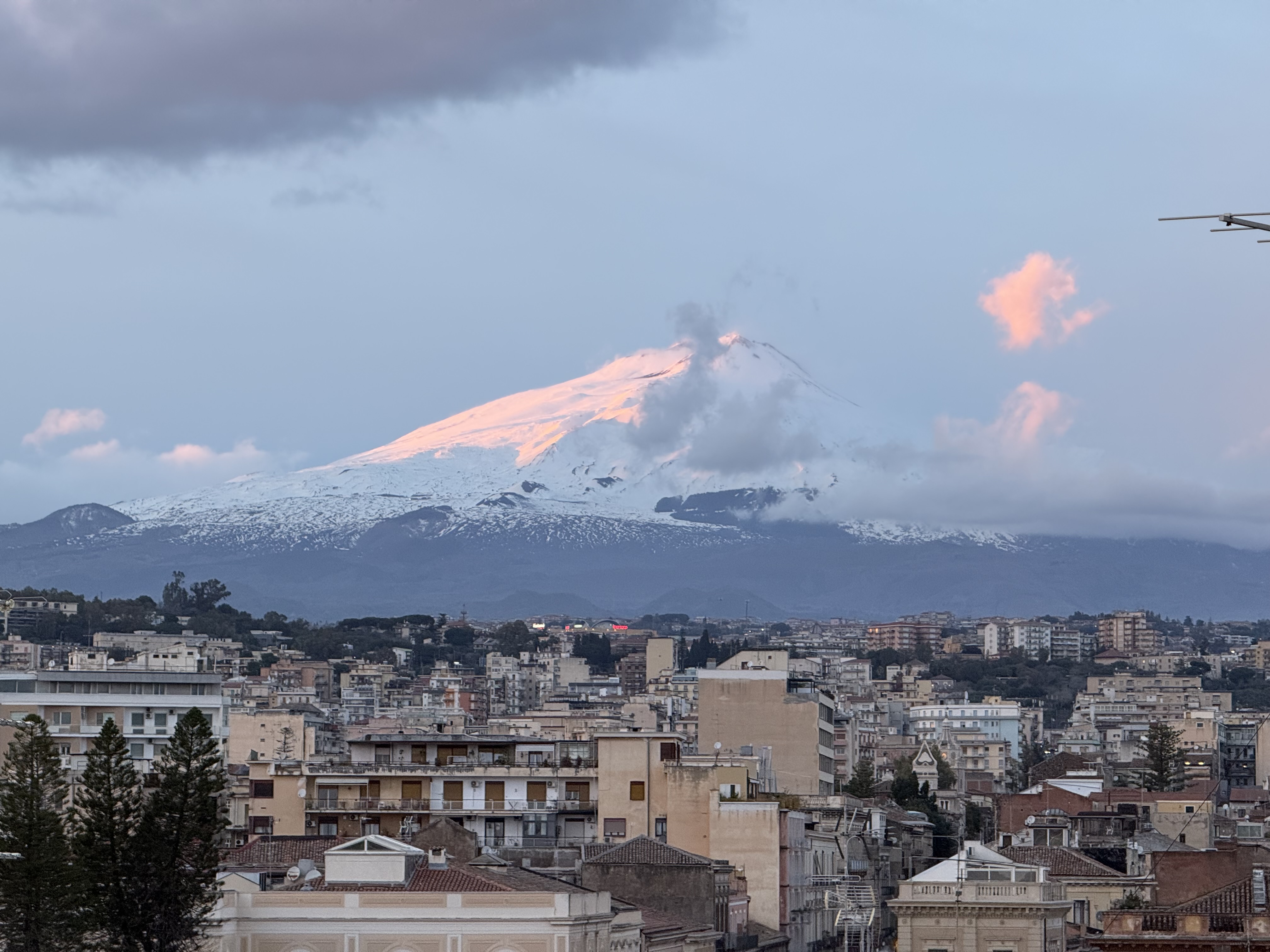
Our time in Sicily ends today. We board a plane for Rome around 1 p.m. for the final leg of our journey. We’ve been to Rome twice before so we’ve seen all the major sites. This time, we plan a relaxing stay.
Sicily has lived up to and even exceeded our expectations and that’s primarily because of the people we’ve met along the way and the wonderful hospitality we’ve been shown everywhere we’ve visited. It’s also been very challenging with the weather, the winds, the narrow roads, the cyclone damage and realizing just how much Betsy’s injuries would impact our trip. But we’ve faced those challenges and learned a lot along the way and made some new memories to cherish.
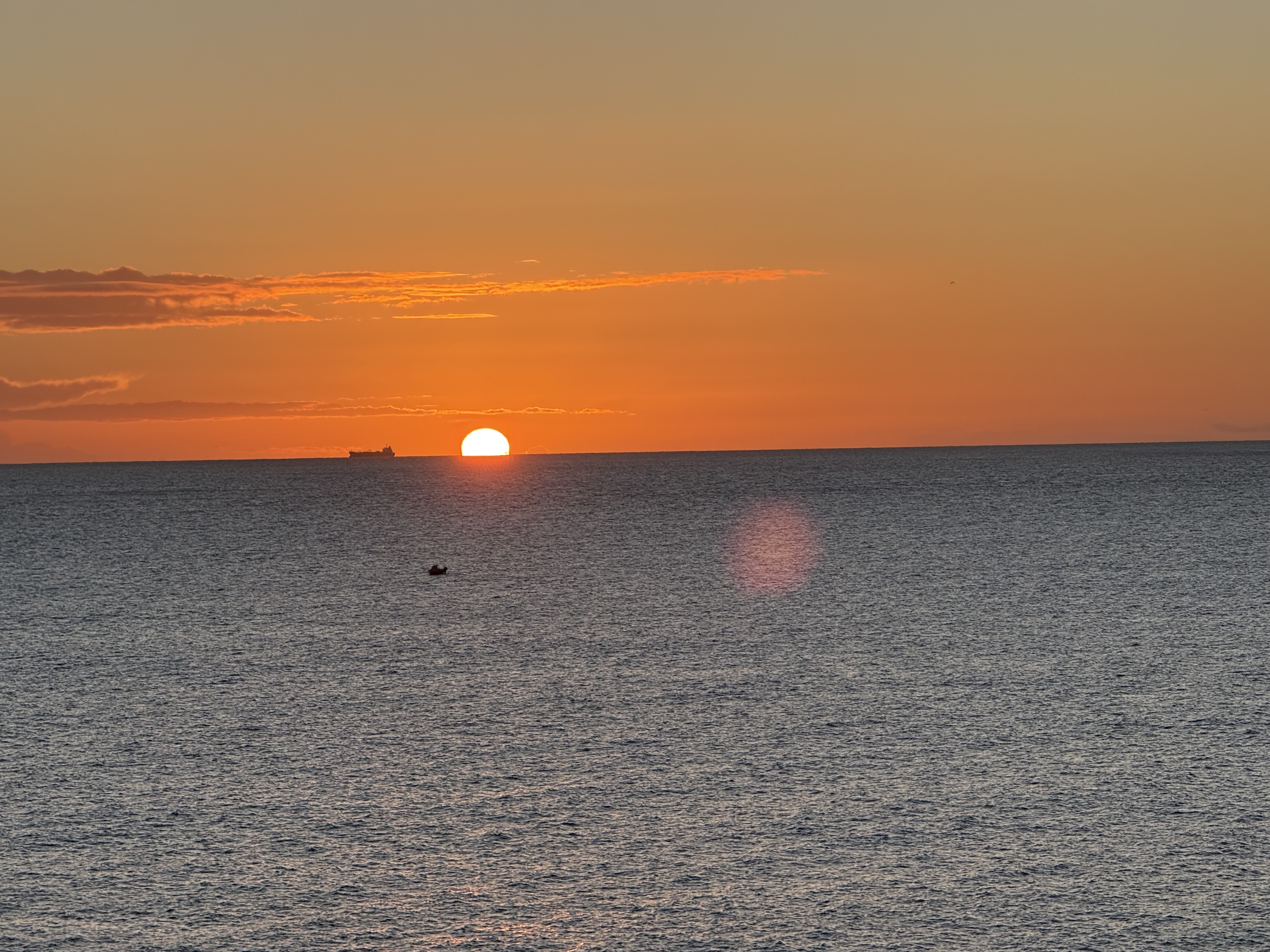
We were up early Monday morning to watch the sunrise over the Mediterranean. It did not disappoint. The sky turned beautiful colors and then it seemed like that bright orange ball rose right out of the water. Just gorgeous.
We were picked up at 10 a.m. by our driver Constantino for an hour’s ride to Catania. Once again, a kind person entered our lives. The trip was a like being given a last tour of Sicily. As we passed bright yellow orchards of lemon trees (the fruit is in season now), he told us about the special type of lemons grown here that become sweet because of the minerals in the soil thanks to the volcano. He pointed out a lighthouse with no ocean nearby and said it once sat on the shore, but the land filled in after an early 1900s eruption of the volcano. He, like almost everyone we met here, talked about the different cultures that make up Sicily. We’ve found there is such pride in that cultural diversity here.
After checking into our hotel, we tried to visit the Duomo. With only one night before flying to Rome, we wanted to see a little of Sicily’s second largest city. There is a grittiness to Catania, but also an energy. The Duomo, according to its website and our guidebook, is open from 7 a.m. to 7 p.m. daily. No surprise, that wasn’t the case when we tried to visit. A security officer at the gate was turning people away. She said it was closed for cleaning. We really haven’t had a lot of luck visiting churches. Of course we saw the fabulous Monreale cathedral and also the one in Cefalu, but the doors have been closed on at least four others when we tried to enter.
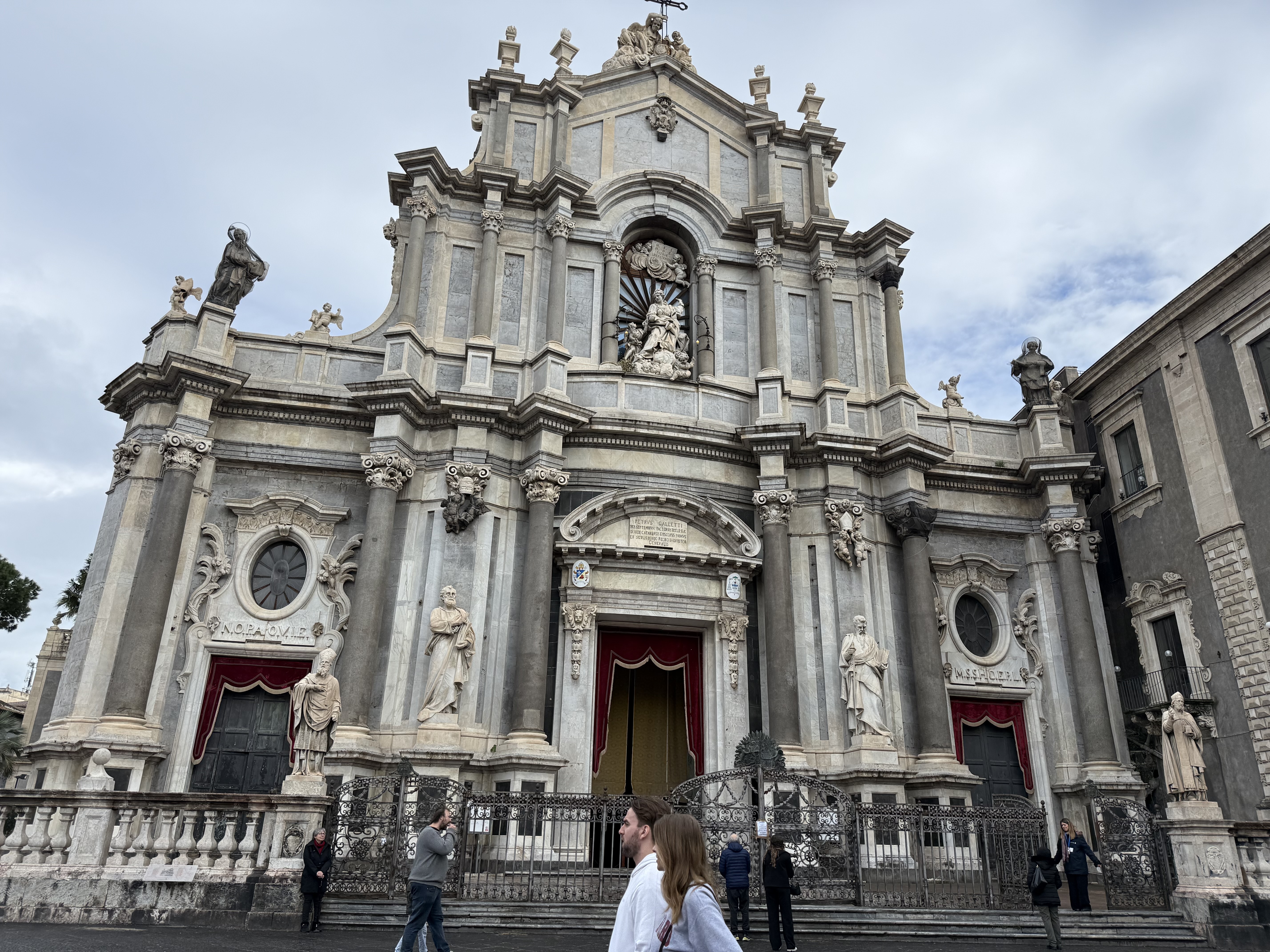
The Cattedrale di Sant’Agata (the Cathedral of Saint Agatha) is in the heart of Catania, Its foundations date back to the 11th century (commissioned by Roger I of Sicily around 1078). Much of the original Norman structure was destroyed by the devastating earthquake of 1693. The exterior you see today is a masterpiece of Sicilian Baroque design, reconstructed in the early 18th century by the architect Gian Battista Vaccarini. Its facade is white Carrara marble, featuring three levels of Corinthian columns and ornate statues of Saint Agatha and other local martyrs. Its limestone is a different from the dark volcanic stone used in a lot of the other buildings.
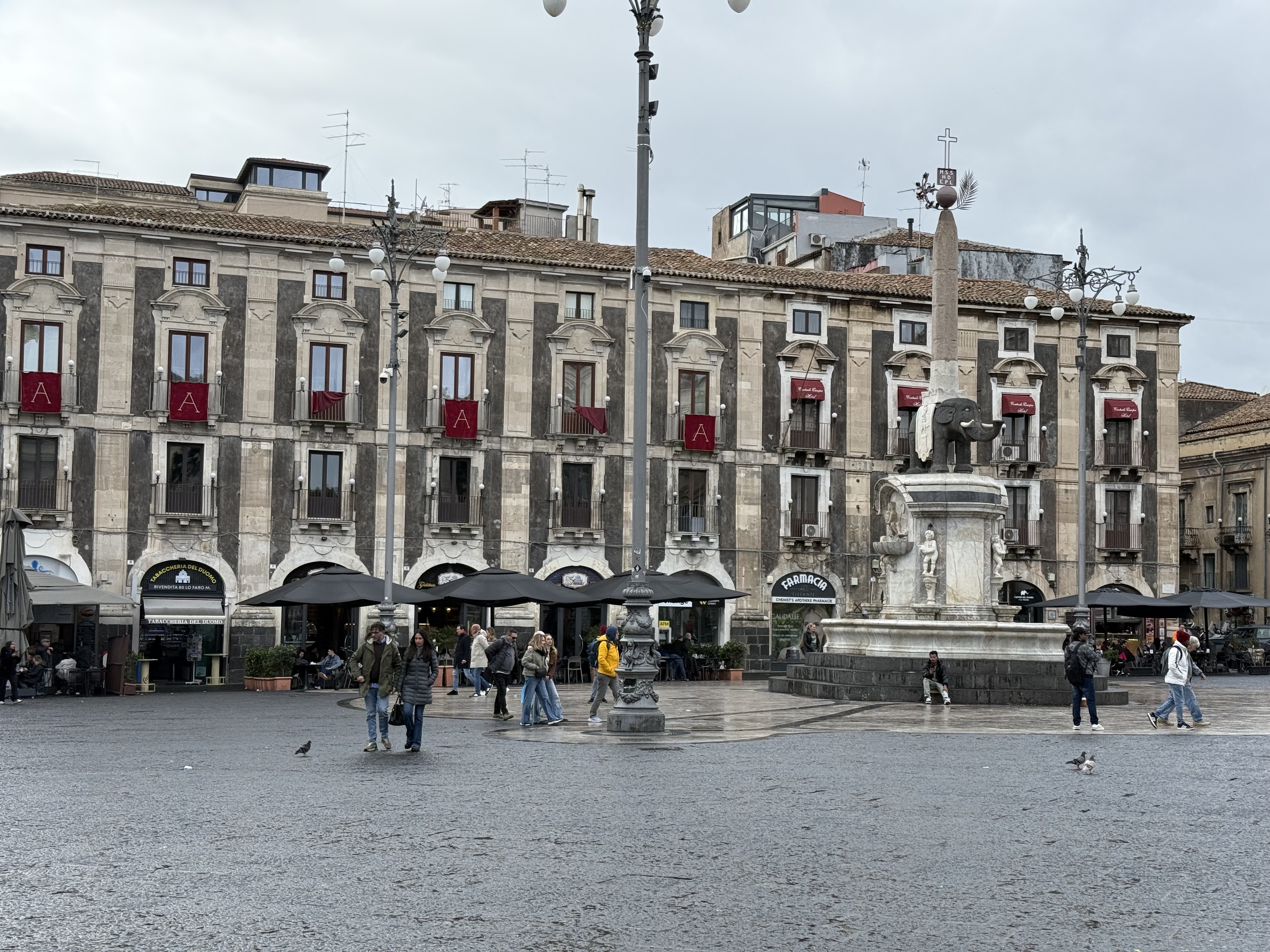
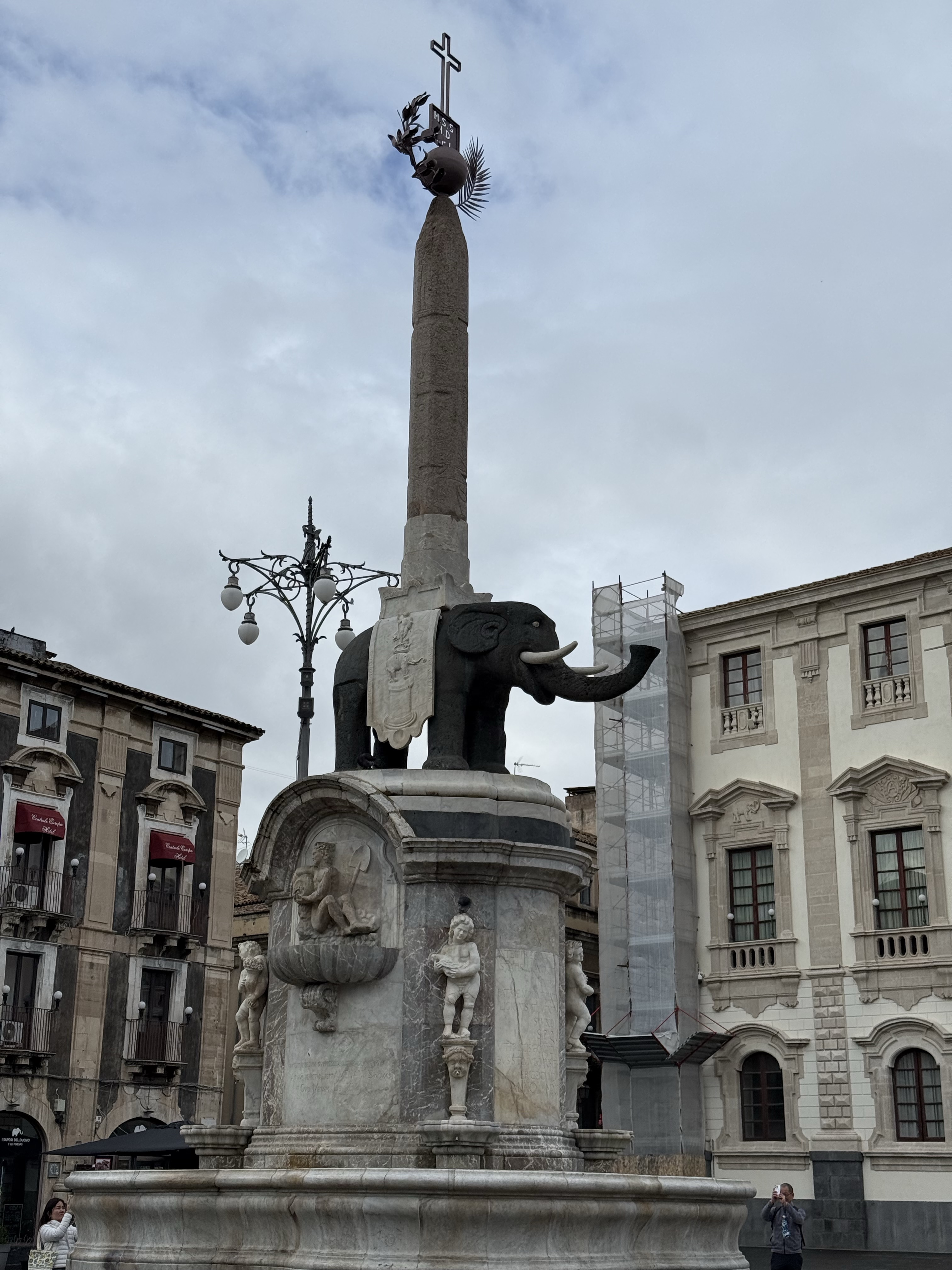
We sat in at a cafe and split an arancini, a fried rice ball stuffed with meat. There were a lot of young people around us, some from Poland, others from France and Germany. I tried to visit the famed fish market, but it closed about an hour before we arrived at the piazza. Once back at the hotel, Betsy needed a rest and I decided to take a quick walk around the area to explore.
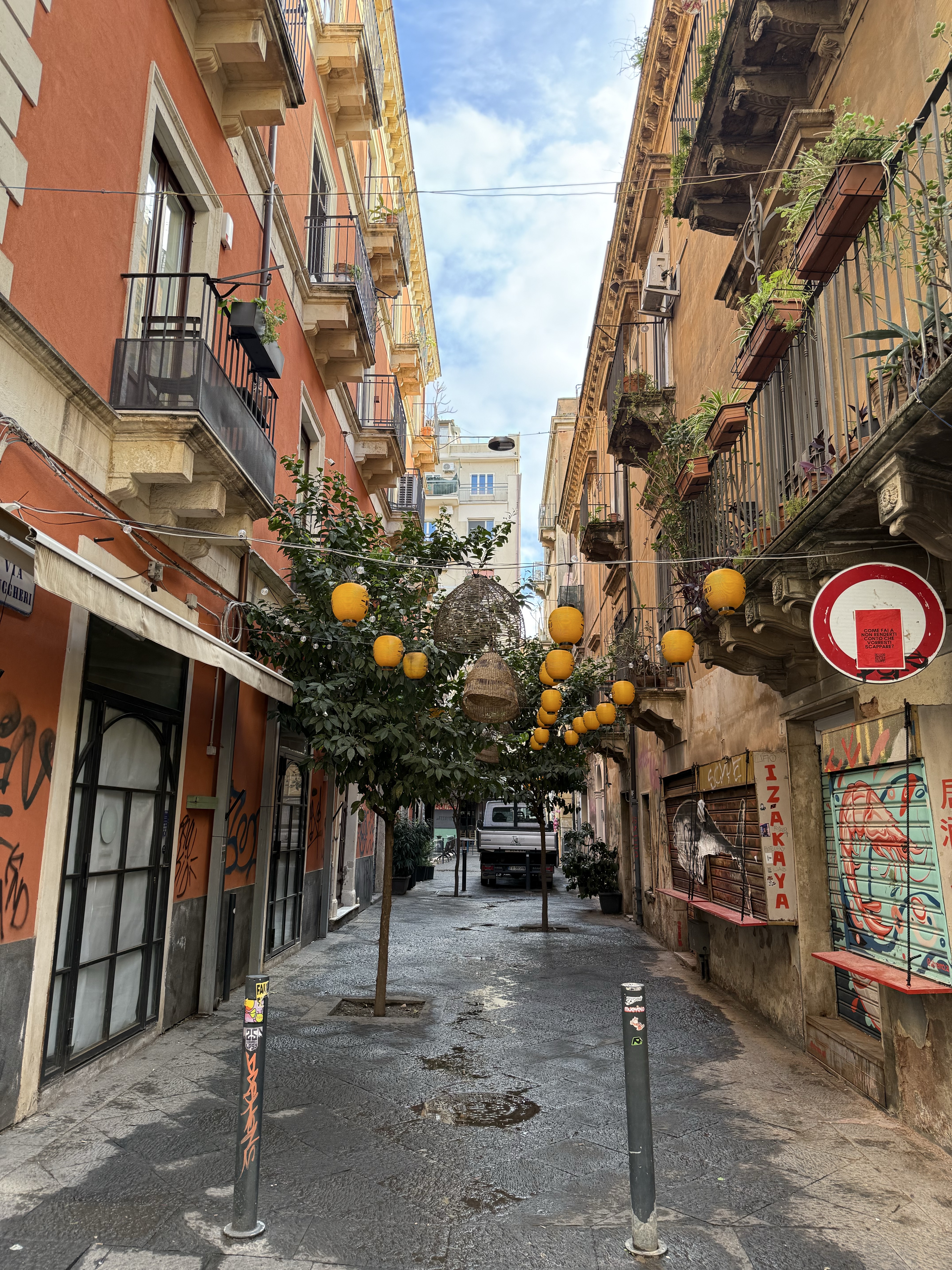

I noticed a lot of cleaning happening. Street sweeper trucks, three of them, were moving through the area. People in official city vests were manually sweeping, hosing things down and picking up lots of garbage. Everything looked really trashy and dirty and they were working hard to make it better. Then I turned a corner and saw a real mess.

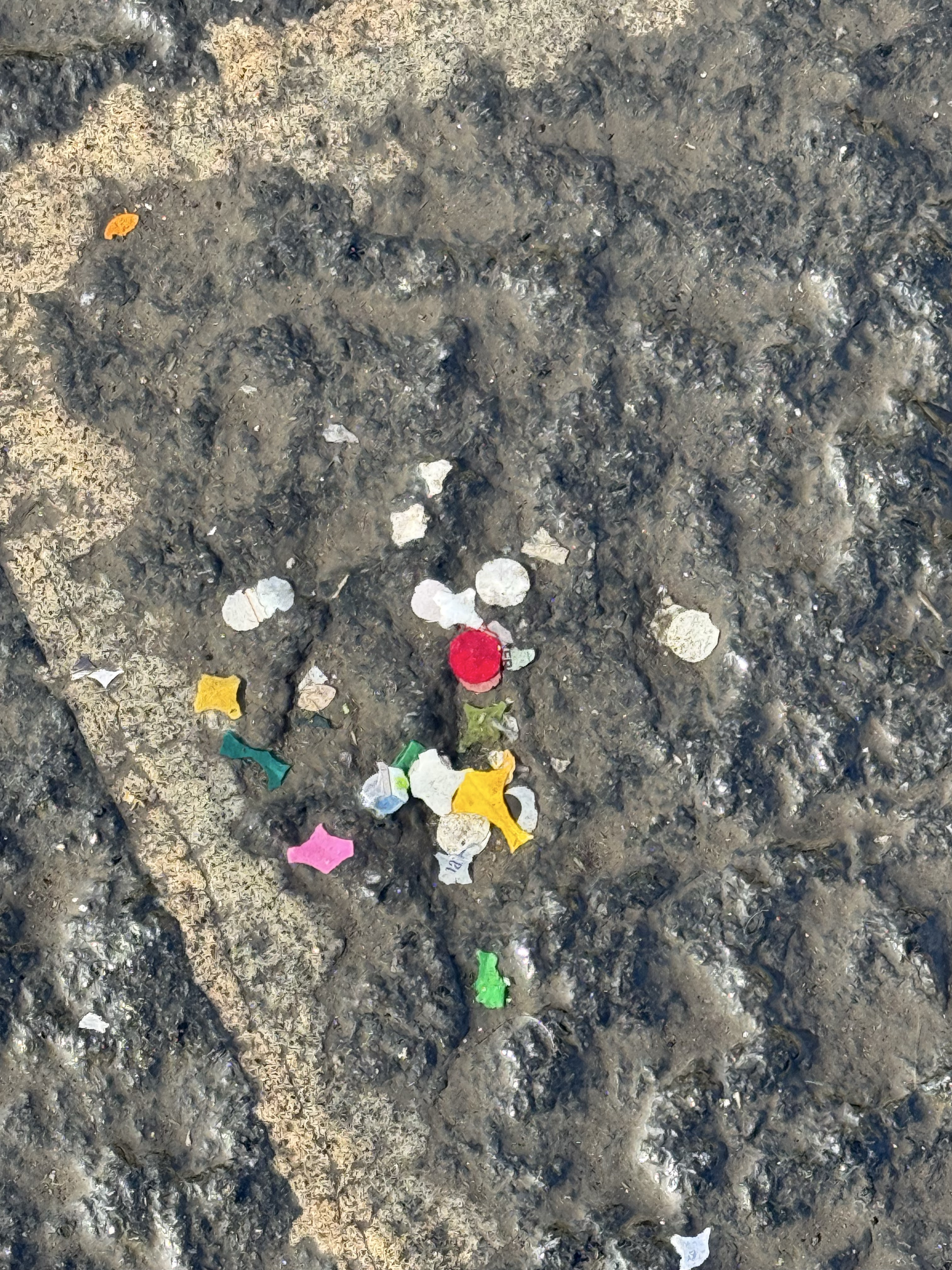
Turns out the day before we arrived, the city celebrated Carnevale Sociale with a big community parade featuring music, performances, masked groups and tons of confetti. That’s why the city is so filled with young people from throughout Europe. They were here for the party. The biggest celebration is apparently in a nearby town, Acireale, which is world-famous for its floats and flowers, and the Catania event also draws a crowd. It’s also why the cathedral was closed for cleaning because a lot of confetti is thrown inside during part of the celebration.
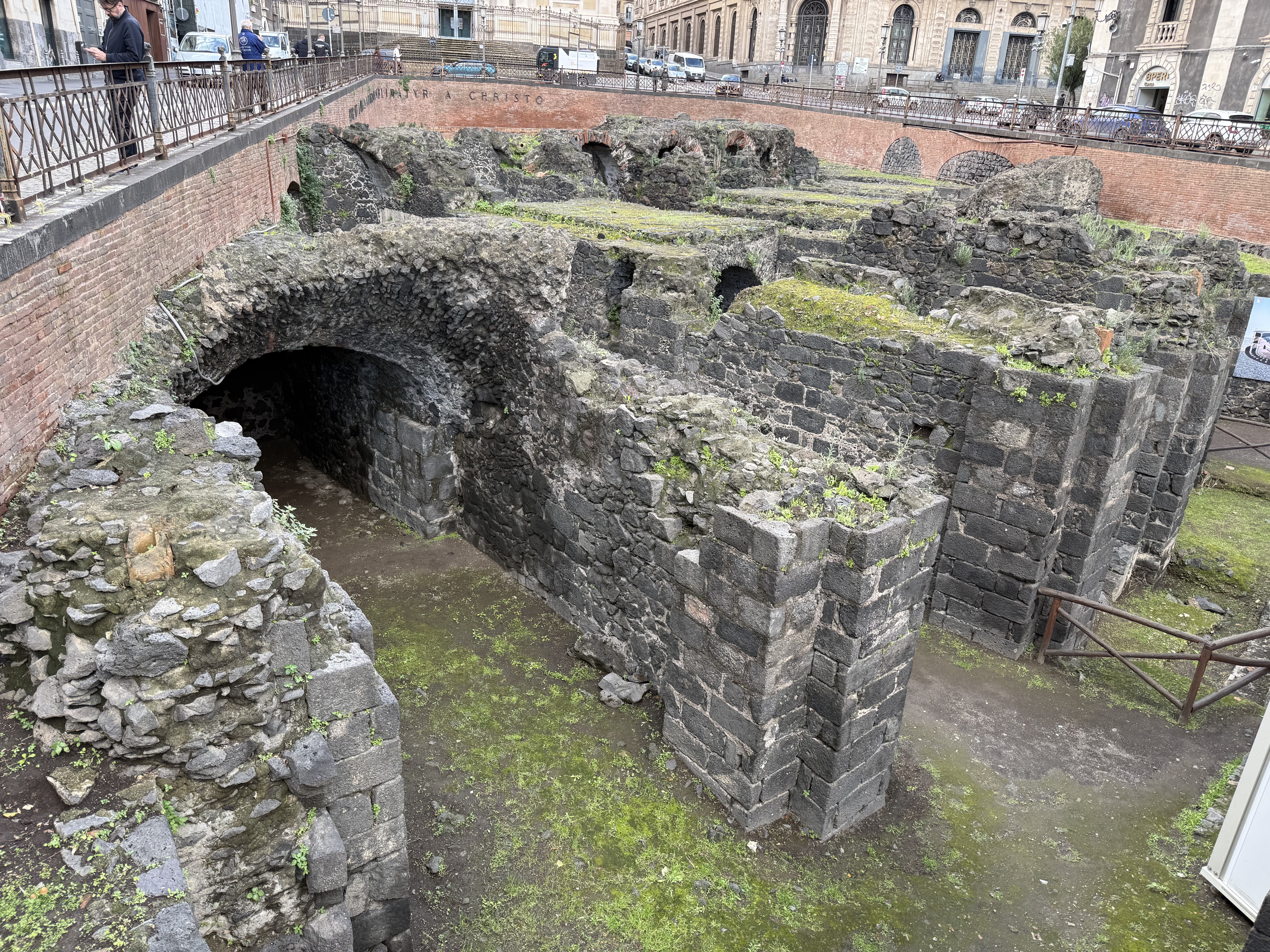
Right in the middle of the city is remnant of the Anfiteatro Romano. Built in the 2nd century AD primarily from dark Etna lava stone, this is what’s left of what once was a massive arena that held up to 15,000 spectators, making it one of the largest amphitheatres in Roman Italy. Most of its original marble was stripped centuries ago to build the Catania Cathedral, the surviving arches and corridors offer a glimpse into the ancient city that is buried beneath the city. Just like the coliseum in Rome, looking at these type ruins always makes me sad. Gladiators fought to the death here and it’s also the scene of public executions and other horrors. It’s hard to believe that killing people was entertainment for thousands of spectators.
Near the ruins were two more churches I tried to visit. Both were open this time, but they required tickets that were supposedly sold somewhere nearby that I couldn’t seem to locate. I wasn’t alone. Four other people asked me where to buy a ticket to see inside and none of us were successful in finding the spot.
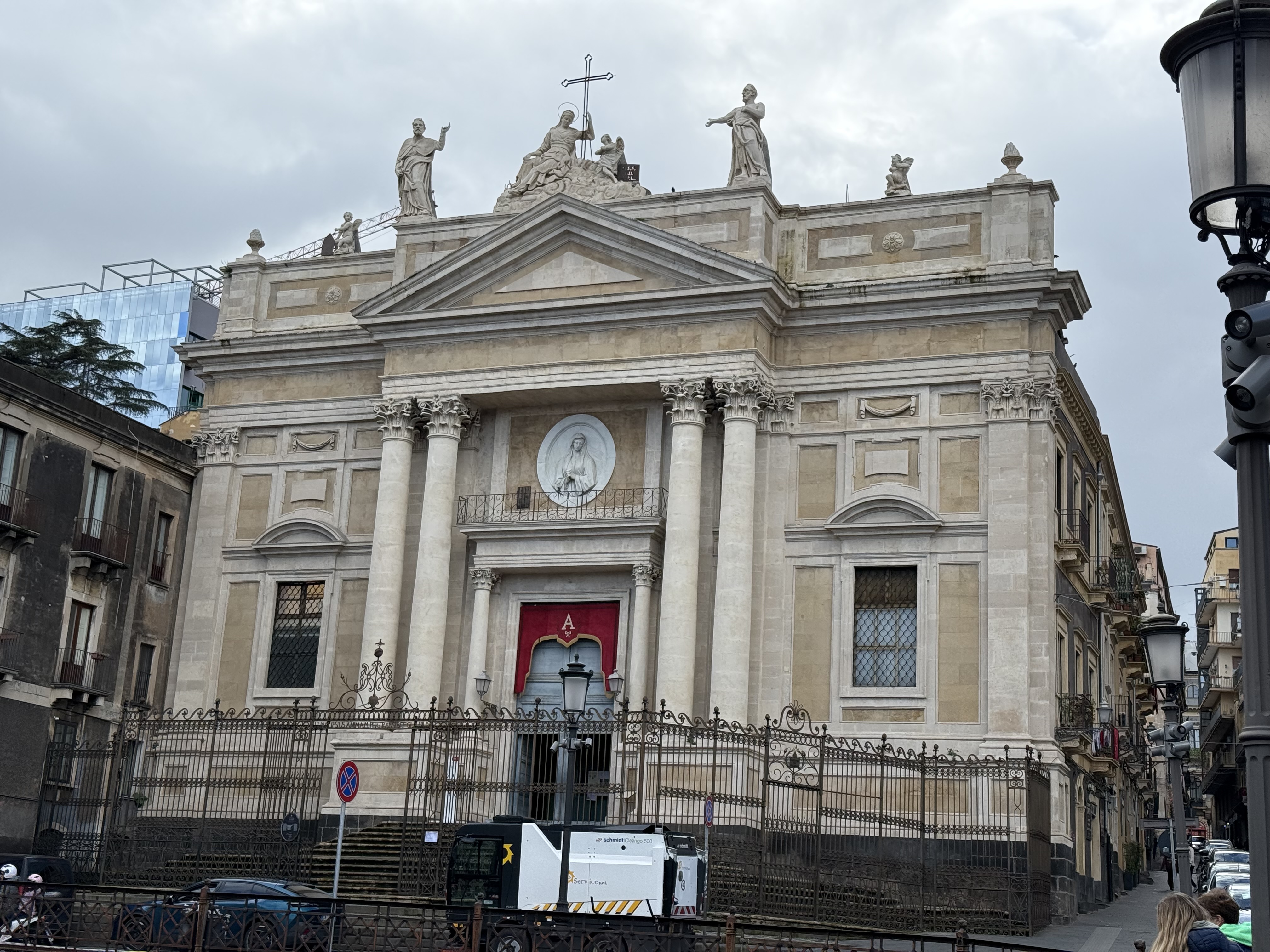
Heading back to the hotel, I passed a lot of graffiti. This city is covered in it.
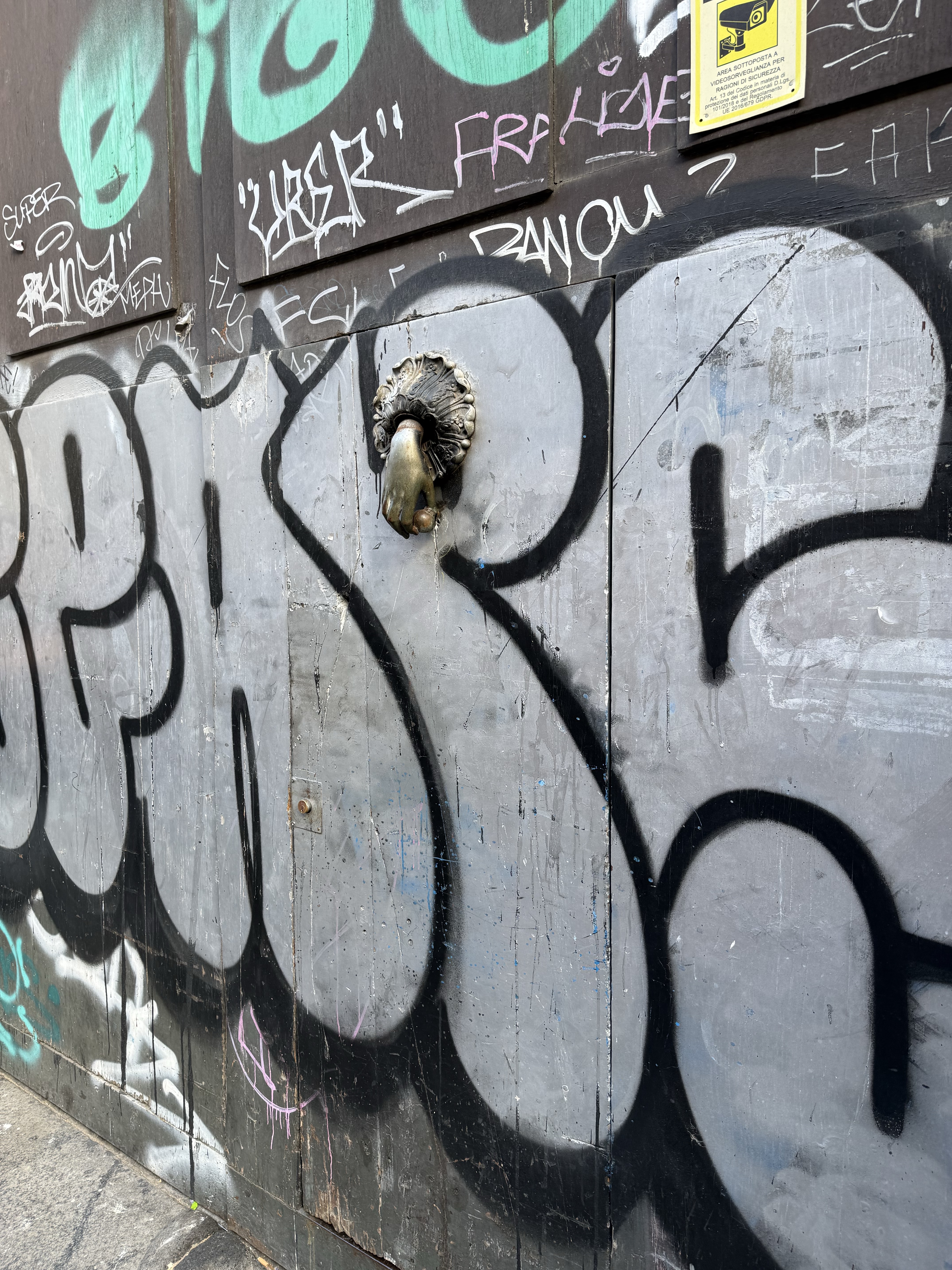


Last night we ran into the same challenge regarding eating. The hotel website mentioned the rooftop bar served food all day so we went up to have some dinner at 5:30. Nope, they close the kitchen from 5 p.m. to 8 p.m. We went back to the room and ordered a hamburger and a salad when the kitchen reopened. We watched the Olympics while we ate. That’s been a treat to see the games as they are happening.
This morning, I decided to see the Cathedral and Fish Market before our taxi to the airport. Both are a straight shot, about 9 minutes, from the hotel. I’m so glad I did.
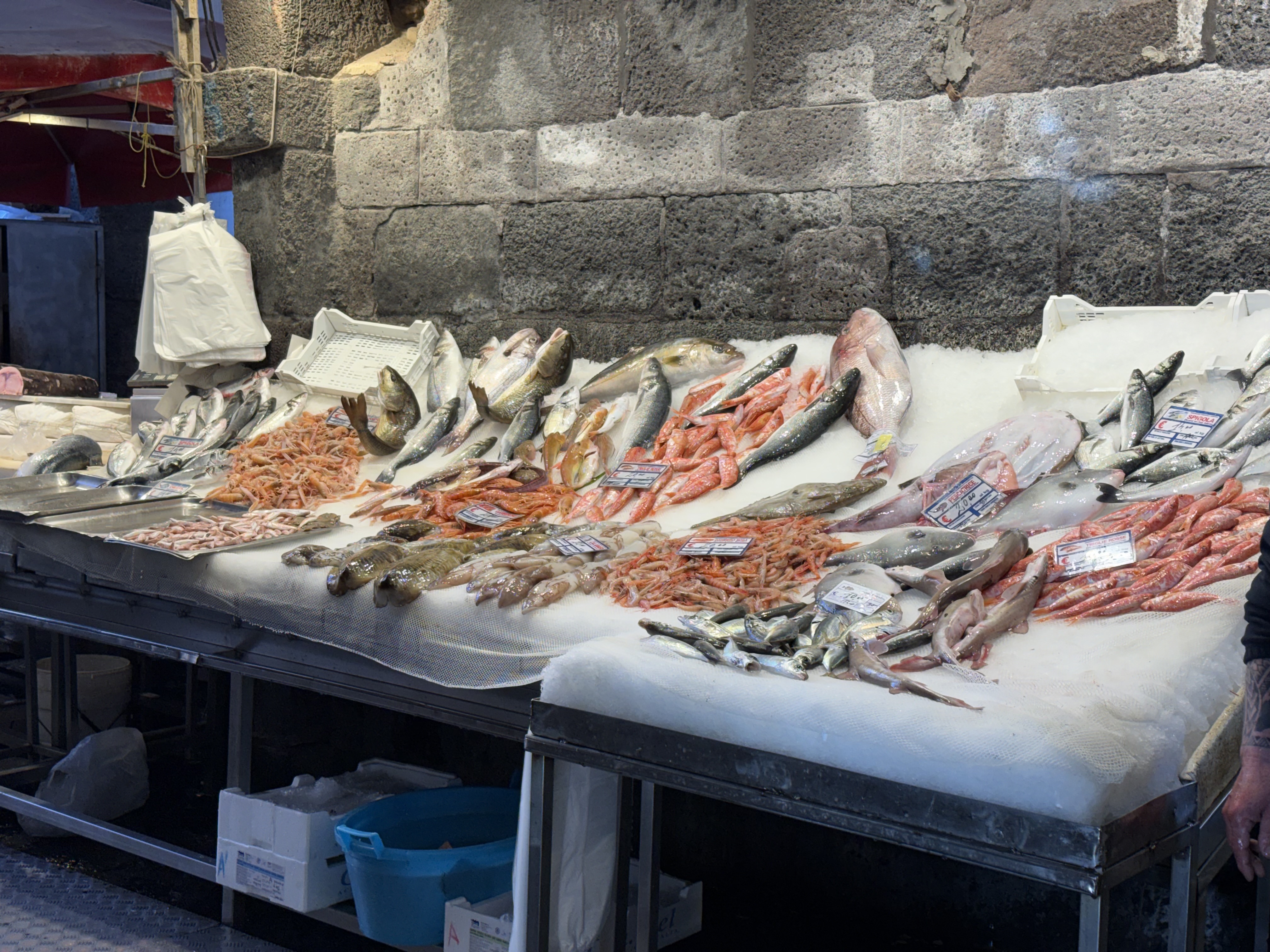
There are about 20 tables and stalls like this one in the market and all of them filled with fresh fish. Perhaps the most impressive thing about the market is that it does not smell fishy, not at all. All the fish and shellfish look so fresh and clean. It’s a loud place, with fishermen trying to sell their products and local people making deals.
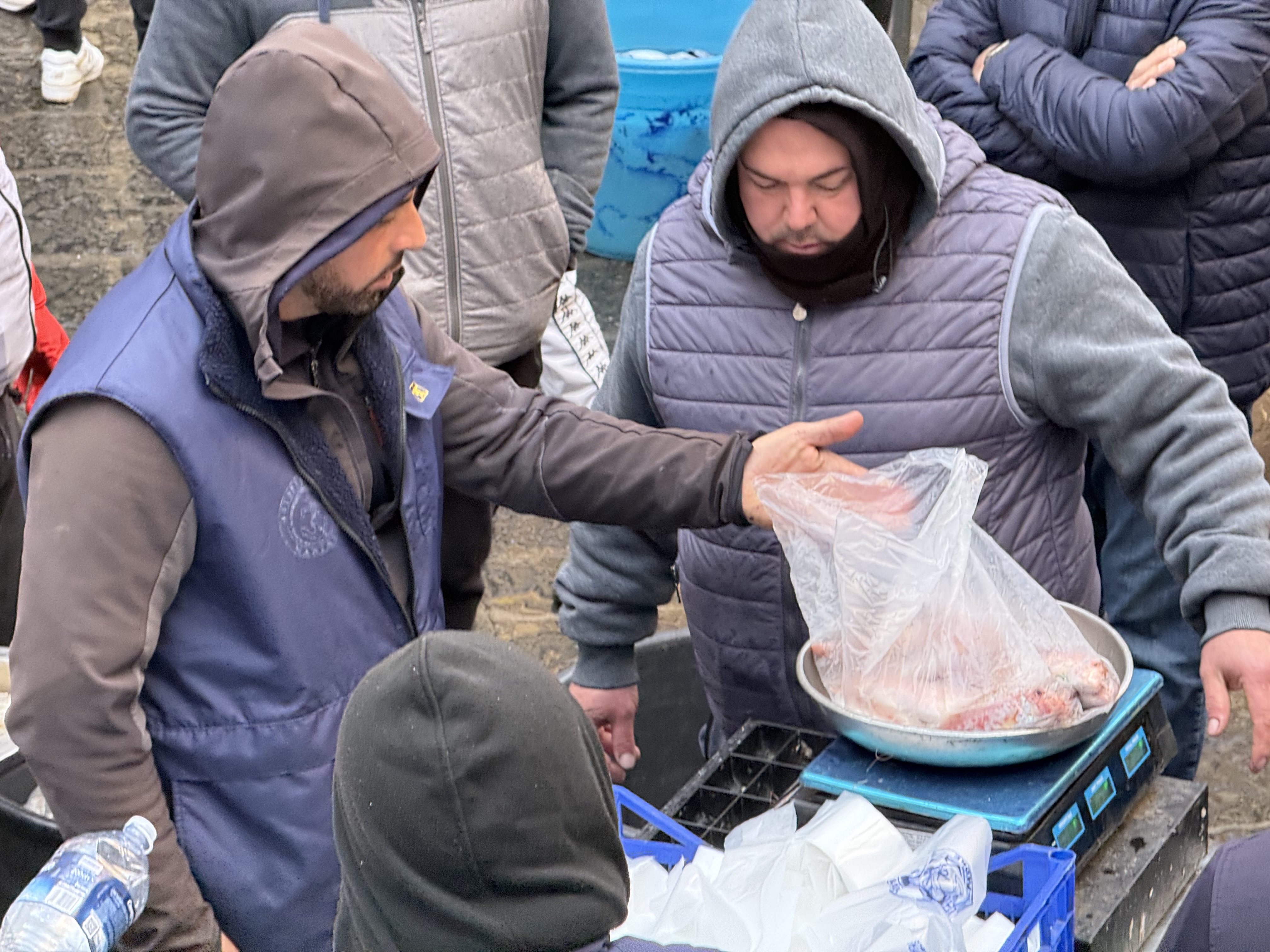
I didn’t have to understand any Italian to know the guy on the right in the photo above was not happy with the amount of fish in the bag. Below, you can see that he prevailed.
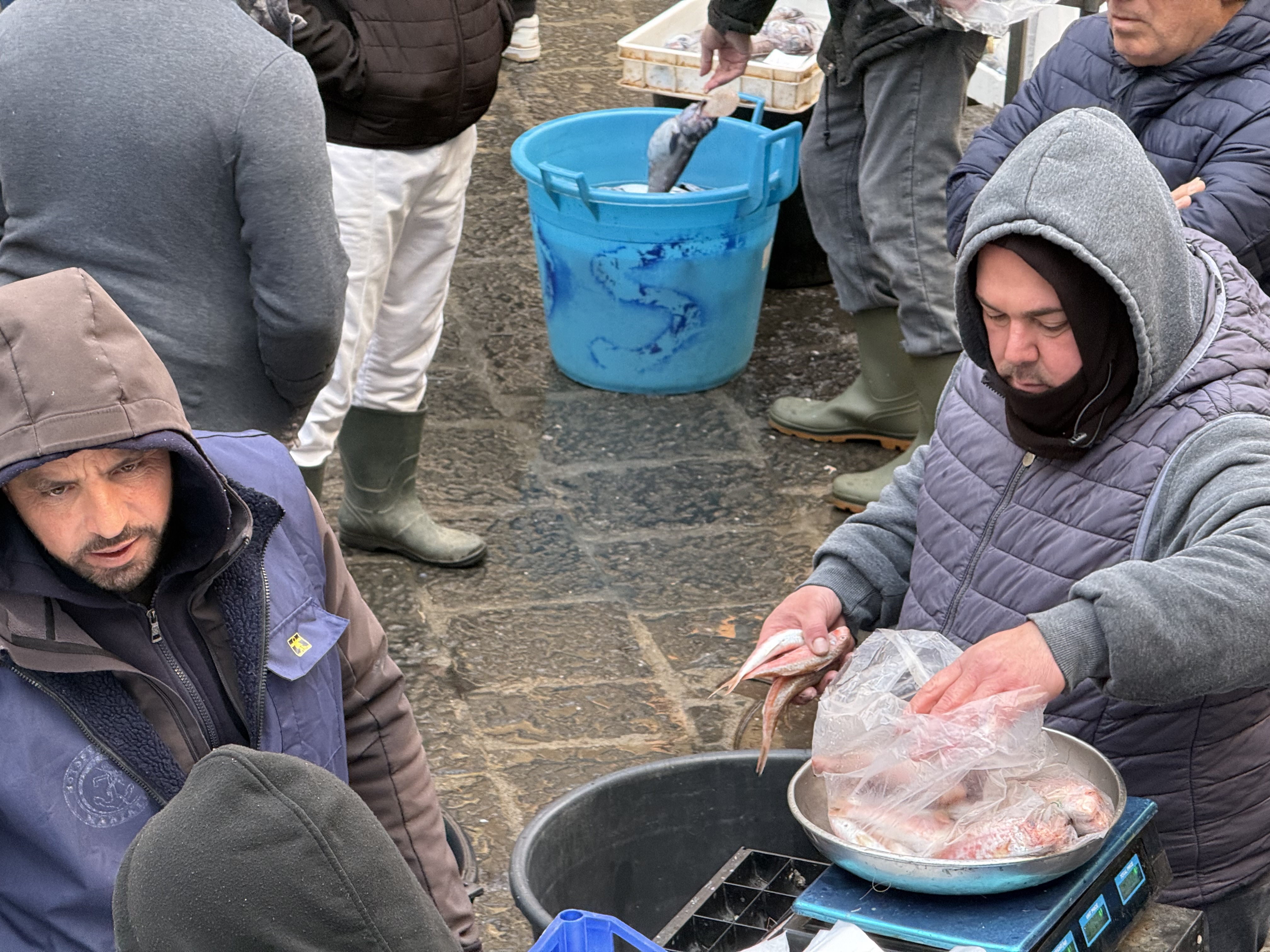
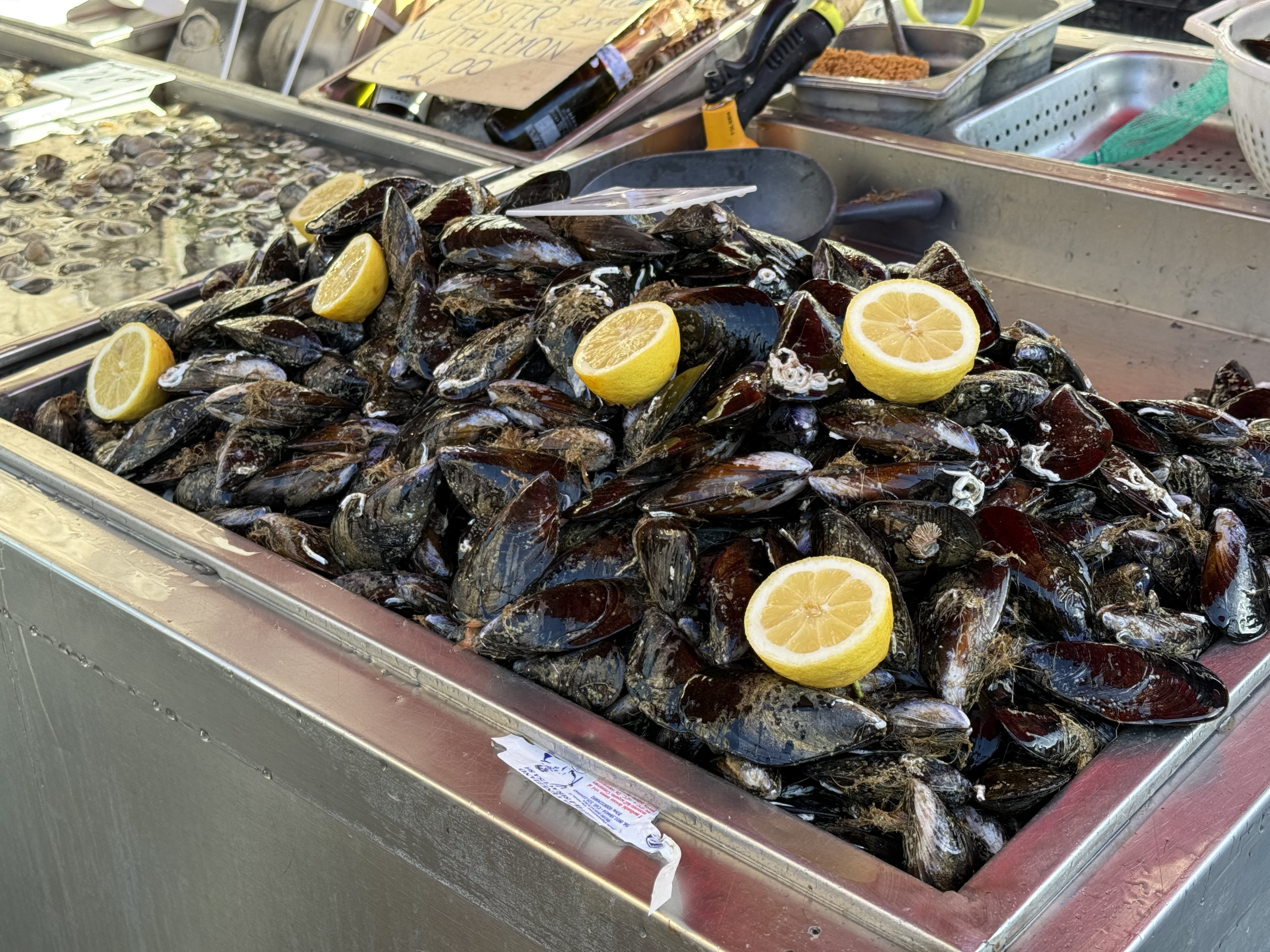
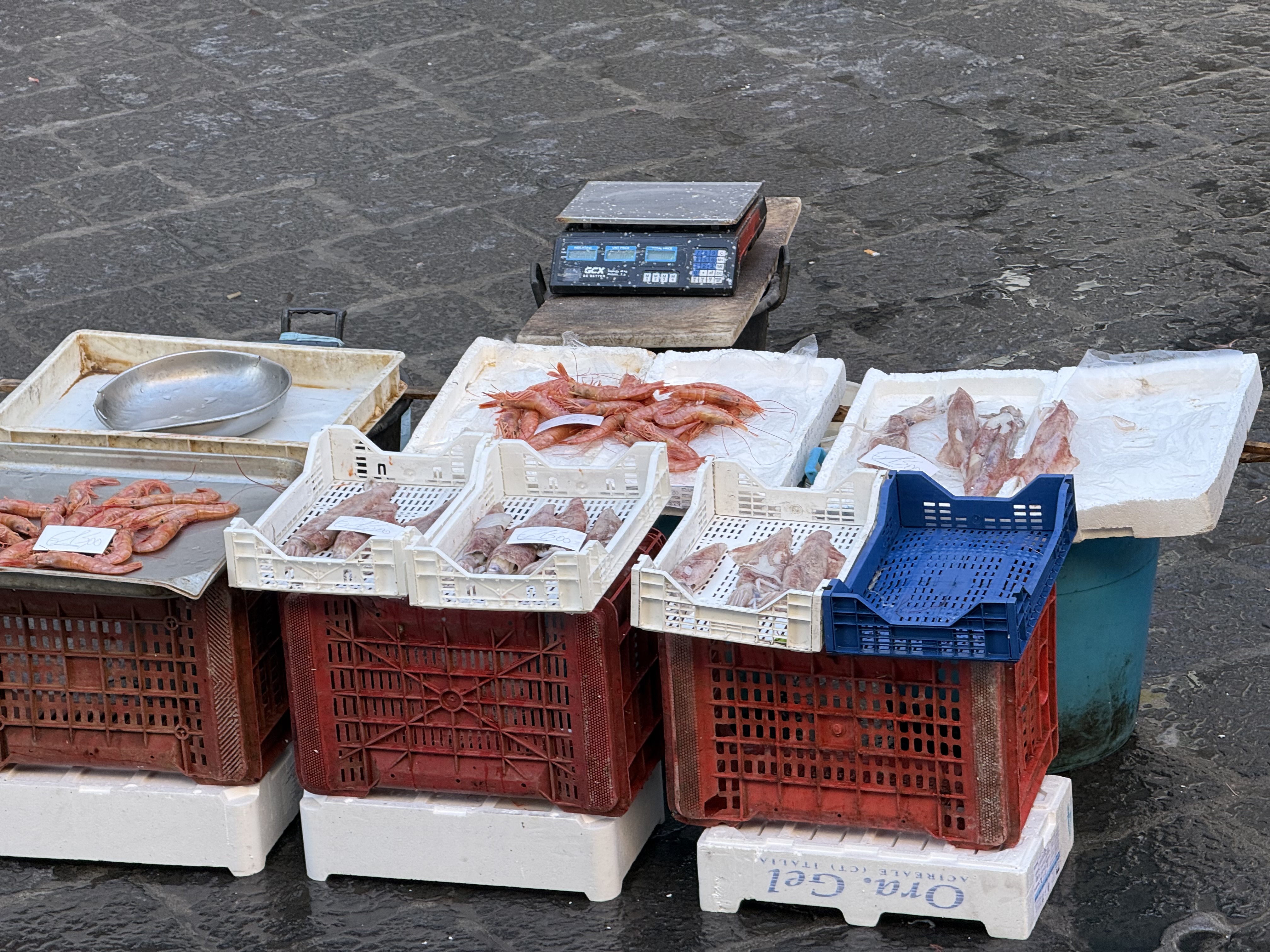
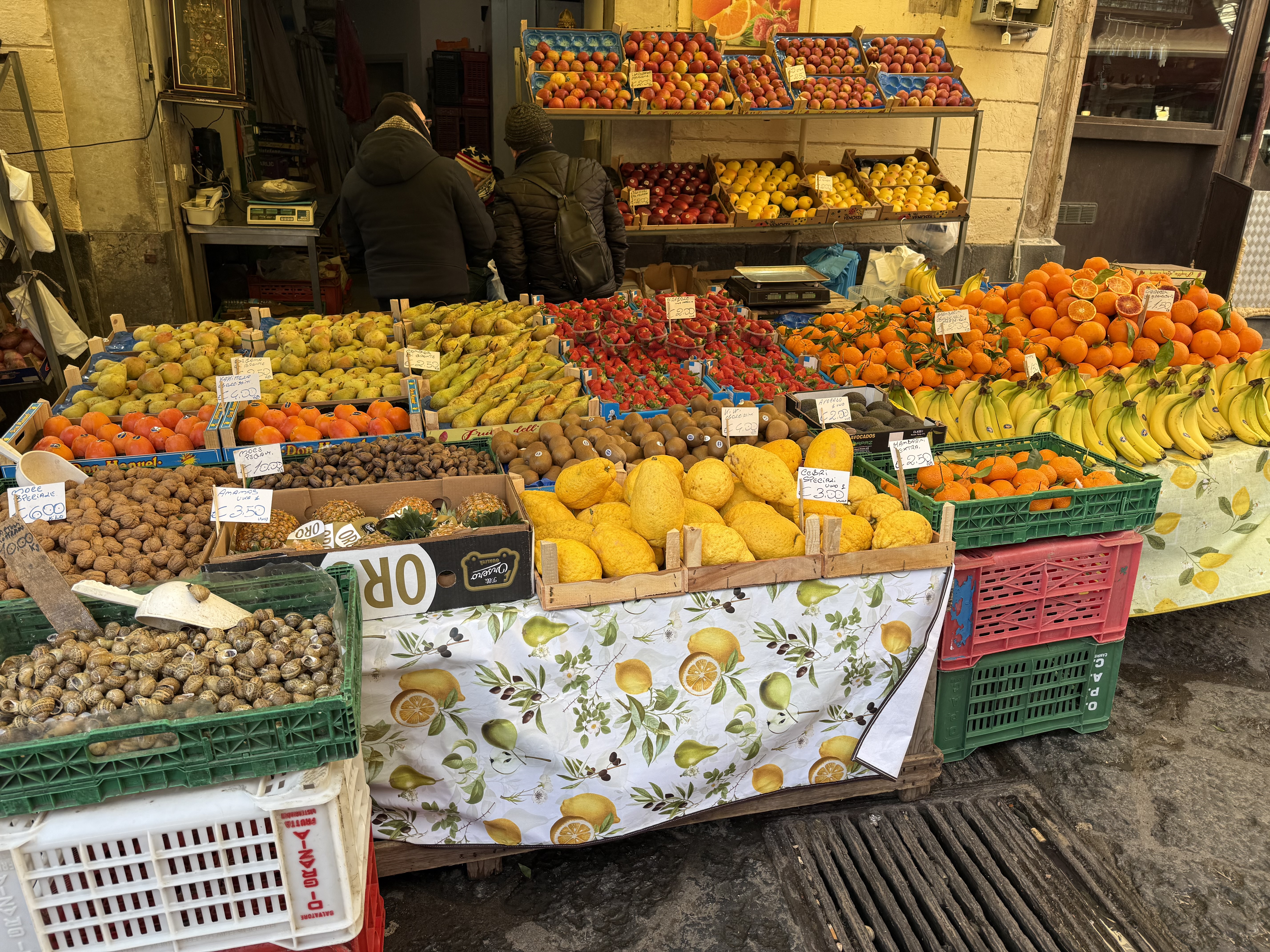
Other vendors were also selling meats. In one stall, a butcher was doing the kind of work I decided not to photograph. The fruits and vegetables also looked fresh. People were selling nuts and candy and flowers. It felt so local.

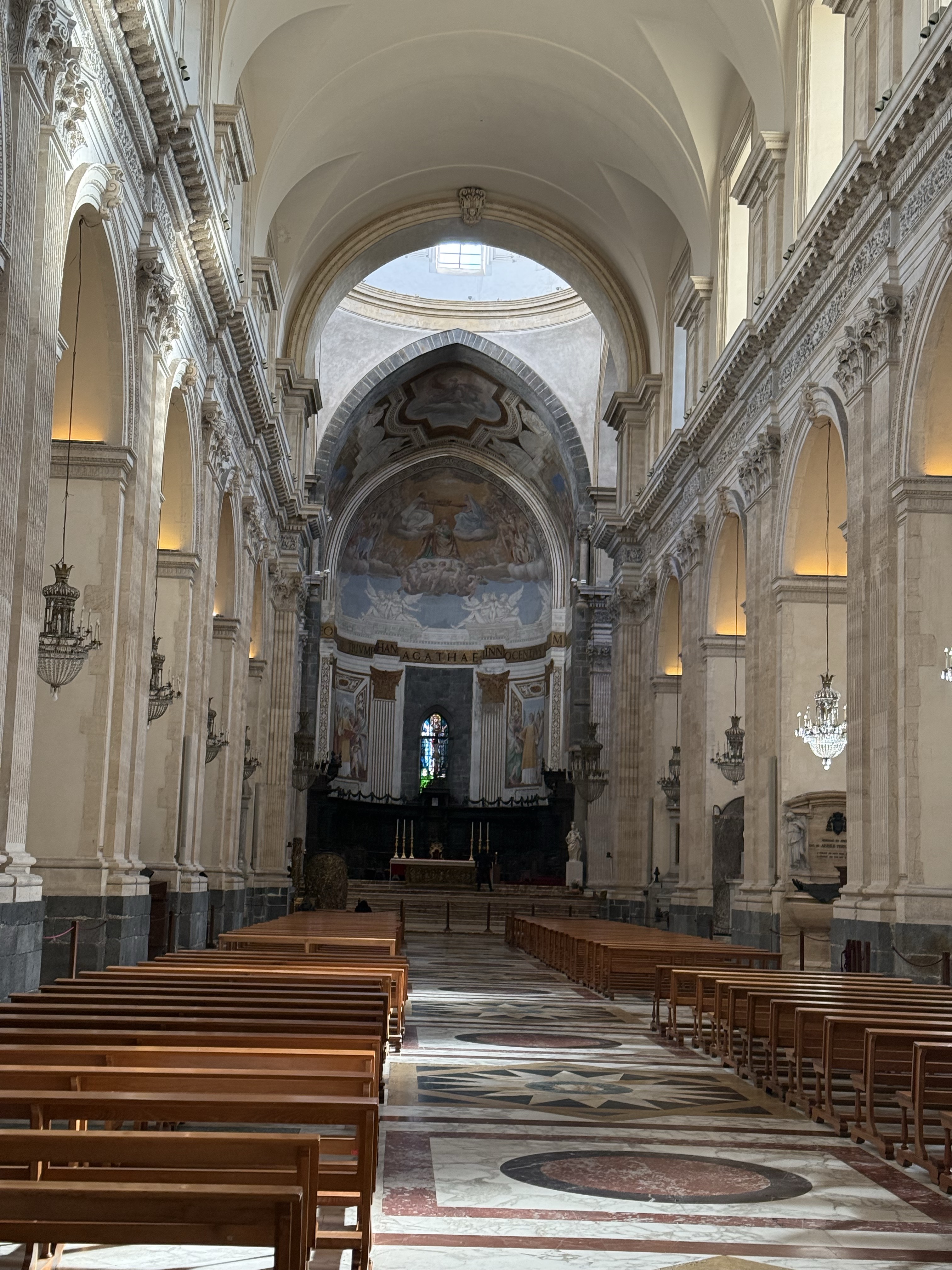
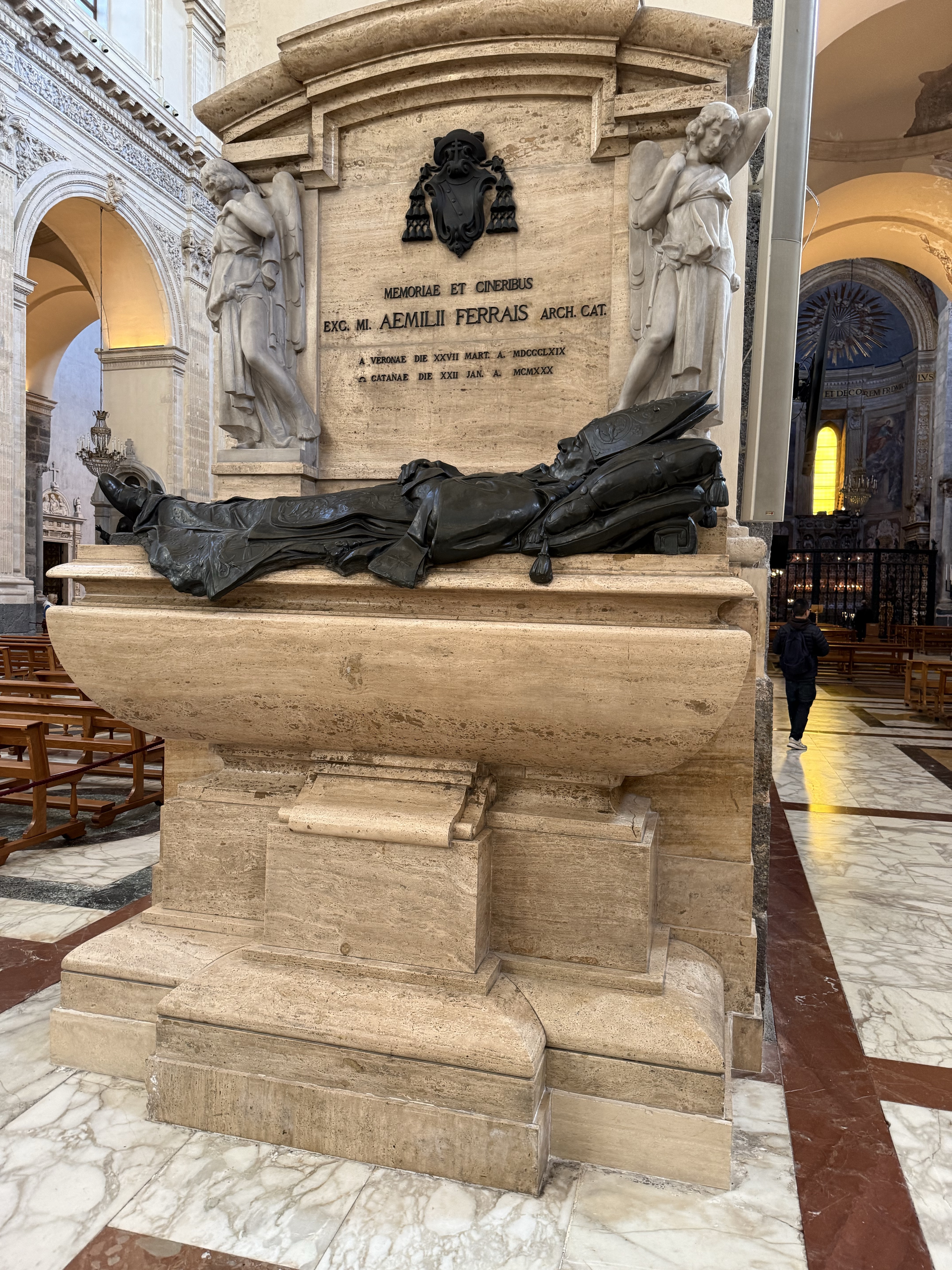
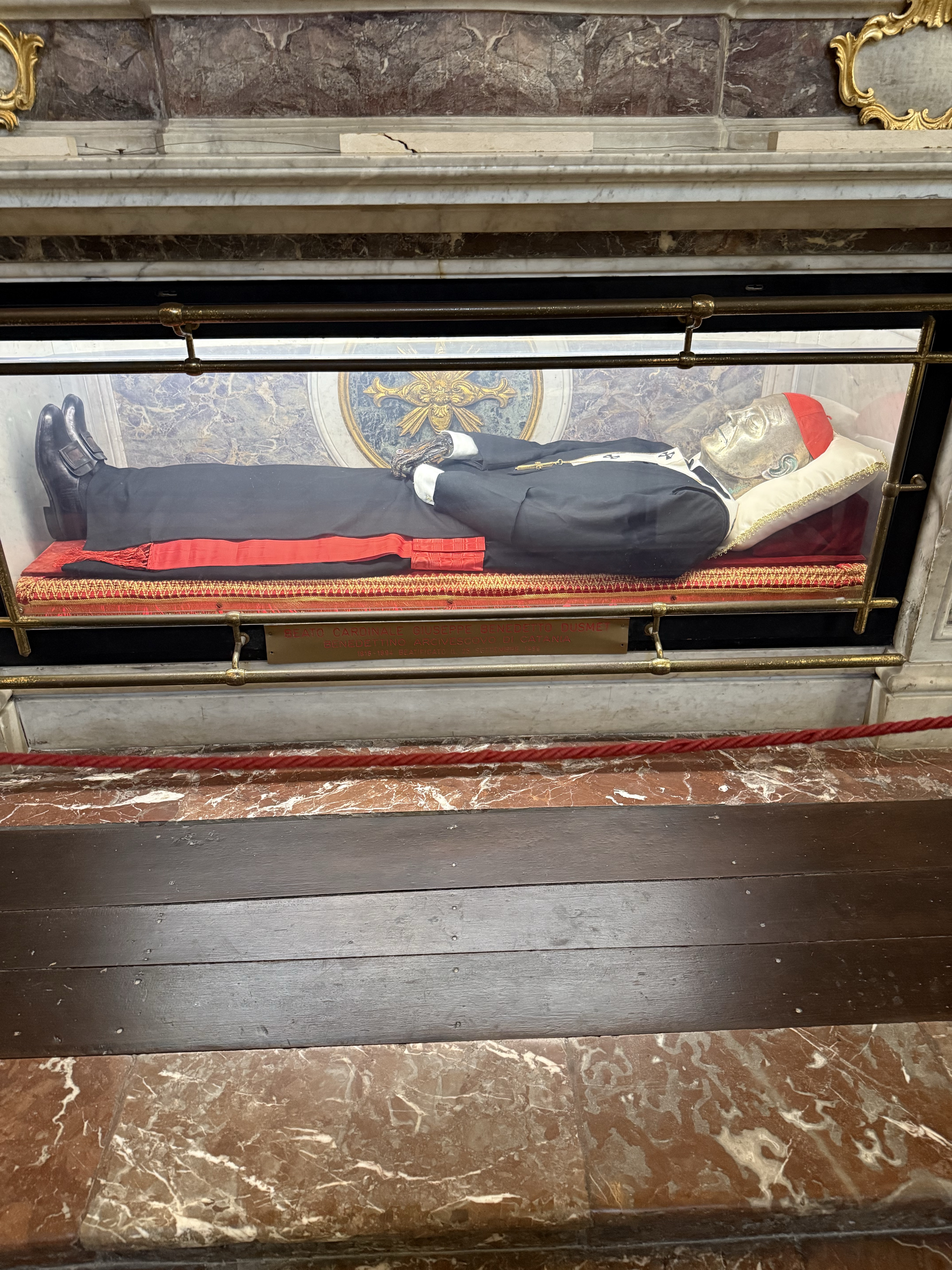
The interior of the cathedral follows a classic Latin cross layout divided into three naves by large pillars decorated with white marble. Like nearly every cathedral we’ve seen in Europe, it’s also a burial ground. This one had the tomb of the famous opera composer Vincenzo Bellini, a Catania native, whose monument is inscribed with a melody from his most famous work, Norma. I didn’t get a photo of that, but I did take a couple of others. The cathedral is also the final resting place for several Aragonese kings of Sicily, including Frederick III and Louis.
Okay, we are off to Rome!

 Kim & Betsy